



קינה לשלום המדינה
In an original Hebrew poem, Shoshanah Haberman addresses the crisis in Israel and Gaza, mourns the dead, and prays for the future.
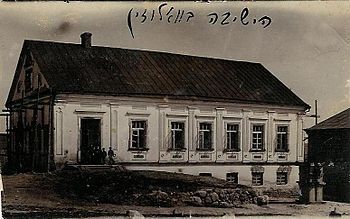
Rav Hayyim and the Love of Lernen
In 1927, Rabbi Boruch Ber Leibowitz wrote a poem, an ode to Rabbi Hayyim Soloveitchik of Brisk. Nati Helfgot provides the background and a translation.

A Journey Across the Ages: Esther in America
Jennifer Caplan reviews Esther in America, a timely volume featuring essays by a number of Lehrhaus editors that addresses how the characters and themes of Megillat Esther have been integrated into American thought and culture over time.

Outside Help in the Teshuvah Process
With Hoshanah Rabbah today and the theme of repentance in mind, Jack Cohen explores the role that outsiders play in one's teshuva process through an enigmatic midrash instructing one to return a person to themselves.

She-Hehiyanu: An Endangered Blessing Species
It is customary to celebrate Tu Bi-Shevat by eating fruits and reciting the She-Hehiyanu blessing on them. This custom, however, has proved challenging in recent years as advances in technology have made it difficult to find new fruit—as defined by halakhah—to say the She-Hehiyanu

No Assembly Required: The Individualized Aspects of the Shalosh Regalim
Michael Bernstein examines how the individual experience is ironically incorporated into holidays that are all about the community.

With Liberty and Presents for All
Through an analysis of Hanukkah ads, Yael Buechler explains how Yiddish newspapers used the Old Country language to acculturate Jews to the New Country.

Remembering the Forgotten
Where is Yosef in the haggadah? Max Hollander suggests that through his absence, he is very present, teaching us about the importance of remembering the forgotten.

The Shofar as a Mekonenet, a Singer of Laments
Rebecca Cypess
As the only musical instrument used in modern Jewish liturgy, the shofar possesses a humble form. Halakhah forbids the modification of the shofar’s...

Rejoicing at the Downfall of Enemies: From Ancient Egypt to Modern Israel
The propriety of celebrating the downfall of enemies presents a complex web of questions and seemingly contradictory Jewish texts. Michael Kurin makes sense of this subject and proposes a framework for applying it to matters of Israeli public policy.



 Site Operations and Technology by The Berman Consulting Group.