



The Jewish Calendar: Mirrors & Doubles
Zoe Jick Fertik explores the parallels between holidays on the Jewish calendar.
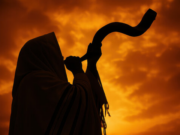
My Fifty-Year Soul Journey with the Shofar
Thomas Freeman reflects on the meaning the shofar has taken on throughout his life.

Who Caused the Deaths of the 10 Martyrs? The Kinot of the 9th of...
Yaakov Jaffe analyzes what the Kinah about the Ten Martyrs says about heroism.

Kinnah 31: Burning with Hope
Max Hollander argues that the Kinnah of Aish Tukad is not only a lament over the destruction of Jerusalem, but also a testament to Jewish resilience.
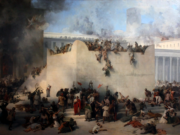
The Great Tisha B’Av Debate: Then and Now
Michael Kurin explores different interpretations of what marks an end of mourning the destruction of the Beit HaMikdash.

Translation as Interpretation in the Thought of R. Shagar: Speaking with Levinas, Lacan, and...
One of the central concerns of the work of Rav Shagar is translation, in both its literal and figurative versions. Michael Blank explores Rav Shagar's use and conception of translation by examining the way he puts the writings of Rebbe Nachman, Jacque Lacan, and Emmanuel Levinas in conversation.
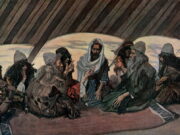
What If Jethro Was the First to Imagine Sinai?
Whose idea was Sinai? A midrash contends that Sinai was first conceived by Jethro. Ezra Zuckerman Sivan supports this Midrash from the Torah's text, and explains why Jethro was the appropriate vehicle for providing the rationale of Sinai.
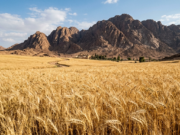
Why Celebrate the Torah at The Wheat Harvest?
The biblical account of the holiday we refer to as Shavuot bears no relationship at all to the giving of the Torah at Mount Sinai. The emergence of the association between this harvest festival and the Sinai covenant has therefore occupied both traditional and academic thinkers for centuries. Tzvika Aviv argues for a previously unexplored approach to the question, one which bridges the mystical insights of the Zohar with current scientific knowledge regarding wheat genetics.
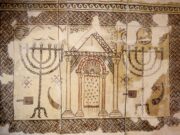
Did R. Akiva’s Students Die in the Bar Kokhba Revolt?
Chaim Katz examines the commonplace assumption that Rabbi Akiva's students died as a consequence of the Bar Kokhva rebellion, showing how the details depict a more nuanced story and provide a clue as to how Rabbi Akiva's Torah was passed down.

The Date of the Omer Sacrifice According to Rabbi Yehuda Halevi – an example...
A novel medieval interpretation by R. Yehudah ha-Levi about the counting of the omer may have a surprising basis in rabbinic countering of heresy.



 Site Operations and Technology by The Berman Consulting Group.