



Translation as Interpretation in the Thought of R. Shagar: Speaking with Levinas, Lacan, and...
One of the central concerns of the work of Rav Shagar is translation, in both its literal and figurative versions. Michael Blank explores Rav Shagar's use and conception of translation by examining the way he puts the writings of Rebbe Nachman, Jacque Lacan, and Emmanuel Levinas in conversation.
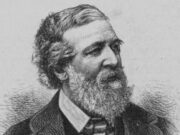
The Poet’s Rabbi
In this essay, Brandon Marlon analyzes the presence of Ibn Ezra in the poetry of Robert Browning.

A Story Well Lived
In this essay, Thomas P. Balázs considers Edgar Allan Poe as a springboard to consider what makes a life meaningful

Rejoicing at the Downfall of Enemies: From Ancient Egypt to Modern Israel
The propriety of celebrating the downfall of enemies presents a complex web of questions and seemingly contradictory Jewish texts. Michael Kurin makes sense of this subject and proposes a framework for applying it to matters of Israeli public policy.

Aggadic Men: Rabbi Lord Jonathan Sacks’s References to Rabbi Dr. Abraham Joshua Heschel
In honor of the yahrtzeits of Rabbis Jonathan Sacks and Abraham Joshua Heschel, we present Steven Gotlib's study of Rabbi Sacks's complicated engagement with the scholarship and religious worldview of Rabbi Heschel.

Modern Men of Faith: Rabbi Lord Jonathan Sacks’s Critique of Rabbi Dr. Joseph B....
In honor of Rabbi Jonathan Sacks’s fifth yahrtzeit, we present Steven Gotlib's study of Rabbi Sacks's longstanding criticism of the religious worldview of Rabbi Dr. Joseph B. Soloveitchik.

A Parable of Barriers
In honor of Rosh Hashanah 5786, Akiva Weisinger retells and reimagines the parable of the king "who wished to be seen, but did not want to be seen."

Daniel Deronda: George Eliot’s Book of Exodus
In this essay, Eileen Watts draws parallels between Daniel Deronda and the book of Exodus

Two Men Enter the Vacated Space ...
The death of Nadav and Avihu is difficult to explain, perhaps even impossible to approach through the medium of language. In a composition crossing the boundaries of original drashah, Breslov thought, poetry, visual art, and historical fiction, Akiva Weisinger renders the tragedy of Nadav and Avihu as a reflection of the Vacated Space beyond human language.

Science and Torah in the eyes of Rambam, Maharal, and Rema: The Nexus of...
Ron Ennis explores the similarities and differences between Rambam, Maharal, and Rema, in their approaches to conflicts between science and Torah.




 Site Operations and Technology by The Berman Consulting Group.