

Entebbe Plus Fifty: What can the greatest hostage rescue of all time teach us?
Fifty years after the Entebbe hostage situation and subsequent rescue, Moshe Rosenberg reflects on the ways the conflicts surrounding Entebbe relate to today's political climates.
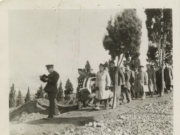
Before Whom They Stood
Menachem Butler responds to Michael Bernstein's article about the propriety of placing flags in shul sanctuaries.

Translation as Interpretation in the Thought of R. Shagar: Speaking with Levinas, Lacan, and...
One of the central concerns of the work of Rav Shagar is translation, in both its literal and figurative versions. Michael Blank explores Rav Shagar's use and conception of translation by examining the way he puts the writings of Rebbe Nachman, Jacque Lacan, and Emmanuel Levinas in conversation.

‘Knocking on Open Doors’ – Intuition and Experience in the Legal Thought of Rav...
Shimi Kaufman analyzes Rav Shimon Shkop's perspectives of halakha and human experience, through the lens of financial law.
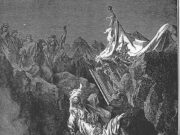
Avot 5:6: The Mouth of Korah’s Earth and the 2nd Edition of the...
We only rarely have the opportunity to compare and analyze instances where a rabbi or scholar changed his interpretation over time, yet R. Yom Tov Lipman Heller published his Mishnah commentary, Tosafot Yom Tov, twice in his lifetime. Yaakov Jaffe examines the evolution of R. Heller's interpretation of the term “the Mouth of the Earth” in Pirkei Avot.

How To Cleanse A Sanctuary
In honor of Flag Day, Michael Bernstein argues that national flags do not belong in our shul sanctuaries. Drawing on halakhic responsa, news reports, and photographic evidence, Bernstein locates the practice of displaying flags in shuls in its historical context and proposes that flags do not ever belong in prayer spaces.

Extraordinary Claims Require Extraordinary Disclaimers: A Halakhic Appraisal of Mentalism
Steven Gotlib explores mentalism through a halakhic lens -- in particular, the need for a disclaimer stating that no magic is genuinely being performed.

The Divinity Is in the Details
Why do biblical and rabbinic texts preserve so many names, places, and seemingly unnecessary details? Chaim Trachtman argues that these textual additions are more than literary embellishments: they strengthen communal memory, reinforce covenantal identity, and help transform religious tradition into lived history.

The Sotah Ritual and Its Implications for Abortion
Noah Gradofsky explores sources about a pregnant Sotah and their relevance for Jewish abortion ethics.
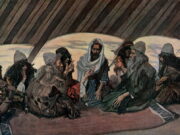
What If Jethro Was the First to Imagine Sinai?
Whose idea was Sinai? A midrash contends that Sinai was first conceived by Jethro. Ezra Zuckerman Sivan supports this Midrash from the Torah's text, and explains why Jethro was the appropriate vehicle for providing the rationale of Sinai.



 Site Operations and Technology by The Berman Consulting Group.