



Bury Me in the Kingdom of My Grandparents
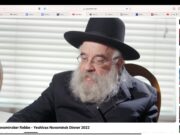
In this essay, Alter Yisrael Shimon Feuerman reflects on his family history and Hasidic pedigree.
Rabbi Meir Simcha Cohen of Dvinsk: A Centennial Reappraisal
R. Meir Simcha Cohen of Dvinsk, the legendary author of Meshekh Hokhmah and Ohr Sameiah and early-20th century community leader, passed away exactly one century ago. In honor of this centennial, Chaim Oscar Jacob reappraises the legacy of R. Meir Simcha.

Areivut as the Conceptual Core of the Rav’s Covenant of Fate and Beyond
Reuven Mohl explores Rav Soloveitchik’s understanding of Areivut in Kol Dodi Dofek.

Who Caused the Deaths of the 10 Martyrs? The Kinot of the 9th of...
Yaakov Jaffe analyzes what the Kinah about the Ten Martyrs says about heroism.
The Poet and the Rabbi: A Conversation on Browning and Judaism
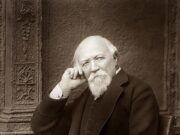
Rowan Williams and Irene Lancaster dialogue about the philosemitism of Robert Browning.
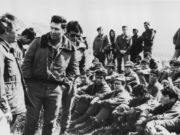
Entebbe Plus Fifty: What can the greatest hostage rescue of all time teach us?
Fifty years after the Entebbe hostage situation and subsequent rescue, Moshe Rosenberg reflects on the ways the conflicts surrounding Entebbe relate to today's political climates.
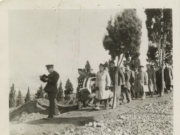
Before Whom They Stood
Menachem Butler responds to Michael Bernstein's article about the propriety of placing flags in shul sanctuaries.

Translation as Interpretation in the Thought of R. Shagar: Speaking with Levinas, Lacan, and...
One of the central concerns of the work of Rav Shagar is translation, in both its literal and figurative versions. Michael Blank explores Rav Shagar's use and conception of translation by examining the way he puts the writings of Rebbe Nachman, Jacque Lacan, and Emmanuel Levinas in conversation.
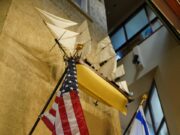
How To Cleanse A Sanctuary
In honor of Flag Day, Michael Bernstein argues that national flags do not belong in our shul sanctuaries. Drawing on halakhic responsa, news reports, and photographic evidence, Bernstein locates the practice of displaying flags in shuls in its historical context and proposes that flags do not ever belong in prayer spaces.
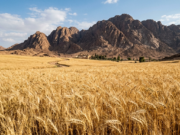
Why Celebrate the Torah at The Wheat Harvest?
The biblical account of the holiday we refer to as Shavuot bears no relationship at all to the giving of the Torah at Mount Sinai. The emergence of the association between this harvest festival and the Sinai covenant has therefore occupied both traditional and academic thinkers for centuries. Tzvika Aviv argues for a previously unexplored approach to the question, one which bridges the mystical insights of the Zohar with current scientific knowledge regarding wheat genetics.




 Site Operations and Technology by The Berman Consulting Group.