



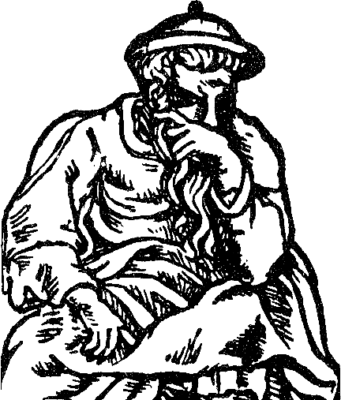

Why Celebrate the Torah at The Wheat Harvest?
The biblical account of the holiday we refer to as Shavuot bears no relationship at all to the giving of the Torah at Mount Sinai. The emergence of the association between this harvest festival and the Sinai covenant has therefore occupied both traditional and academic thinkers for centuries. Tzvika Aviv argues for a previously unexplored approach to the question, one which bridges the mystical insights of the Zohar with current scientific knowledge regarding wheat genetics.

Love Bends the Line
David Curwin
“Ahavah mekalkelet et ha-shurah.”
— Bereishit Rabbah 55:8
The sages used the above phrase “love bends the line” to describe Abraham’s actions before the akeidah:...

The Many Hats of Heresy: Epikorsut and Minut in the Writings of the Sages
The epikorus and the min apparently represent two different kinds of heretic in traditional Jewish literature. Elisha Price traces the evolving meaning of each term in Hazal and medieval writings, clarifying the differences between the major genres of Jewish heresy and helping illuminate for us why they matter.
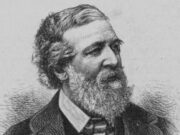
The Poet’s Rabbi
In this essay, Brandon Marlon analyzes the presence of Ibn Ezra in the poetry of Robert Browning.

Ha-Inyan Ha-Eloki: Restoring Yehuda Ha-Levy and The Kuzari to Their Andalusian Context
Jackson Gardner offers a new reading of the Kuzari’s Inyan Ha-Elohi.

The Daring Theology of the Kinnah of the Maharam
Yaakov Jaffe examines the anti-Christian polemic in Maharam of Rottenberg's Kinnah about the burning of the Talmud.

Science and Torah in the eyes of Rambam, Maharal, and Rema: The Nexus of...
Ron Ennis explores the similarities and differences between Rambam, Maharal, and Rema, in their approaches to conflicts between science and Torah.

Man vs. Prophecy? A New Look at the Classic Discussion of Predetermination in the...
The Mei Ha-Shiloah’s statements on predetermination pose a theological challenge to foundational Jewish doctrines. In an analysis weaving together several Torah narratives and Izhbitzer commentaries, Reuven Boshnack proposes an empowering interpretation of the Mei Ha-Shiloah.

The End of Contradiction: Resolving the Mysteries of The Guide to the Perplexed
Josh Frankel reviews Lenn Goodman’s new work of commentary on Moreh Nevukhim, which brings Rambam’s work to life for careful, contemporary readers.

Insanity and Hope
Warren Zev Harvey reflects on the pain and fear of Israel’s current moment, finding unexpected hope in R. Joseph Kaspi’s anti-deterministic theory of history. The essay was originally published in Hebrew and translated by the author.




 Site Operations and Technology by The Berman Consulting Group.