




A Mathematical Reevaluation of the Prohibition on Counting Jews
Mark Glass
I.
A long time ago in a galaxy far far away. …
Growing up, that’s how the gabba’im of my youth minyan would determine if...

Hendiadys in the Pre-Shofar Acrostic Prayer: An Introduction to an Overlooked Principle of Biblical...
In unpacking the meaning of a tricky verse from Eikhah that we say as part of the Shofar service on Rosh Hashanah, Mitchell First introduces us to the literary principle called hendiadys, which can help us understand various phrases throughout Tanakh.

What Yitro Can Teach Us About Synagogue Leadership
Gidon Rothstein mines parashat Yitro for insight into best practices in synagogue governance.

Seeing Double: Themes in Judges, Chapter 3
Judy Taubes Sterman examines Judges Chapter 3.

The Pregnant Sotah: A Case Study in the Ethics of Abortion
Yisroel Ben-Porat grapples with whether the case of the pregnant Sotah has implications for the debates surrounding abortion.

Was God Angry at Sarah?
Ben Greenfield
God isn’t angry with Sarah, when she laughs at the idea of birthing a child in her old age (Gen. 18:12-15). God is...

Esther, Feminist Ethics, and the Creation of Jewish Community
How can the mitzvot of Purim reveal the feminist ethics of the Megillah? Aton Holzer offers an enlightening new reading of the Megillah, suggesting that there is a profound connection between the text's structure and its ethics.

Capra Dei, or Had Gadya: Isaiah 53 and Jewish Redemption
Aton Holzer offers a novel interpretation of Isaiah 53 based on current events in Israel.

Of Split Wood and Waters
Nachum Krasnopolsky explains Rashbam's interpretation of the splitting of the sea as an educational experience.

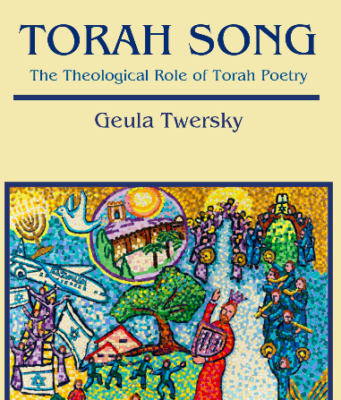
The Torah’s Song
What is the meaning of a biblical song? Writing for Parshat Ha'azinu and in memory of her beloved cousin, Shira Shaindel Rodman (née Brilliant) z”l, Elana Stein Hain reviews Geula Twersky's theory of biblical poetry as portrayed in her 2022 book Torah Song.



 Site Operations and Technology by The Berman Consulting Group.