




Death by the Sword: What Makes Balaam so Wicked?
Daniel Brauner analyzes the character of Balaam -- specifically, why Balaam is considered so wicked in the eyes of Chazal.

What Yitro Can Teach Us About Synagogue Leadership
Gidon Rothstein mines parashat Yitro for insight into best practices in synagogue governance.

Rereading the Akedah Story (Genesis 22)
Joel Wolowelsky analyzes various midrashic readings of the Akedah.

Love Bends the Line
David Curwin
“Ahavah mekalkelet et ha-shurah.”
— Bereishit Rabbah 55:8
The sages used the above phrase “love bends the line” to describe Abraham’s actions before the akeidah:...
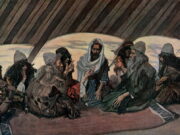
What If Jethro Was the First to Imagine Sinai?
Whose idea was Sinai? A midrash contends that Sinai was first conceived by Jethro. Ezra Zuckerman Sivan supports this Midrash from the Torah's text, and explains why Jethro was the appropriate vehicle for providing the rationale of Sinai.

The Prince and the Precedent: Genesis 34 in its Socio-Legal Context
How should one respond to ominous cultural trends that have not yet had a direct impact? Alex Maged's thoughts on the rape of Dinah.

Trial by Water: Exodus and the Akeidah
Yisroel Benporat juxtaposes the Akeidah with the Splitting of the Sea as similar tests of faith.

Fearless Leadership:Nehemiah son of Hacaliah Learns from Moses and Aaron
In this second-place prize-winning essay for Hadar’s annual Ateret Zvi contest, Nehemia Polen approaches a vexing episode in the Torah through new lens: what if Moses and Aaron were denied entry to the Land of Israel not because of what they did when obtaining water from the rock but because of where they escaped to right before?

Tu b’Shvat and the Question We Can’t Keep Avoiding: Is the Tree of the...
In this essay, Aviva Lauer analyzes the Biblical prohibition against cutting down fruit trees in wartime, and connects it to messages about human dignity.

Imagining Passover
As we prepare for Passover, enjoy these three poems by Bruce Black meditating on the past, present, and future of our Exodus.




 Site Operations and Technology by The Berman Consulting Group.