




Is a Modern Orthodox Humash Even Possible?
Jack Bieler continues the conversation about the need for and feasibility of a Modern Orthodox humash.

The View from the Cleft of the Rock: The Mystery of Forgiveness
Ari Levisohn considers forgiveness through the lens of the Divine encounter through which the Thirteen Attributes of Mercy are revealed.
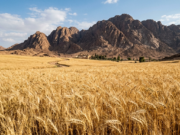
Why Celebrate the Torah at The Wheat Harvest?
The biblical account of the holiday we refer to as Shavuot bears no relationship at all to the giving of the Torah at Mount Sinai. The emergence of the association between this harvest festival and the Sinai covenant has therefore occupied both traditional and academic thinkers for centuries. Tzvika Aviv argues for a previously unexplored approach to the question, one which bridges the mystical insights of the Zohar with current scientific knowledge regarding wheat genetics.

Hearing the Shofar with Korah’s Children
In this winning essay of the Ateret Zvi Prize, Dr. Ethan Schwartz analyzes the Yamim Nora'im experience and interpretations of what happened to Korah's children.

Abraham and the 1960s – Technocracy and the Journey Inward
Sam Glauber examines Abraham's place in his society.

The Ballad of Cain and Adam
Ari Lamm on The Boss and The Bible
Avot 5:6: The Mouth of Korah’s Earth and the 2nd Edition of the...
We only rarely have the opportunity to compare and analyze instances where a rabbi or scholar changed his interpretation over time, yet R. Yom Tov Lipman Heller published his Mishnah commentary, Tosafot Yom Tov, twice in his lifetime. Yaakov Jaffe examines the evolution of R. Heller's interpretation of the term “the Mouth of the Earth” in Pirkei Avot.

What Avram and Sarai Taught the World Zionist Congress: An Orthographic Exploration of Parashat...
Following the World Zionist Congress, Gabriel Slamovits reflects on the significance of the event and how the journey of Avraham and Sarah in Parshat Lech Lecha informs the future.
The Duality of Kisuy Ha-Dam
I. Introduction: The Puzzle of Vayikra 17
The mitzvah of kisuy ha-dam, the commandment to cover the blood of a slaughtered bird or wild animal,...

The Akeidah of Shmuel ibn Abbas
Chesky Kopel considers the piyyut "Eit Sha’arei Ratzon" and its author's relationship to his son, parallel to the Akeidah.




 Site Operations and Technology by The Berman Consulting Group.