


Shimi Kaufman
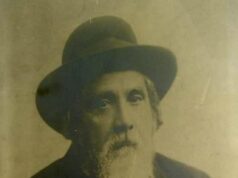
One of the most unique thinkers in the tradition of analytical learning is Rabbi Shimon Shkop, Rosh Yeshiva of the Telshe yeshiva (henceforth referred to as Rav Shimon). Unlike the dominant strain of thought among inheritors of the Brisker tradition, which saw the role of the student of halakhah as primarily one of understanding the ‘what’ rather than the ‘why’, Rav Shimon’s approach was unique in its insistence on inquiring after the internal logic of the halakhah. Rav Shimon’s analytical style (derekh ha-limmud) was characterized by articulating the logic behind elemental features of the system of halakhah, and through this process coming to deeper and more fundamental understandings of basic principles. It was this insistence on inquiring into the foundations of the halakhah which led to the characterization of Rav Shimon in his yeshiva years as someone who was “knocking on open doors”.[1] His magnum opus, the seven-part Sha’arei Yosher, applies his unique method to some of the fundamental sugyot in the sedarim of Nashim and Nezikin, modeled after the systemic treatment of Rabbi Aryeh Leb Heller in his Shev Sh’mateta.
In a seminal article, Elisha Friedman has argued that Rav Shimon’s unique derekh ha-limmud emerged out of the broader philosophical and ideological context in Telshe, which stressed the importance of individuality and subjectivity in religious life.[2] In contrast to the dominant analytical trend, which held that the depths of Torah wisdom were above human comprehension, Rav Shimon believed that the capacity for true understanding of the Torah is latent within each person. The process of Torah study, far from being a removed analysis of objective forms, is an attempt to uncover the resonance of the halakhah within our inner selves.
“Since R. Shkop accepts the ideology of Telshe that the Torah reflects the deepest convictions of the human soul, there is no bifurcation between Divine command and human reasoning. Instead, human beings in their inner recesses feel that the truth of the Torah is perfectly in consonance with their own subjective experience of reality, and this deep unity is what leads to the deepest obedience to God’s commandments.”
In this vein, Friedman identifies the project of Sha’arei Yosher as follows:
“R. Shkop claims that Divine wisdom, at its core, must reflect the human experience. Only through offering reasons in halakhic study can one hope to arrive at the truth of Torah. Shaarei Yoshor includes philosophical speculation in order to validate the halakhic discussion’s authenticity.”
Friedman’s analysis here is illuminating both in what it reveals and what it obscures. It is certainly important that Rav Shimon deems it necessary that halakhah resonate with human reasoning. At the same time, this formulation asserts that the function of Torah study is to ‘validate’ the inherent goodness of the halakhah. One attempts to work out the reasoning of a given ruling or concept not because their own reasoning is privileged above the halakhah, but because any sufficient honest analysis will eventually reveal the resonance of the halakhah with one’s deepest understanding. Ultimately, the logic of halakhah is still framed as the ultimate barometer of truth; the analytical process is only a means by which we come to align our own minds with the halakhic truth.
This analysis leads Friedman to a unique approach to one of Rav Shimon’s most famous innovations, that being his distinction between religious law and financial law (torat ha-mishpatim). For Rav Shimon, the Torah’s rules which regulate financial interactions presuppose an existing economic reality. When the Torah commands “do not steal,” this commandment can only be understood by a society which already has a concept of ownership. The Torah thus does not establish financial realities, but rather imposes various obligations and restrictions on top of an existing system. Rav Shimon rearranges much of the bedrock of halakhic financial law around this assertion, and the results are some of the most innovative and influential aspects of Rav Shimon’s halakhic thought.
Friedman sees Rav Shimon’s introduction of torat ha-mishpatim as a solution to a thorny problem: generally, halakhic discourse is a closed system, where the terms are defined by and seen through the lens of the system itself. However, rules relating to finances necessarily draw on experience external to the Torah’s system, since they are predicated on existing realities which predate the giving of the Torah, both chronologically and conceptually. It is therefore necessary to incorporate this external understanding into the study of these halakhot, since without them, the halakhah cannot resonate. As Friedman writes:
“Financial matters have a reality independent of the Torah and therefore one’s deepest subjective experience of financial matters is also developed in response to the existing reality. This is, according to Telshe ideology, not distinct from the experience of financial matters that the Torah discusses. All these experiences reflect ultimately the same truths. If so, R. Shkop argues there must also be halakhic ramifications to the external concepts of property which exist outside the Torah. Unlike ritual, which has no existence outside the Torah, money does; in this, it is different from other areas of halakhah. The halakhah, collapsing distinctions between Divine wisdom and human experience, takes into account the rules of property as human beings subjectively experience them. R Shkop’s method is then seen to embrace human reason both as the motivator to study the reasons of the halakhah, as many have noted, but reason also plays another role as the creator of new halakhic legislation.”
We thus have two distinct accounts of the role of human reason in the study of halakhah in Rav Shimon’s thought. In most areas of halakhah, reason serves only to clarify and verify the essential correctness of the Torah’s rulings. Reasons are offered only as a means to get at the essential truth, which can be known by its resonance with a person’s own intellect. Regarding financial matters, however, we bring to bear not only our intellect, but our experiences; as such, in order to have a halakhah which reflects the unified truths of Divine and human wisdom, the external structures of finances must be taken into account within the analysis.
This formulation, at least as regards the non-financial aspects of Torah, is focused primarily on the result of the halakhic analysis, that is, that the analytical process is both concluded and verified when the most resonant explanation has been uncovered. What this formulation does not address is the role of intuition within the analysis itself, and how it affects the process of discovery. Closely tied to this problem is the limitation of human experience to the strictly financial realm, where it can be quantified in terms of concrete knowable facts about social arrangements. In truth, humans bring a host of intuitive assumptions with them to any inquiry, informed by their experience of the world and of their own cognitive processes. This experience is the very means by which the halakhic inquiry can actually be verified; the teretz ‘makes sense’ precisely because it aligns with our broad range of experiences.
In fact, much of the brilliance of Rav Shimon’s method is his ability to give intuitive, experiential, logical explanations (sevarot) to explain halakhic phenomena, rather than relying on a strictly mechanistic view of the halakhah. It is in this sense that Rav Shimon can be said to be “knocking on open doors” – his method serves to make explicit the inherently human underpinnings of halakhic thinking, and through this to reveal the internal logic of the halakhah. The method used in regards to torat ha-mishpatim is in fact indicative of Rav Shimon’s general approach to halakhah.
In this article, I will show one example of how Rav Shimon’s approach prioritizes intuitive explanations rooted in experience even in discussions not primarily relating to financial law. We will focus on Rav Shimon’s approach to the halakhic concepts of rov and chazakah in order to demonstrate how his halakhic methodology prioritizes explanations rooted in human experience and intuition.
Halakhah has two main tools by which it contends with situations of doubt. The first tool, rov, looks to the majority as the determining factor; that is, we assume the situation we are dealing with follows the majority of cases. The second tool is called chazakah, a sort of holding pattern which assumes that situations do not change unless we have good reason to say so.
In Bava Kamma 46a, we find a machloket between Rav and Shmuel in a case where one buys a cow which turns out to be too violent to use for labor. Rav claims that since most people buy cows for the purpose of field work (rather than for consumption), the buyer can charge that the sale was made under false pretenses (mekach ta’ut). Shmuel argues that since there are a minority (mi’ut) of people who buy cows to slaughter and eat, the sale cannot be assumed to be invalid. Shmuel formulates the principle ein holkhin ba-mamon achar ha-rov – in monetary cases, we cannot decide based on a statistical majority. Tosafot (Bava Kamma 27b) are bothered by a sugya in Sanhedrin (3b), which states that the principle that monetary cases follow the ruling of the majority of judges is derived from a kal ve-chomer (derivation a fortiori) from capital cases. If in capital cases, which are more stringent, we nevertheless rely on a majority of judges, we can certainly rely on this same majority when dealing with monetary issues, which are relatively less serious. Tosafot wonder why we cannot make a similar derivation as regards a statistical majority (ruba de-leita kaman) – since we follow statistical majorities in many capital cases (see for example Sanhedrin 69a), we should be able to derive the same kal ve-chomer regarding monetary cases. Why then, does Shmuel insist that monetary cases cannot be decided by a statistical majority? Tosafot give the following cryptic answer:
And there is to say (ie. we can answer), that there regarding judges is different, that the minority is as though it is not there, and there is no reason to say ‘establish the money in the possession of the person who originally owned it’, since the court has taken the money from the original owner. However, as regards other monetary considerations, where there is both a minority and a prior owner, we do not follow the majority.
There appear to be two aspects to the answer of Tosafot as to why the kal ve-chomer regarding judges cannot be applied to other instances of statistical majorities:
- The rov regarding judges is different, since there is no meaningful mi’ut to speak of.
- When considering a court case, there is no room to assume that the money should remain with the current owner (muchzak), since once the court rules who the money belongs to, they re-assign the ownership.
The problem in Tosafot is that these two points appear to be unconnected. Individually, each point would serve as a reasonable distinction to explain why in monetary cases we follow a majority of judges, but not a statistical majority. Other versions of this discussion in Tosafist writings, from other schools, indeed provide either one of the two answers, or split them into two separate points. Taken together, however, it is very difficult to explain exactly how the two points connect into one answer.
Rav Shimon tackles this Tosafot in two separate places in Sha’arei Yosher. Taken together, his reading of the Tosafot reveals a fresh approach to the concepts of rov and chazakah which prioritizes the experiential as an explanation for the halakhic ruling. The first instance we will analyze where Rav Shimon addresses this Tosafot is in Shaarei Yosher 3:3, where Rav Shimon explains why the minority of judges is considered functionally nonexistent. Rav Shimon explains that the principle of following the rov as regards judges is not based on any claim about the truth or falsehood of their ruling. Rather, the rule is a din torah – a basic rule within the system that judgements are decided based on the majority of judges. Given that this is the case, once we know what the majority has ruled, the minority is no longer a relevant factor – the court speaks in one voice, and it is the voice of the majority. Since the rov here is not making any claims to the truth, it is not operating in the same stream as chazakah – it therefore is capable of overriding or sidestepping the chazakah that money should stay with the original owner (chezkat mamon), despite our general principle stating the contrary.
Initially, this explanation appears quite similar to a standard feature of analytical halakhic thinking, that being the gezerat ha-katuv, the self-justifying normative demand which does not require any underlying logic. On closer investigation, however, we can see that Rav Shimon is actually introducing a careful distinction between areas of halakhah which deal with courtroom law and areas of halakhah which serve to create norms for daily living. The formal, procedural rules of a courtroom will necessarily be more static than rules which govern daily living.
The second place where Rav Shimon addresses this Tosafot is in a cryptic comment at the beginning of Sha’ar 2, which addresses chazakot. To understand Rav Shimon’s argument, some background is required:
The gemara (Chullin 10b) derives the principle of chazaka from the halacha of a kohen who checks a house for a nega, a blemish which would render it impure. The kohen checks the size of the nega to determine whether it is sufficiently large to cause impurity, and if it is not, he declares the house pure. The gemara asks: how is the kohen permitted to assume that the nega did not change size as he closed the door to the house while leaving, and thereby render the house impure? We must conclude that the kohen is allowed to assume that the size of the nega did not change. This serves as the source for the general rule that one may rely on a chazakah, an assumption that a situation did not change as long as there is no reason to believe that it did.
Rav Shimon is bothered by the following question. The chazakah regarding the size of the nega is a chezkat ha-guf, a chazakah which addresses a question about a physical reality. The gemara in Ketubot (75b) indicates that chezkat ha-guf is uniquely powerful, and that it is followed over any other chazakah. As such, how can we derive that we follow any other chazakah from the case of the kohen where the chazakah in question is the uniquely powerful chezkat ha-guf?
Rav Shimon answers: the principle of chazakah is a legal principle which is used to give a starting point to help in resolving situations of doubt. In other words, chazakot are the Torah’s way of responding to questions. Every reference to chazakah is an attempt to address the core question within a given case – thus, the relevant chazakah will always be the one which addresses the question from which all the other questions emerge. For example, when considering whether a given person successfully dipped in a mikvah, we consider the chezkat kashrut regarding the mikvah rather than the chezkat tumah of the person. We also consider the chezkat kashrut of a knife for shechitah rather than the chezkat eiver min hachai of an animal which has not yet been slaughtered. Although we could consider the halakhic questions, these questions hinge on the fundamental question of what actually happened. To put this differently, chazakot provide a tool for approaching and moving through an unclear situation. The guiding principle is to make as few assumptions as possible – we make an assumption about the reality based on chazakah, and act in accordance with all of those implications. Answering the question about the realia automatically leads to an understanding of the halachic situation, as the halachic situation emerges from the realia.
It is therefore not problematic that all chazakot are derived from the strong chezkat ha-guf of nega’im. In the end, there is no conceptual difference between a chezkat haguf and any other chazaka. The rule of chazaka teaches us that in situations of doubt, we can act based on a presumption that the previous circumstances did not change. Once we derive this principle, it is logical to always consider the chezkat ha-guf first, since the halachic question is always dependent on the realia. This does not mean, however, that the chezkat ha-guf is any more logical or robust than other chazakos – rather, once we derive a principle of chazakot, it always makes sense to first look at the chezkat ha-guf.
Already, we see how Rav Shimon’s approach to the question of how chazakot function prioritizes the experiential as the best means for understanding the halakhah. The halakhah structures its rules about assumptions not around abstract halakhic questions, but round the practical realia in which the questions are based. This move simultaneously grounds the conversation about chazakah in terms that are familiar and intuitive, external to the halakhic system, and allows for Rav Shimon to free himself from hyper-formalist understandings of the ‘power’ which different chazakot hold. In other words, Rav Shimon’s suggested sevara here is grounded in an experiential intuition, and this line of thought allows him to move towards a more resonant understanding of the halakhah.
To better understand this second point, we continue with Rav Shimon’s objection to the view of Rabbi Jacob Joshua Falk on this question. R. Falk is quoted by Rabbi Aryeh Lev Heller (Shev Sh’mateta 1:15) to the effect that even though in general, we follow rov rather than following a chazakah, a chezkat ha-guf can override a rov. This is derived by the transitive property: since we know that we cannot decide monetary cases based on a rov, but we can decide them based on chezkat ha-guf (as is clear in Ketubot 75a), it is logical to conclude that chezkat ha-guf is stronger than rov.
Rav Shimon disputes this setup based on the principle outlined above. Both rov and chazakah are methods given by the Torah to handle situations of safek – we either assume the most likely scenario, or we assume that nothing within the scenario has changed. In regards to monetary cases, the method of rov cannot be used, and so we default to the principle of assuming chazakah. Once we are using chazakot, however, we must act based on the most fundamental chazakah in the situation, the chezkat ha-guf. The ‘superiority’ of chezkat ha-guf does not exist on a formal power-scaled list of options for resolving sefeikot. Rather, each tool is contextual and used in the situation which most logically requires it. As a result, the rules governing chazakah and rov are reformulated to reflect personal experience, and thereby become more intuitive and resonant.
Regarding why rov cannot be used in financial cases, Rav Shimon appears to provide two reasons:[3]
As regards the power of a majority, which the Torah says we should follow: this is because it is more likely that the situation actually occurred in this way, if it is truly the majority… and there would be room to say that even though a majority is applicable for the rest of the rules in the Torah, regardless, as regards monetary disputes, the minority, when combined with the chazakah of the original owner of the money, is sufficient to change the ruling, as it changes [the reliability of] the clarification rendered by the majority. However, when there is a chezkat ha-guf which resolves the root doubt – not through clarifying matters, but rather through a Torah law as regards how one approaches situations [hanhagah] that we assume the situation has remained as it appeared to us, and this Torah law does not apply to monetary matters – but if the monetary question emerged as a result of the clarification of the doubt, then the chazakah would function… and even as regards the majority, we have found situations where it functions for monetary cases, in situations where the monetary question is a direct result of the majority, such as a majority of judges, which works even for monetary cases for this exact reason, as Tosafot write at the beginning of Perek Ha-Meniach. And this is not the place to elaborate on this…
Rav Shimon is extremely cryptic here, but he appears to draw two distinctions between rov and chazakah:
- Regarding a rov, there is always a mi’ut which can be combined with the chezkat mamon.
- The mamon is a direct result (toladah) of the chazakah in a way that it is not regarding the rov.
The relationship between these two factors is unclear, but Rav Shimon concludes by stating that in situations where the mamon can be considered a toladah of the rov, we will use rov in a monetary case – this, says Rav Shimon, is exactly what Tosafot is speaking about in Bava Kamma 27b.
To unpack what Rav Shimon is saying here, let us begin by examining the distinction drawn between rov as a birur and chazakah as a hanhagah. This cannot be understood to mean that rov provides some real factual clarity into the situation which chazakah does not – obviously, in some cases there will be instances where the rov is untrue. Rather, both rov and chazakah are methods of handling a situation of safek. When following rov, we are choosing to act based on the most likely scenario. When following chazakah, we are choosing to act as though nothing has changed in the situation. Both rov and chazakah are hanhagot, in that they are ways of approaching an objectively unclear situation – the difference between them is that rov is premised on a statistical likelihood that this is the “correct” option, and chazakah is nothing more than a guiding principle for how to begin approaching an otherwise totally unclear scenario.
In general, the fact that rov is premised on logical grounds makes us more likely to use it as a means of approaching unclear situations. This leads to the general principle that rov is preferred: ruba ve-chazakah ruba adif. As regards monetary disputes, there is a specific issue because of the dynamics of two people making claims in court. Since each side makes an argument about what happened, following rov would be to a priori presume one party’s claim over the other. In other words, the hanhagah of rov posits two options for what occurred, and chooses to assume the most likely option. This is generally a good strategy, except in a situation where the fairness of the system rests on assessing both claims equally. As such, Shmuel’s position is that in monetary cases, we should use our other model for creating starting assumptions, that of chazakah.
There are two advantages to using chazakah in monetary disputes. First, chazakah does not first posit two options and then pick one of them to act upon. Rather, it chooses the situation which makes the fewest assumptions, though there may be any number of alternatives. Second, chazakah addresses the underlying questions which generate the dispute in front of us, rather than the question which is at stake between the claimants. To put this in Rav Shimon’s language, there is always a mi’ut which contradicts the rov, and the monetary question is a toladah of the chazakah – that is, rather than the chazakah weighing in on the dispute itself, the chazakah sets the scene for the dispute.
We are now well equipped to understand Rav Shimon’s explanation as a reading of Tosafot in Bava Kamma. The reason the rov of judges works despite there being a chazakah is because of the unique nature of this rov, which does not have a mi’ut, since we only are concerned with the final ruling of the court. This is relevant in terms of understanding why this rov cannot be used as a model for extending other rovs into dinei mamanot – this rov is uniquely positioned to function in dinei mamanot because it is not premised on the two options which the claimants are disputing, but rather a question outside of their claims – that is, what is the court’s decision? The answer to this question, like a chazakah, has direct ramifications on the monetary question, but it is not simply a reframing of the question which is at stake between the claimants. Thus, this rov can work to extract mamon, since in this fundamental way, it causes us to form our assumptions about the case in a manner more analogous to chazakah.
Taking a step back, what observations can we make about Rav Shimon’s method from this brief case study? First, it is notable that Rav Shimon’s fundamental assertion about chazakot is premised on human processing. Rav Shimon’s basic assertion is that the most fundamental chazakah in any given scenario is the one which resolves the question about what occurred in the world around us, rather than the one which resolves the halakhic question. The thinking which underlies this resolution is clearly based on assigning primacy to perception over halakhic reality. In other words, it is the halakhah that is constructed to map onto human reasoning, not human reasoning which must be refined until it aligns with the halakhah. This is notable because chazakot are relevant within all areas of halakhah, not just monetary questions. Even sevarot in the realm of issur ve-heter are premised upon this basic assumption that halakhah is supposed to make sense.
Second, the distinction drawn by Rav Shimon between rov and chazakah does reveal a distinction between monetary cases and non-monetary cases. However, the distinction is not that monetary cases are based on external experience, whereas other situations are based in abstract halakhah. Just the opposite: monetary judgements often require rigid rules which do not map onto external experience. The realm of dinei mamanos is the closest thing to what we would call ‘law’ in secular terms, and it is the place where formalism is most relevant as an analytical tool. Outside of the courtroom, halakhah is to be understood primarily from the subjective viewpoint of the practitioner.
Third, the distinction drawn between the categories of rov and chazakah is not absolute. There are situations, such as the rov of judges, where rov is assumed to function in a similar manner to chazakah, since the manner in which it gives us information about the situation is most similar to chazakah. Primacy is assigned not to pre-existing conceptual categories but to the ways in which practitioners of halakhah relate to and process those categories. It therefore naturally emerges that the best way to come to an understanding of halakhah is by interrogating the perception of practitioners and formulating the halakhah in those terms.
Rav Shimon’s conceptual frameworks often feel far more satisfying than other analytical solutions for this exact reason – he takes as a starting point that halakhah was made for humans, and is fundamentally a human system. Here Rav Shimon is in conflict with much of the dominant legacy of the analytical school. Halakhah should work with us, and we should work with halakhah. We do not need to twist ourselves into knots to align with abstract theoretical models. We do not need to rewire our cognition to think in terms of Platonic halakhic forms. If we are studying Torah correctly, we will find that there is no need to beat our common sense into submission. All of the doors we need to walk through are already open.
[1] Reported by R. Avraham Yitzchak Bloch in a eulogy for Rav Shimon
[2] See Elisha Friedman, Natural Law And Religious Philosophy in R. Shimon Shkop’s System (Tradition Journal, 2016).






 Site Operations and Technology by The Berman Consulting Group.