

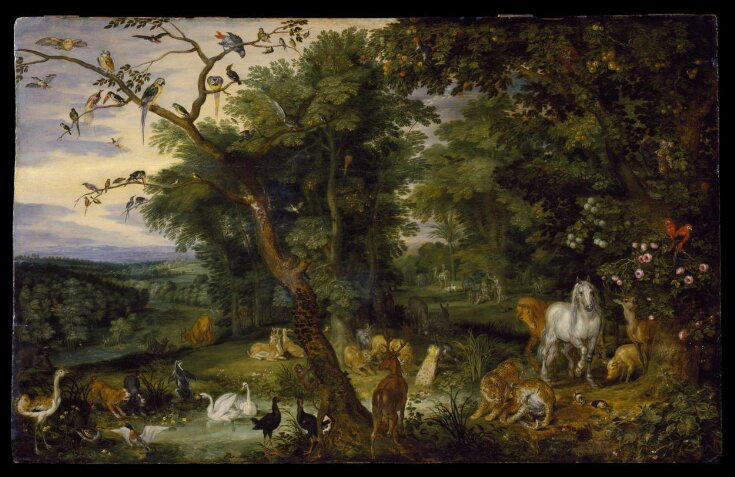
Introduction
Discussion of the purpose of the Tabernacle typically revolves around its relationship to the sin of the Golden Calf. Commentaries discuss the chronology of events: whether the command to build the Tabernacle preceded the sin, or came in response to it[1]. Scholars have suggested it additionally serves as a recreation of the revelation at Mount Sinai[2]. R’ Menachem Liebtag, based on several textual parallels, has proposed that the Tabernacle offers the potential to repair the sin of Adam and Eve and an opportunity to return to the close existence with God that was lost after the sin[3]. This essay presents an additional explanation meant to supplement rather than replace any of the above: that the Tabernacle represents a fulfillment of the human desire to partner with God in contributing to the completion of Creation, a desire that was left unfulfilled in the Garden of Eden. The Tabernacle offers a second chance at a close communion with God, but this time under different parameters more palatable to the human psyche. Understanding this approach requires a focused analysis of the beginning of Genesis.
Return to Genesis: Adam and Eve’s Original Mission
As the book of Genesis unfolds, we are introduced to various models of humanity’s mission and purpose. Ultimately, the humanity that persists permanently with their God-given mission is the Abrahamic line, with their inheritance of the land of Israel and their eventual receipt of the Torah. But what are we to make of the earlier iterations of humankind’s purpose? In 2022, R’ Yaakov Nagen authored an essay in which he proposed that the opening chapters of Genesis establish the importance of a value that is too often overlooked.[4] We typically categorize mitzvot into two groups: those between man and God, and those between fellow people. R’ Nagen noted that the original mitzvot given to Adam and Eve in the Garden of Eden (“be fruitful and multiply,” establish benevolent dominion over animals, and “to cultivate and guard” the garden) do not fit into either of these categories. Instead, they establish a third category he called mitzvot “bein adam la-olam,” between the human being and the world. Essentially, we are to populate the world, care for its environment, and ensure continuity of animal species. These express a universal ethic of stewardship that he believes flows from our tzelem Elokim: it is through this God-image in each of us that God invites humankind to partner with him in completing the creation of the world. This reading assigns high value to environmental consciousness and a universalist message upon which to find common ground with other nations and religions based on the Edenic values that preceded the more particularistic Abrahamic line.
While I certainly espouse the values that R’ Nagen highlights, I will suggest that the Edenic mitzvot are not an expression of mankind’s Godliness in completing the creation of the world. In fact, they are lacking in this exact feature. Adam and Eve were commanded to be caretakers, not true partners, and this may have contributed to their failure in the Edenic mission. As we will see below, humankind’s Godliness does eventually find its expression with the building of the Tabernacle.
Partners or Caretakers?
It is reasonable to assume, as R’ Nagen does, that the function of the tzelem Elokim is to liken humans to God as creators. After all, to this point in Genesis all we know of God is that He is the Creator. If we are to be likened to Him, it would be fitting that we are likened in that attribute of God to which we have been introduced. However, nowhere in the text does it say that the mitzvot Adam and Eve are given in the Garden of Eden represent an expression of their tzelem Elokim. Let us carefully examine the three commandments at hand to determine whether they express a God-like contribution to the creation of the world.
- Be fruitful and multiply[5]
God did not create the world to be empty of humans save for Adam and Eve, so populating the world was certainly part of God’s design for humankind. However, this command cannot flow from our God-image. The ability to procreate is not unique to humans. Animals, too, filled the world by reproducing. Since animals were not created with a tzelem Elokim, the ability to reproduce cannot be a manifestation of the tzelem Elokim, nor can it represent a unique Divine-human creative partnership. Fundamentally, populating the world is really about filling in the gaps with more of what already exists, rather than creating anything new[6]. The relationship is akin to that between the creator of a children’s coloring book and the child who colors in the pictures. This is not a true partnership. One person is clearly the creator, while the other is merely filling in the empty space, sometimes in a way that detracts from the quality of the outlined picture, rather than enhancing it.
2. Have dominion over the animals[7]
The command to have dominion over the animals is difficult to interpret. If it means to make use of the animals for our own devices, this would represent not an enhancement of creation, but at best, making use of God’s creation – and at worst, a destruction of God’s creation. If, as R’ Nagen suggests in the name of Rav Kook, it means to establish benevolent rulership over the animals, this rulership would function to maintain the continuity of each animal species. Again, this does not involve the creation of anything new, or even the advancement of what God created, but rather maintenance of what God has created and preventing its destruction.
3. Cultivate and guard the Garden[8]
Taking care of the Garden perhaps represents the best chance at a true partnership model. Here we are not merely filling in the space but actually bringing forth the potential within the world that God created. However, an examination of the command itself will show this is not the case. God uses two words when describing to Adam and Eve their role in the Garden of Eden: L’ovdah (to work it), u’L’shomrah (and to guard it). Guarding something is inherently not creative. It means to maintain the stability of something that God has already created. Working the land is a creative process to some degree, but one wonders what kind of work this entailed when it seems that working the land in order to grow produce is part of Adam’s punishment after the sin.
Many commentaries presume that the work required in the Garden of Eden was quite light, to say the least. Ibn Ezra (Genesis 2:15) suggests it means to water the garden and protect it from animals. Indeed, Rambam[9] implies that the workload in Eden was intentionally minimal so that Adam and Eve would have time to pursue spiritual and intellectual matters instead.
But more important than the difficulty of the work is the nature of it. I would like to highlight an important textual distinction. The verb avodah, which is used to describe Adam and Eve’s task in the Garden, belies a lack of God-like creativity, and thus negates the possibility that the job itself is an expression of the tzelem Elokim as Creator.
Avodah vs. Melacha: Two Distinct Forms of Labor
The Torah’s two major terms for “work” represent two distinct modalities of religious labor. Avodah is perhaps best translated as service. It is a type of work that is regimented with rules that are beyond the control of the laborer. Avodah appears in several contexts throughout the Chumash and all follow this pattern.
A. Working the land. Adam’s punishment is the need to toil in working the land, for example (Genesis 3:23).
B. Bondage or slavery (Exodus 1:14).
C. Tabernacle service (Numbers 3:7-8)
D. Service of God (Deuteronomy 10:12)
What these uses all have in common is the laborer’s lack of control over the requirements of the labor, and submission to another being or force. Avodah connotes regulated, duty-bound performance in deference to a higher power. Working land to grow produce is in some ways a regimented process in which the farmer must adhere to the agricultural process in order for the land to make produce[10]. Deviating from that recipe will result in a poor yield. Furthermore, the farmer remains submitted to the whims of mother nature, leaving the success of his work outside the realm of his total control. Slave work definitionally involves a lack of control for the worker and total submission to the master. Tabernacle service performed by the priests also involves a regimented process in which deviation from the rules can result in death. Lastly, service of God hinges upon submission to His will.
To be clear, there is creativity to be had in most of these forms of avodah. However, in some cases the creativity is more in the spiritual-intellectual-emotional realm. In others, such as working the land, the creativity still comes in the context of a regimented procedure and in the setting of subservience to nature[11].
Melacha, on the other hand, can be defined as creative workmanship. This definition flows from its usages throughout the Chumash as well.
A. Creation of the world and cessation on Shabbat (Genesis 2:1-3)
B. The work that is forbidden on Shabbat (Exodus 20:9-10)
C. Designing the Tabernacle (Exodus 35:31-33)
The commonality between these is the connotation of creative craftsmanship that requires intelligent design. God’s creation of the world is often termed intelligent design. The building of the Tabernacle involved creative, constructive, intentional artisanship. The Torah explicitly uses the phrase “melechet machshevet” (loosely translated as work that requires intelligence and intent) to describe the form of the work. Lastly, the forms of work forbidden on Shabbat assume this same character because they are modeled after God’s creation of the world and the building of the Tabernacle. Melacha is what God rested from on the 7th day of creation, implying that this form of melacha parallels the nature of God’s creation, namely intelligent design. Furthermore, the 39 forbidden forms of work on Shabbat are also patterned after the building of the Tabernacle. Chazal even borrowed the phrase “melechet machshevet” from the Tabernacle to describe the actions required to be liable for violating Shabbat. Moreover, Rav Samson Rafael Hirsch, lamenting those who mistake Shabbat for a day of rest from physical exertion, declared that toil requiring exertion is permitted on Shabbat as long as no melacha is involved. He defined melacha as creative, constructive, intentional craft that brings an intended result into reality (commentary to Exodus 20:9).
Eden’s Directive and Sin
What, then, is commanded in Eden? To serve and to protect the Garden. Eden’s charge is avodah, not melacha. It is unclear what kind of work was actually required to maintain the Garden, an environment bereft of unpredictable weather patterns that form some of the challenge of land-work[12]. But whatever the details, Adam and Eve’s role in the Garden of Eden was likely regimented and submissive, not a license for intelligent creativity, innovation, and advancement. Thus, even if a value of environmentalism or bein adam la-olam is being expressed here, it cannot flow from our tzelem Elokim, or represent a human-divine partnership based on mutual creativity.
In fact, I would suggest this lack of creative outlet may be what doomed the Garden of Eden experiment. Humans were created with a tzelem Elokim, which we’ve defined as the ability to be an intelligent designer. But where was that aspect of humankind to find expression in the Garden of Eden? A careful reading of the text suggests this desire to actualize their ability in intelligent design is a significant factor that led to Adam and Eve’s sin. As Eve is about to eat from the Tree of Knowledge, it says “And the woman saw that it [the fruit] was good…” (Genesis 3:6), a phrase reminiscent of the refrain throughout Genesis chapter one, “And He saw that it was good.” Furthermore, Rashi (Genesis 3:5), citing the midrash (Genesis Rabbah 19:4), explains explicitly that the snake was able to successfully tempt Eve to eat the fruit because he convinced her the fruit would make her into a creator of worlds, like God. According to this midrash, the snake even told her that God was able to create the world only because He ate from the tree.[13] It is her very desire to make use of her God-given God-like creative quality that leads Eve to sin. Adam and Eve fail, at least in part, because that desire could not be fulfilled within the confines of the Garden of Eden.
The Category of Bein Adam La-Olam
R. Nagen’s reading makes two moves. First, it clusters three pre-Sinai directives as an integrated ethic of “human-to-world”: fill the earth, exercise compassionate rule over animals, and “work and guard” the garden. Second, it grounds these in tzelem Elokim, casting humanity as co-creators who continue God’s project.
Our discussion questions the claim that Eden grounds a third category of mitzvot. First, The Garden of Eden experiment ended in failure. The subsequent chapters of Genesis outline further failures, with the generation of the flood, and the Tower of Babel. In the eventual Abrahamic line, the same commands are not repeated. While the mitzvah to populate the world is retained, the command to cultivate the land is not. The notion that the commands given to Adam and Eve in the Garden of Eden nonetheless retain enduring value rests upon the assumption that the experiment was meant to be successful, and that, had they not disobeyed the command to refrain from eating from the Tree of Knowledge, humankind might have remained in the Garden for eternity. Not only must the failure in the Garden of Eden be a result of Adam and Eve’s disobedience, but the underlying cause of that disobedience must be disconnected from the nature of the existence they were given there. Second, the kind of labor commanded there, avodah, not melachah, is inconsistent with the thesis that Eden exemplifies human-divine creative partnership. Third, when the Torah does authorize human creative agency as a theological ideal, it does so outside Eden.
The Garden and the Tabernacle: From Avodah to Melacha
On the reading advanced here the Garden of Eden experiment failed in part because of a misdirected yearning for melachah, for the evaluative wisdom and creative agency that produces in a God-like manner. Eden suppresses that drive by restricting humanity to avodah. Adam and Eve fail to restrain this desire, and are exiled and punished.
Crucially, in the subsequent iteration of human existence that achieves longevity, an outlet for this creative desire is granted: the Tabernacle. The passages that describe the building of the Tabernacle celebrate human craft explicitly as melechet machshevet: thoughtful, designed workmanship (Exodus 35:33; 35:35; 36:1). Perhaps an underappreciated function of the building of the Tabernacle was to foster that creative desire. Although commanded by God, and with a detailed description of its contents and dimensions, the actual building process of the mishkan required intelligent design, as is repeatedly emphasized in the text (Exodus 31). In fact, it is fitting that according to the midrash, the appointed chief architect, Betzalel, is praised precisely for his ability to deviate appropriately from Moses’s instructions (Rashi, commentary to Exodus 38:22). The Tabernacle is a human creation, one that makes use of the tzelem Elokim. Thus, the building of the tabernacle offered humanity the opportunity to gain closeness to God through emulating His craft as Creator[14]. In a sense, this is a do-over of the Garden of Eden, only with a mission that fulfills rather than suppresses the human drive for innovation.
But the Tabernacle does not only serve as a contrast to the avodah of the Garden of Eden. It harkens back to the creation of the world itself, functioning as its reciprocal. God employed melachah to fashion a world hospitable to humanity; Israel employs melachah to fashion a space hospitable to God within that world. What greater expression of the tzelem Elokim is there than this?
Shabbat and the Tabernacle
As inspiring as it may sound, permission to engage in melacha in this God-like manner, left unhinged, can potentially lead humans to minimize the distinction between them and their Creator. Enter Shabbat. In order to prevent humankind from spiralling into undisciplined feelings of Godliness, God provided a weekly reminder of our place, vis a vis Him. Shabbat serves as this reminder. The mandate to cease all melacha specifically removes us temporarily from the bustle of creativity, allowing a chance to reflect on our place in the universe. It is no coincidence that the Torah places its discussion of Shabbat and the building of the Tabernacle adjacent to each other (Exodus 31:12-17; 35:1-3). It is also no coincidence that the 39 prohibited melachot on Shabbat are patterned after the building of the Tabernacle. It is precisely the intelligent design of the Tabernacle that carries the greatest danger of blurring the boundary between person and God. Our mandate to engage in melacha only continues inasmuch as God allows it. As God controls when we are allowed to engage in melacha, the danger of the blurring of the boundary between human and God is mitigated.
Thus, the Torah establishes a tripartite relationship between the creation of the world, the Tabernacle, and Shabbat. The same melacha used by God to create the world is used by humans to build the Tabernacle. But as God stopped on the 7th day to reflect on His creations, we too desist from this specific type of creative work to reflect on our place in God’s world. But it is not for the sake of remembering Creation that we observe Shabbat. Shabbat was not mandated to Adam and Eve even though God had already rested, and could have told them to emulate His rest every seventh day. Rather, it is the engagement in melacha akin to God’s creation that necessitates the boundary of Shabbat.
While building the Tabernacle may be the most explicit textual example, our engagement in melacha in the post-Garden of Eden era extends beyond it. All forms of human innovation can be described as melacha[15]. With Shabbat’s command for cessation comes the mandate to engage in such work during the week. “For six days you shall perform melacha…” (Exodus 34:21). The relationship is bidirectional. Observance of Shabbat brings with it the mandate to engage in all forms of human creativity during the rest of the week, and also protects against its pitfalls.
This purpose of Shabbat continues to this day. Performance of melacha is not limited to building the Tabernacle. Our advancement of civilization through human innovation constitutes melacha,[16] use of our tzelem Elokim and partnership with God in completing the creation of the world.[17] Our mandated weekly cessation from this melacha ensures a frequent reminder that while we emulate God, we are not Him.
From Avodah to Melacha and Back to Avodah Again
The Tabernacle contains an additional safeguard against uncontrolled likeness to God: avodah. Avodah, with its regimented nature and theme of servitude and subservience, is the perfect antidote to undisciplined human innovation. It is no coincidence that unlike the building of the mishkan, in which deviation was acceptable, when it comes to the Tabernacle service, even a slight deviation can result in catastrophe.
This may also explain a perplexity pertaining to the Tabernacle that commentaries have struggled to explain. On the one hand, the building of the Tabernacle deferred to Shabbat observance. Yet, after its completion, the Tabernacle service overrides Shabbat.[18] The very moment creative authorship succeeds, it yields to regimented avodah. The Tabernacle service, regimented and subservient, does not require any external safeguard against human haughtiness, and thus the service does not need to yield to Shabbat.
Lastly, it is possible this concept can be traced in the text of the Torah as a progression. It is strange that, in Exodus chapter 31, the command to observe Shabbat is mentioned at the conclusion of the description of the building of the Tabernacle. In contrast, in Exodus chapter 35, observance of Shabbat is commanded first, followed by a repetition of the instructions to build the Tabernacle. This striking change in order may represent this exact progression described herein. Chapter 31 represents God’s instructions to Moses, in which the nature of the melacha required to build the Tabernacle must first be fully elucidated, and only afterwards can the observance of Shabbat as a safeguard against the pitfalls of that melacha be appreciated. On the other hand, chapter 35 represents Moses’s conveying of God’s instructions to the people. Perhaps Moses saw an educational benefit in opening the discussion with a warning about Shabbat observance, to pre-empt the dangers that Shabbat is to protect against. In other words, Moses chooses to frame his discussion of the melacha used to build the Tabernacle in the context of Shabbat so that from the start the pitfall of the task at hand is minimized.[19]
Conclusion
The very type of “work” assigned in Eden points away from human creative partnership and toward regulated service. Eden assigns avodah to caretakers; it does not commission melachah to co-creators. Adam and Eve failed in the Garden in part because they could not control their desire to express their tzelem Elokim by performing creative craftsmanship akin to God’s creation of the world. Only later does the Torah open the path, through the Tabernacle’s artisanship and the converse to Shabbat’s prohibitions, to melacha, as the calibrated expression of human creativity in the image of God. God’s creation of a space for us in the universe mirrors our creation of a space for Him in our world. Because of the potential for this reciprocity to foster a blurring of the boundaries between God and humankind, Shabbat is introduced as a safeguard, reminding us that melacha is only permitted to us when God allows. The corollary to Shabbat is the six days of melacha of the work week, where the mandate to do melacha is expanded from the mishkan to all forms of human innovation, such that humans can truly partner with God in completing Creation through advancement of the world. In this way, the tripartite relationship between the Tabernacle, Shabbat, and the creation of the world is a contrast to the commands given in the Garden of Eden, and serves as a God-given opportunity to partner with Him, expressing our tzelem Elokim to become co-creators of the world.
[1] See, for example, Rashi to Exodus 31:18, and Ramban to Exodus 25:1.
[2] See, for example R’ Menachem Liebtag at https://tanach.org/shmot/pkud.txt. This notion is based on the commentary of Ramban to Exodus 25:1.
[3] https://outorah.org/p/37472/
[4] https://thelehrhaus.com/timely-thoughts/what-does-god-want-from-humanity-a-new-perspective-on-the-creation-chapters/
[6] One could argue on an individual familial unit level that having a child is a true partnership with God. In fact there is literature to support this (see Niddah 31a, Kiddushin 30b). However, this is more in the sense that we can create a person just like God created man. The similarity does not carry over to the global perspective, to say that populating the empty world is akin to creating it.
[7] Genesis 1:28
[9] Moreh Nevuchim part 1 chapter 2
[10] Importantly, the picture is probably more complex in reality than the one I am painting. Farming, or working the land, is somewhat of a hybrid between avodah and melacha. On the one hand, it is called avodat adama, signifying its placement in the avodah category, likely for the reasons explained in this paragraph. On the other hand, many of the 39 melachot relate to farming and the agricultural process, and in reality farming does require adaptation to changing weather patterns and environments, and creativity and innovation in finding new and more efficient ways to produce an optimal yield. For the purposes of this essay, we will not focus on this complexity, but instead on the fact that farming requires submission to nature and that Adam and Eve’s role in the Garden of Eden was likely much more simple than farming, as explained below.
[11] Due to this complexity, it is difficult to define where exactly avodah ends and melacha begins. For the purposes of this essay, it is less important to determine where exactly to draw that line, and more important to acknowledge the different connotations of avodah and melacha, wherever the specific divide may be. Even if one argues there is some overlap with some actions able to be both avodah and melacha, such as farming, that would not detract from the presentation here.
[12] It is important to note that Adam and Eve are never actually told to work the land. Their purpose is described as “L’ovdah,” meaning to work “it,” namely the garden. However, the garden was already planted by God and had grown food ready to eat, leaving their actual mission unclear.
[13] He even analogizes God to an artisan.
[14] The connection between the building of the Tabernacle and the Garden of Eden is further bolstered by the textual comparisons noted by R’ Liebtag in his article cited above in footnote 3. He notes the unique appearance of the cherubim in both narratives, first with respect to guarding the way back into the Garden, and subsequently the holy of holies and their appearance atop the ark of the covenant.
[15] Rabbi Michael Hattin (https://www.etzion.org.il/en/tanakh/torah/sefer-shemot/parashat-vayakhel/vayakhel-mishkan-and-shabbat-2 ) suggested that the 39 melachot can be broken down into four categories that represent the 4 most revolutionary discoveries in human history that did the most to advance the world. His article provided inspiration for some of the ideas in this essay.
[16] While this merits its own independent analysis, I should at least make mention here of a similar pattern to be found on a national level. Abraham is promised a land on which the Israelite people will eventually build a nation. As God stewards the world, He granted us autonomy on a small piece of land, to build it into what we will. This process of nation-building thus constitutes God-like melacha on a societal level. It is striking that it, too, is therefore limited by the boundary of shemittah, which the Torah also calls Shabbat.
[17] See Netziv’s Ha’amek Davar commentary to Genesis 2:3 where he states that humans are commanded to bring glory to God by releasing the forces of nature contained in all creation. The thrust of the Netziv supports the notion that part of human purpose is to bring completion to creation by actualizing the potential that God implanted in the world to lead to its gradual advancement.
[18] See commentary of Meshech Chochma to Exodus 35:2.
[19] See Meshech Chochma and Kli Yakar to Exodus 35:2 who offer different explanations to this question.






 Site Operations and Technology by The Berman Consulting Group.