



Forty Years Later: The Rav’s Opening Shiur at the Stern College for Women Beit...
Forty years ago, Rabbi Joseph B. Soloveitchik changed women's Torah education forever. Rabbi Saul Berman tells us how that happened.

Religious Zionism: Beyond Left and Right
With the emerging Kneset leadership bringing together a broad range of political parties, consider Zach Truboff's review of Rav Shagar's writings (in honor of his upcoming yahrtzeit), which argue that Religious Zionist thought must transcend the old binary of Left and Right.

Human Words: Rav Elhanan Nir’s “Intentions for Rosh Hashanah”
Levi Morrow provides an all-new translation of Rav Elhanan Nir’s “Kavvanot for Rosh Hashanah,” and analyzes how these theological poems speak about our relationship with God and prayer on Rosh Hashanah.

Man vs. Prophecy? A New Look at the Classic Discussion of Predetermination in the...
The Mei Ha-Shiloah’s statements on predetermination pose a theological challenge to foundational Jewish doctrines. In an analysis weaving together several Torah narratives and Izhbitzer commentaries, Reuven Boshnack proposes an empowering interpretation of the Mei Ha-Shiloah.

Dr. Norman Lamm’s Trailblazing Talmudic Methodology
Tzvi Sinensky makes a case to consider Rabbi Norman Lamm as pathbreaking Talmud innovator.

The Yemima Method: An Israeli Psychological-Spiritual Approach
Yael Unterman
I dedicate this essay to my friend Dr. Tsippi Kauffman z”l, who passed away in the course of its writing. A wonderful educator,...

The Legacy of Rav Moshe Kahn zt’’l
In commemoration of the upcoming Sheloshim of Rav Moshe Kahn, Mindy Schwartz Zolty shares a Hesped of her teacher in which she discusses his derekh ha-limmud and his derekh as a melamed.

Reflections From A Student
Meira Wolkenfeld's reflection commemorating the passing of Yaakov Elman, ob"m.
Thriller
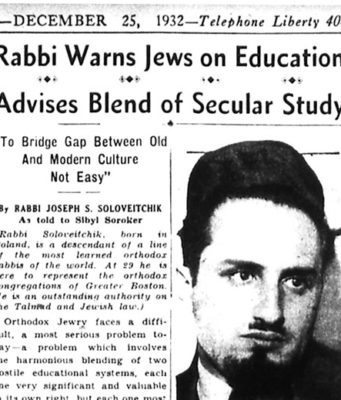
William Kolbrener offers insight into the intellectual underpinnings of the Rav's 1932 interview recently re-published by The Lehrhaus.
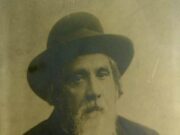
Rabbi Meir Simcha Cohen of Dvinsk: A Centennial Reappraisal
R. Meir Simcha Cohen of Dvinsk, the legendary author of Meshekh Hokhmah and Ohr Sameiah and early-20th century community leader, passed away exactly one century ago. In honor of this centennial, Chaim Oscar Jacob reappraises the legacy of R. Meir Simcha.


 Site Operations and Technology by The Berman Consulting Group.