



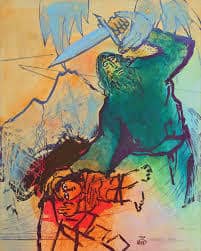
What Could (and Couldn’t) the Rabbis Do?
What sort of powers did Hazal have in the first century? Ari Lamm wonders.

The Soul of Man Under Postmodernism: Further comments on Rav Shagar’s contribution
Shalom Carmy
The last couple of weeks have brought two worthwhile assessments of Rav Shagar’s Faith Shattered and Restored: Judaism in the Postmodern Age, Matt Lubin’s...

Odysseus vs. Avraham: What An Essay Written In Exile Teaches About Teshuva
Joe Wolfson explores what a comparison between Homer and the Bible can teach us about Teshuva.

Aesopian Language in the Holocaust Writings of the Aish Kodesh of Piaseczno
The Hasidic work, Aish Kodesh, under the scholarly microscope, by Henry Abramson.

Rav Yehuda Amital and the Secret of Jewish Continuity
In commemoration of Rav Amital's seventh Yahrtzeit, Shlomo Zuckier shares Rav Amital's teachings on Jewish continuity, in Derasha form.

On Subjectivity and Pluralism: Sparks of Rav Shagar’s Thought
Udi Dvorkin offers a plea to take Rav Shagar at his full value, which means reading him in the original Hebrew.

Cultural Heritage in an Age of Genocide
Matthew Omolesky considers the importance of culture in the face of genocide.

God Is Other People
In a chapter adapted from his new book, Be, Become, Bless: Jewish Spirituality between East and West, Yaakov Nagen suggests based on the Zohar that the world endures when we see Godliness in another person's face.

Torah u-Madda Thirty Years Later
Elana Stein Hain explores how the frameworks offered by the humanities can mesh with our Torah-driven lives.

To Be, or Not to Be, a Holy People
Steven Gotlib reviews Eugene Korn’s To Be a Holy People: Jewish Tradition and Ethical Values, a book which asks hard questions about whether Halakhah can integrate with the demands of contemporary ethics.



 Site Operations and Technology by The Berman Consulting Group.