



A Time To Keep Silence, and A Time To Speak
Tragic events this past summer brought a wave of protests against racial injustice that shows few signs of abating. Yitzhak Grossman shares how rabbinic leaders in the United States and Israel have historically approached the tactic of protest, and explores what their views might mean for our current moment.

There Is Nothing New Under the Sun: A Reply to Gil Perl
In response to Gil Perl's Postmodern Orthodoxy, Gidon Rothstein asks for another look at Rabbi Aharon Lichtenstein and the limits of pluralism and what we consider "truth."
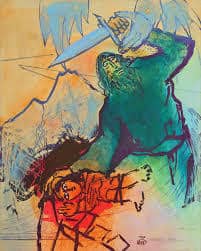
Surrender or Struggle? The Akeidah Reconsidered
Herzl Hefter provides critical perspective on a stream of Akeidah interpretation from Kierkegaard to the Rav

The Baptized Jew Who Had a Lot to Teach Us about Orthodox Judaism
Peter Berger, Daniel Korobkin argues, offers an important lens to understand Orthodox Judaism, its religious features and institutions.

Areivut as the Conceptual Core of the Rav’s Covenant of Fate and Beyond
Reuven Mohl explores Rav Soloveitchik’s understanding of Areivut in Kol Dodi Dofek.

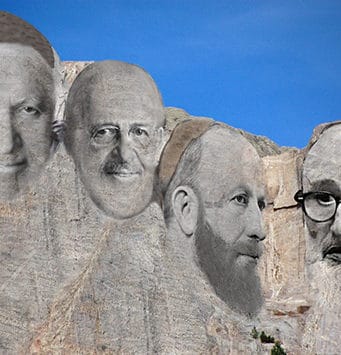
What is Teshuvah? Contrasting the Rav and Rav Lichtenstein
Meir Ekstein contransts Rav Soloveitchik’s and Rav Lichtenstein’s respective approaches to Teshuva.

“Our Bread of Isolation”
How can we respond to a Seder during which it is prohibited to host guests? Yitzchak Etshalom and David Block each offer unique tefillot to be recited at our Seder table this year.

Aspects of My Father’s Philosophy of Jewish History
This essay by Aaron Zeitlin—originally published in Yiddish in 1967 and translated here into English by Daniel Kraft—explores Aaron’s father Hillel Zeitlin’s approach to anti-semitism by way of the Book of Jonah.

The OU Paper: Three Lenses
Elli Fischer contributes to the Lehrhaus Symposium on the recent OU statement regarding female clergy.

Two Men Enter the Vacated Space ...
The death of Nadav and Avihu is difficult to explain, perhaps even impossible to approach through the medium of language. In a composition crossing the boundaries of original drashah, Breslov thought, poetry, visual art, and historical fiction, Akiva Weisinger renders the tragedy of Nadav and Avihu as a reflection of the Vacated Space beyond human language.




 Site Operations and Technology by The Berman Consulting Group.