

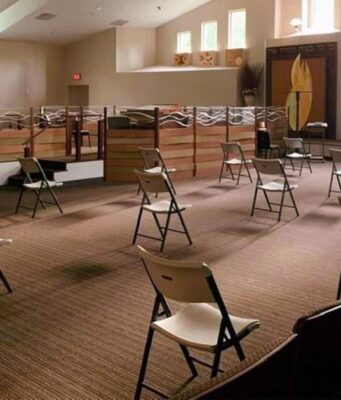


Subjective Experience in Halakhah: Music During Sefirah as a Case Study
Judah Kerbel explores how differing approaches to listening to music during Sefirat ha-Omer balance the appropriate role for subjectivity in halakhic decision-making.

Strength in This Time
Rachel Sharansky-Danziger limns the deep collective pain of October 7th on Israelis and forges a way forward amidst its intensity.

The Torah’s Song
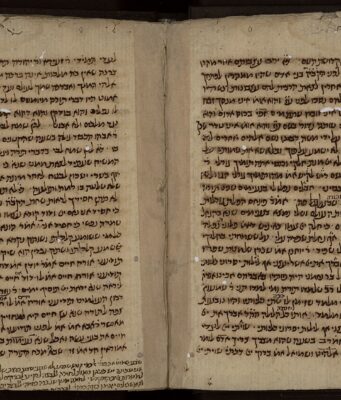
What is the meaning of a biblical song? Writing for Parshat Ha'azinu and in memory of her beloved cousin, Shira Shaindel Rodman (née Brilliant) z”l, Elana Stein Hain reviews Geula Twersky's theory of biblical poetry as portrayed in her 2022 book Torah Song.

Coming Undone: Vows and the High Holy Days
Why is the annulment of vows so central to the High Holy Days? Wendy Amsellem discusses this, with a timely message.

Old Mr. Kohen
In this poem, Julian Alper reminisces about the legacy of an old man who used to sit beside him in synagogue.

The Tabernacle as a Response to the Failure in the Garden of Eden
Michael Kurin analyzes the building and existence of the Mishkan as a form of spiritual redemption for the mistakes which took place in the Garden of Eden.
The Utility of Ambiguity
Dina Brawer explores "certainty" and "doubt" in rabbinic tradition.

The “Judeo-Christian” Tradition at Yeshiva
Yisroel Ben-Porat offers historical, hashkafic, and personal reflections on what’s often called the “Judeo-Christian” tradition and whether a Torah u-Madda outlook can embrace the study of Christianity.

Shechem, Place Of Brit
This week's Parashah introduces us to the city of Shechem. Tamar Weissman examines the various appearances of this city throughout Tanakh, explaining that while it is a city of rupture, it is also one of covenant and fraternity.

The Pauper’s Bread
"Ha lahma anya" is one of the first paragraphs recited at the Seder - and its strange features have been baffling commentators for centuries. Elli Fischer adds his reflections to the mix.




 Site Operations and Technology by The Berman Consulting Group.