



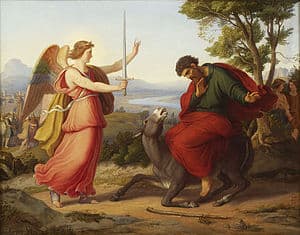
The Problem of Mosaic Authorship You Never Heard of: What is Parashat Bilam?
The Talmud speaks of a mysterious passage on Bilam authored by Moses. What is it?

The Sacrifice of Moses
David Fried argues that the question of Moses seeing the face of God reveals the tragic choice Moses made in choosing between his own spirituality and that of his people.
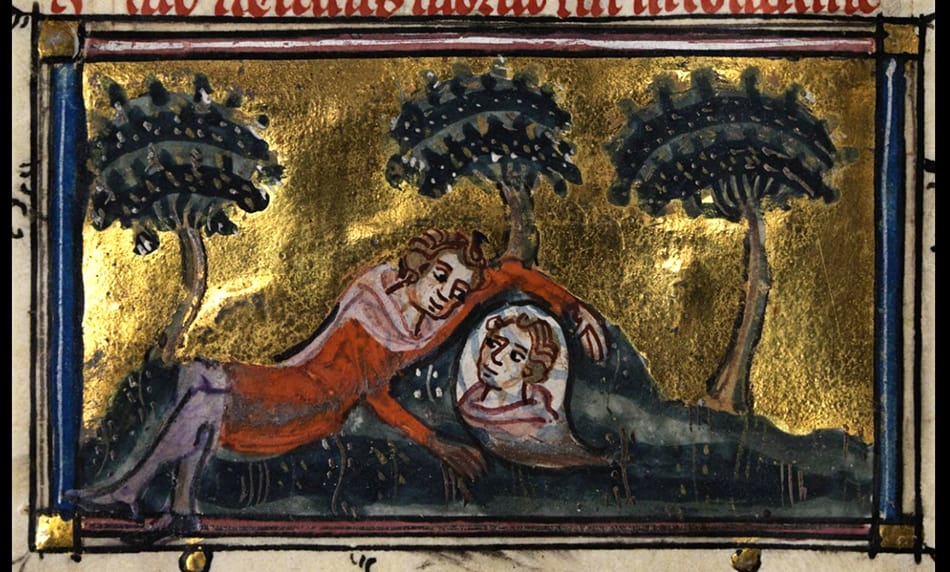
Narcissus and the Nazir
Tzvi Sinensky explores the Talmudic version of the Roman myth of Narcissus

The Pregnant Sotah: A Case Study in the Ethics of Abortion
Yisroel Ben-Porat grapples with whether the case of the pregnant Sotah has implications for the debates surrounding abortion.

Privilege and Power in the Torah
In this thought-provoking piece, Aharon Frazer traces the approach to power and privilege in the Torah from Genesis through Deuteronomy, and offers a framework for the ethical use of power in our own times.

Jonah and the Varieties of Religious Motivation
David Bashevkin articulates a religious educator’s perspective on why people become religious

The Voice and the Sword: A Meta-Narrative in Rashi
Dan Jutan locates a fascinating meta-narrative within Rashi's commentary.

Azariah de Rossi’s Fascination with the Septuagint
What inspired Azariah de Rossi to take a work that cut against the grain of rabbinic views of the Septuagint and make it accessible to his Hebrew-reading fellow Jews?

“For These Things I Weep”: Psychological Readings of Lamentations
In time for Tisha Be-Av, Marc Eichenbaum offers a meaningful new reading of Eikha using modern psychological concepts like grief, trauma, and narrative construction.

The “Judeo-Christian” Tradition at Yeshiva
Yisroel Ben-Porat offers historical, hashkafic, and personal reflections on what’s often called the “Judeo-Christian” tradition and whether a Torah u-Madda outlook can embrace the study of Christianity.




 Site Operations and Technology by The Berman Consulting Group.