




Adam’s Absence: Rereading the Primordial Sin
Yisroel Ben-Porat analyzes a Midrash offering non-misogynistic takes on the original sin.

The Nazir and the Priest
Yoni Nouriel examines an episode in the Talmud where Shimon Ha-Tzadik describes his encounter with an impure Nazir.

Was God Angry at Sarah?
Ben Greenfield
God isn’t angry with Sarah, when she laughs at the idea of birthing a child in her old age (Gen. 18:12-15). God is...

Pinhas’ Parts: Of Priests, Peace, and Disturbing the Piece
What was the covenant of peace God gave Pinchas? R. Shlomo Zuckier puts the pieces together to find out
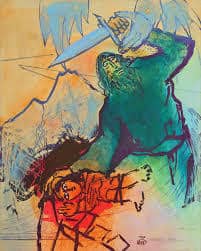
Surrender or Struggle? The Akeidah Reconsidered
Herzl Hefter provides critical perspective on a stream of Akeidah interpretation from Kierkegaard to the Rav

The Source of Joseph’s Dreams
Lazarre Simckes analyses Joseph’s dreams through the lens of trauma psychology.

A Tale of Two Rages: God Confronts Cain and Jonah
Dan Ornstein juxtaposes the narratives of Cain and Jonah and explores the motif of anger.

Reeding Between the Lines: Parallels Across the Yam Suf and Baby Moshe Narratives
Ben Greenfield examines the curious parallels between the stories of Moshe in the ark and the splitting of the sea.

Abraham’s “Diminished” Weeping: An Orthographic Note Inspired by Rabbi Jonathan Sacks Zt”l
There’s a miniature kaf at the beginning of the parashah. As Gabriel Slamovits explains, what the diminished letter says about how Abraham mourned for Sarah fits well with a prominent teaching of Rabbi Jonathan Sacks, zt”l.

A Pediatric Akeidah
Chaim Trachtman sees the Akeida as addressing the threat to human life, especially that of children, which is always inherent in the religious experience.




 Site Operations and Technology by The Berman Consulting Group.