




The Reward for Honoring Our Parents
Ezra Sivan challenges our understanding of the fifth commandment and all of Sefer Devarim.

Love Bends the Line
David Curwin
“Ahavah mekalkelet et ha-shurah.”
— Bereishit Rabbah 55:8
The sages used the above phrase “love bends the line” to describe Abraham’s actions before the akeidah:...
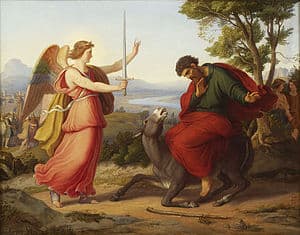
The Problem of Mosaic Authorship You Never Heard of: What is Parashat Bilam?
The Talmud speaks of a mysterious passage on Bilam authored by Moses. What is it?

Leviticus, Leonard Cohen, and the Paradox of Rest
Sarah Rindner asks what the Book of Leviticus, Leonard Cohen and the Liberty Bell all have in common.

From Master to Father: The Evolving Character of God in the Creation Narrative
Gavriel Lakser argues that the first two chapter of Genesis give us different insights into the character of God. The first chapter shows us a transcendent and omnipotent God, while the second shows us a God much more imminent and concerned for the lives of the creation. These two aspects are complimentary and mutually deepens our understanding of the human-God relationship.

Our Hands Did Not Shed This Blood?
Alex Ozar offers an in-depth reading of Eglah Arufah against the backdrop of current events.

A New Coffee-Table Humash is a Gateway to Academic Biblical Scholarship
As we begin to read Sefer Shemot, Yosef Lindell explores Koren Publishers' new series, The Tanakh of the Land of Israel, the first volume to use Rabbi Sacks’ Humash translation.

Team of Rivals: Building Israel Like Rachel and Leah
Ezra Sivan reexamines the relationship between Rachel and Leah.

The “Genesis” of Mary Shelley’s Frankenstein
Eileen Watts examines the similarities between Mary Shelley's Frankenstein and Rav Soloveitchik's Lonely Man of Faith.

Reclaiming Shepherd Leadership — For Our Leaders, For Ourselves
Drawing upon the teachings of the Piaseczner Rebbe, Rabbi Jonathan Sacks, and others, Yiscah Smith proposes a model for reimagining contemporary Jewish leadership on both the communal and personal levels.




 Site Operations and Technology by The Berman Consulting Group.