



Of Divine Nostrils and the Primordial Altar: A Pipeline of Sanctity
What does the makeup of the altar drainage pipes tell us about the nature of holiness? Shlomo Zuckier explores!

To Be a Stiff-Necked People
Is Jewish stubbornness a stereotype or a source of pride? In the Torah, it appears as a criticism, but also as a veiled praise for the people of Israel’s unique power of commitment. Zach Truboff highlights this strength in an application of the words of the Piaseczner Rebbe to our current moment of crisis.

Revelation Deferred but not Denied: the Golden Calf as a Rabbinic Origin Story
Amitai Bin-Nun provides a fresh and intriguing perspective on the story of the Golden Calf by reading it in light of the Talmudic passage in Menahot detailing an encounter between Moses and R. Akiba on Mt. Sinai where God is tying crowns to the letters of the Torah scroll.

Continuing the Trajectory: Rabbi Joseph B. Soloveitchik on King David’s Request
Lawrence Kaplan responds to AJ Berkovitz’s article on the many conflicting interpretations of a passage in Midrash Tehillim, highlighting two different approaches advanced by Rabbi Joseph B. Soloveitchik.

In Plain Sight: Jewish Masquerade from Clueless to the Rabbis
Why have stories of Jewish masquerade captured audiences since ancient times? In her latest, Malka Z. Simkovich explores the hidden meaning behind dressing up, from the Second Temple to '90s cinema.
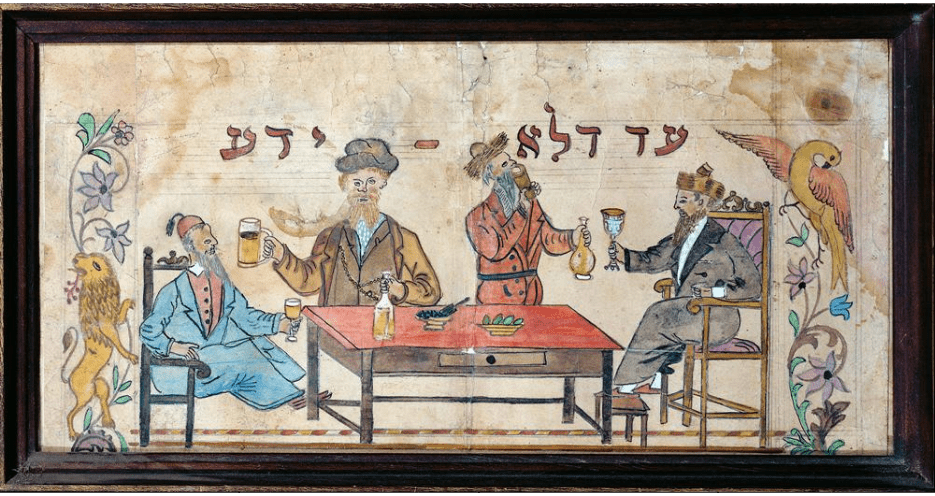
“Miracles Do Not Happen at Every Hour”: Purim Drinking as anti-Christian Polemic
Eliav Grossman examines the Talmud's account of drinking on Purim, reading it as directed at Christian texts and traditions.

The Philosopher King and the Poet Messiah: Hellenic and Hebrew Republics Compared
In this essay, written in honor of Yom Yerushalayim, Bezalel Naor explores the differing visions for the ideal state held by Plato and the Rabbis, Maimonides and Rabbi Nahman of Breslov.

Titus and the Tripartite Soul: A Lesson on Leadership and Jewish Survival
With a novel reading of Josephus and Gittin, Shana Schwartz proposes that the tragedy of the second hurban and the mystery of subsequent Jewish survival may be understood by reference to the physiological knowledge available in classical antiquity.

Aggadah as Midrash Halakhah: Methodologies and Hiddush in the Tanur shel Akhnai Narrative
In this piece, Rabbi Dvir Cahana and Rabbanit Shalhevet Cahana illustrate different methods of relating halakha and aggadah in Talmudic analysis through the lens of the Talmudic narrative of the Oven of Akhnai.

U-shemor Nafshekha: The Curious History of the (Supposed) Mitzvah to Maintain One’s Health
What does the Torah mean when it says to "guard your nefesh (soul)"? Lehrhaus editor David Fried reevaluates the common understanding of a Torah mandate for healthy living.



 Site Operations and Technology by The Berman Consulting Group.