



The Customs of Sefirah aren’t about Mourning. They are about Quarantine.
Ben Greenfield looks at the similarity between Sefirah observances and quarantine, and suggests a new way to understand the connection.

Beyond the Walls of the Synagogue: Prayer as a Virtue
With lyrical prose, Natan Oliff teaches us how to view prayer as a virtue and let it enter every aspect of our lives, making us into prayerful people.

Can a Court Really Ban Kapparot and Why it Matters for the American Jewish...
Michael (Avi) Helfand on a recent court case with implications for American Jews as members of both a religious and a minority community.

Making Seder Out of the Zoom Seder Controversy
Shlomo Zuckier surveys and analyzes the debate over Zoom Seders during coronavirus.

A “What If” Review: Hypothetical History, Science, and Halakhah
Yaakov Taubes examines three hypothetical “What if?” books and what they can teach us about history, science, and halakhah.

What Does Jewish Law Think American Abortion Law Ought To Be?
In light of the Supreme Court’s decision on Friday, Michael Broyde considers what American abortion law halakhah might prefer.

Catching up to Israel: A Yom Ha’atzmaut Reflection on the Post-Pesah Parshah Gap
Shmuel Hain comments on the leap year parshah-gap between Israel and the Diaspora.

Was the Sotah Meant to be Innocent?
For Parshat Naso, Lehrhaus editor Yosef Lindell compares three twentieth-century rereadings of the Sotah ritual that make the passage more palatable to modern audiences.
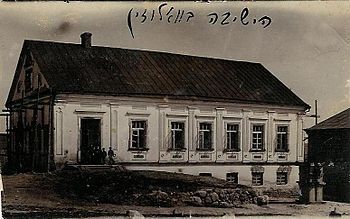
Rav Hayyim and the Love of Lernen
In 1927, Rabbi Boruch Ber Leibowitz wrote a poem, an ode to Rabbi Hayyim Soloveitchik of Brisk. Nati Helfgot provides the background and a translation.

From Madison Square Garden to MetLife Stadium: Transformations in Daf Yomi Siyumim
Elli Fischer looks back at 30 years of Daf Yomi celebrations.




 Site Operations and Technology by The Berman Consulting Group.