




Halakhic Egalitarianism and the Future of Orthodoxy
Last year, Rabbis Ethan Tucker and Micha'el Rosenberg released an updated edition of their influential 2017 work, Gender Equality and Prayer in Jewish Law. In this review, Steven Gotlib outlines the book's core halakhic arguments and assesses its reception by contemporary Jewish thinkers. He concludes with a consideration of the relationship between halakhic egalitarian practice and mainstream Orthodox Judaism, including potential paths that this relationship may take in the future.

Beyond the Walls of the Synagogue: Prayer as a Virtue
With lyrical prose, Natan Oliff teaches us how to view prayer as a virtue and let it enter every aspect of our lives, making us into prayerful people.

What is the Mishnah?: Discovering Judaism’s Philosophy of Harmony
Was the Mishnah intended to serve as a legal text? This traditional assumption, which forms a central premise of the halakhic process, has been challenged by more recent scholarship. Dovid Campbell engages with this scholarship and performs his own close reading of some of the Mishnah's more enigmatic digressions to propose his conception of the Mishnah as a corpus of "found philosophy."

The Downside of Digital Democratization: A Response to Zev Eleff
Sarah Rudolph responds to Zev Eleff's article on "Digital Democratization".

To Be, or Not to Be, a Holy People
Steven Gotlib reviews Eugene Korn’s To Be a Holy People: Jewish Tradition and Ethical Values, a book which asks hard questions about whether Halakhah can integrate with the demands of contemporary ethics.

Of Warriors and Wolves
In these difficult times for Israel, Aharon Frazer of Alon Shvut is thinking about the fundamental sanctity of human life and the long game. Can war and weapons really take us toward the messianic age?

The Many Hats of Heresy: Epikorsut and Minut in the Writings of the Sages
The epikorus and the min apparently represent two different kinds of heretic in traditional Jewish literature. Elisha Price traces the evolving meaning of each term in Hazal and medieval writings, clarifying the differences between the major genres of Jewish heresy and helping illuminate for us why they matter.
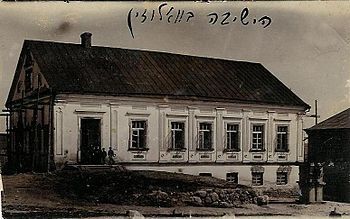
Rav Hayyim and the Love of Lernen
In 1927, Rabbi Boruch Ber Leibowitz wrote a poem, an ode to Rabbi Hayyim Soloveitchik of Brisk. Nati Helfgot provides the background and a translation.

Rabbi Joseph Hirsch Dünner (Ritzad): A (Mostly) Forgotten Pioneer of Academic Talmud
Isaac (Amichai) Roszler
Rabbi Joseph Hirsch Dünner (1833-1911), also known as Ritzad, was one of the first modern academic scholars of the Bavli, the Babylonian...

“Turn it and Turn it, for all is in It:” Ilana Kurshan and the...
The most enjoyable feature of the book is the brilliant and creative integration of the daily Talmudic folio Kurshan studies with experiences of her life.




 Site Operations and Technology by The Berman Consulting Group.