





The Rome not Taken: Pompey, Pigs, and the Implosion of Hasmonean Eschatology
Aton Holzer explores the changing nature of Jewish interactions with Rome from Maccabees through the Rabbinic period.

A Temple in Our Days: A Long-Overdue Conversation
Our traditional longing for the rebuilding of the Beit Ha-Mikdash elides uncomfortable questions about the dramatic differences between sacrificial worship and our current models of serving God. Meir Kraus argues that the time has come to engage in this difficult conversation, especially in light of the growing religious-political movement to restore Jewish presence on the Temple Mount. Kraus also proposes an “alternative vision” for a future Temple era.

“A Cruel Loss to Judaism in America”: Solomon Hurwitz, Torah u-Madda Day School Pioneer
Whom did the Spanish Flu take from our community 100 years ago? Zev Eleff introduces us to the forgotten legacy of Solomon Hurwitz, the founding principal of Yeshiva University's boys' high school, and a pioneer of Torah U-madda.

Letters To The Editor: A Further Response To Tzvi Goldstein On Centrist Orthodoxy And...
Tzvi Goldstein's recent piece on Centrist and Haredi Orthodoxy has generated many responses from our readers. Today we share a response from Chaim Goldberg, who vigorously argues that the greatest pillar for contemporary Haredi ideology is not Ramhal's Mesilat Yesharim but Rav Hayyim Volozhin's Nefesh Ha-Hayyim.

Judaism and Christianity: A Star-Crossed Affair?
Steven Gotlib reviews Eugene Korn’s book on the future of Jewish-Christian relations.
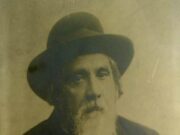
Rabbi Meir Simcha Cohen of Dvinsk: A Centennial Reappraisal
R. Meir Simcha Cohen of Dvinsk, the legendary author of Meshekh Hokhmah and Ohr Sameiah and early-20th century community leader, passed away exactly one century ago. In honor of this centennial, Chaim Oscar Jacob reappraises the legacy of R. Meir Simcha.

Jewish Responses to the Forgiveness Paradox
Is true forgiveness possible? Michael Kurin explores the doubts raised by prominent twentieth century philosophers and considers how Jewish tradition offers a radically different conception of repentance and forgiveness, one that enables people to alter their reality vis-à-vis God and one another.

Torah u-Madda’s Moment
Stu Halpern weighs in on the eternal wisdom Torah u-Madda offers the world during the fraught times in which we live.

The Modern Orthodox Vote and the Episcopalian Turn
Why do Orthodox Jews vote the way they do? Zev Eleff builds a case, using some unconventional data.

Shabbat on the Lower East Side Through the Prism of an Early American Posek
Oran Zweiter
The first collection of she’elot u-teshuvot (rabbinic responsa to communal queries) printed in the United States, Ohel Yosef by Rabbi Yosef Eliyahu Fried...


 Site Operations and Technology by The Berman Consulting Group.