




Letters to the Editor: Raphael Jospe and Zach Truboff
Raphael Jospe and Zach Truboff write regarding recent articles that have driven conversation.

A Night of Watching in the House of the Rav
Bezalel Naor translates and contextualizes a poem by Pinchas Peli about the home of Rav Kook.

Do I Really Love Myself?: Erich Fromm Meets the Rebbe of Warka
The masters of hasidut and psychoanalysis both arrived at a counterintuitive understanding of human nature, according to which narcissism is a reflection of self-hate rather than self-love. Admiel Kosman traces this idea as it appears in the works of Erich Fromm, the Rebbe of Warka, and Martin Buber, focusing on the commandment to love one's neighbor as a behaviorist correction.
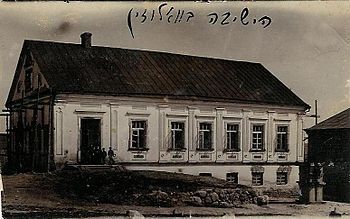
Rav Hayyim and the Love of Lernen
In 1927, Rabbi Boruch Ber Leibowitz wrote a poem, an ode to Rabbi Hayyim Soloveitchik of Brisk. Nati Helfgot provides the background and a translation.

With Liberty and Presents for All
Through an analysis of Hanukkah ads, Yael Buechler explains how Yiddish newspapers used the Old Country language to acculturate Jews to the New Country.

Rejoicing at the Downfall of Enemies: From Ancient Egypt to Modern Israel
The propriety of celebrating the downfall of enemies presents a complex web of questions and seemingly contradictory Jewish texts. Michael Kurin makes sense of this subject and proposes a framework for applying it to matters of Israeli public policy.

How Mendelssohn’s Torah and Philosophy Converge: A Study of “Anokhi”
How do Moses Mendelssohn and Revelation jibe? Judah Kerbel offers some perspective.

Revisiting Mendelssohn’s Living Script
Tzvi Sinensky responds to Lawrence Kaplan and continues the discussion on Mendelssohn and Jewish law.

Halakhic Poet? Translating the Rav for a Generation that ‘Knew not Joseph’
Aryeh Klapper with some new translation-stylings of Rabbi Joseph B. Soloveitchik's Halakhic Man.

From Burning Candles to ‘Burning’ People
In honor of Hanukkah, Admiel Kosman considers literary and aggadic traditions that depict holy people as burning flames or sources of light. He proposes that these traditions be read in light of Martin Buber’s insight regarding the dialogical personality.




 Site Operations and Technology by The Berman Consulting Group.