



Titus and the Tripartite Soul: A Lesson on Leadership and Jewish Survival
With a novel reading of Josephus and Gittin, Shana Schwartz proposes that the tragedy of the second hurban and the mystery of subsequent Jewish survival may be understood by reference to the physiological knowledge available in classical antiquity.

A Response to Moshe Krakowski on YAFFED and Haredi Jewish Education
In a widely-circulated article published in City Journal, Moshe Krakowski objected to the work of YAFFED, an organization that works with government officials to require higher standards of secular education in Hasidic schools. Here, Hannah Lebovits and Yoel Finkelman respond passionately to a number of Dr. Krakowski's contentions.

What’s Divine about Divine Revelation?
Responding to Tamar Ross’s article from two weeks ago, Steven Gotlib argues for a more traditional understanding of Divine Revelation.

The Simple Judaism of a Rosh Yeshiva-Novelist
In a continuing series on great, modern Israeli thinkers, Joe Wolfson explores the powerful themes in a novel by Rav Haim Sabato.

Making Jewish Education Affordable
Jay Kelman offers his thoughts on solving the tuition crisis

Reclaiming Dignity Reviewed
How successful is the new book, Reclaiming Dignity: A Guide to Tzniut for Men and Women, at setting forth a new Torah-based vision for modesty? Laurie Novick offers a careful review, carefully considering both the personal essays and halakhic/hashkafic analyses set forward in this important work.

Imagining Ourselves Into the Beit Midrash
Sara Tillinger Wolkenfeld offers a reflection on the role of imagination in bringing about the recent women's Siyyum ha-Shas.

Saiman’s Halakhah: Rabbinic Law as Culture
Suzanne Last Stone reviews Chaim Saiman's Halakhah: The Rabbinic Idea of Law.

Anonymous Leadership: The Emotional Drama in Ishay Ribo’s Seder ha-Avodah
Shira Hecht-Koller and Aaron Koller explore the worship of the Kohen Gadol through the voice of Ishay Ribo.
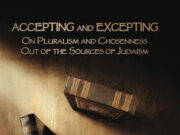
Can there be Pluralism without Relativism?
Can our humility about the possibility of knowing truth help us to achieve a principled pluralism? Steven Gotlib examines Raphael Jospe’s argument and responses to it in this review of Accepting and Excepting.




 Site Operations and Technology by The Berman Consulting Group.