



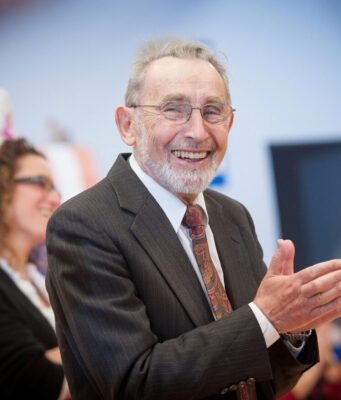

The Modern Orthodox Women’s Agenda, the Eighties, and Bottom-Up Opposition
Zev Eleff tells the story of "Orthodox women's issues" in the 1980s and its impact on today's religious scene.
Halakhic Egalitarianism and the Future of Orthodoxy
Last year, Rabbis Ethan Tucker and Micha'el Rosenberg released an updated edition of their influential 2017 work, Gender Equality and Prayer in Jewish Law. In this review, Steven Gotlib outlines the book's core halakhic arguments and assesses its reception by contemporary Jewish thinkers. He concludes with a consideration of the relationship between halakhic egalitarian practice and mainstream Orthodox Judaism, including potential paths that this relationship may take in the future.

Why Are There So Many “Manels” in Modern Orthodoxy?
Today we feature an exchange on the so-called "manel" phenomenon. We want to hear from you: If a man is asked to sit on an all-male panel, should he refuse on principle?

American Orthodox Jews Can and Should Care About Whether Liberal Judaism Thrives
Roberta Kwall weighs in on the state of non-Orthodox Judaism and how it affects Orthodoxy.

Why Pandemics Happen to Good People
What theological language can we use to describe our current pandemic moment? In an excerpt from his forthcoming book, Jeremy Brown takes scope of the ancient and modern notions of plague theodicy and reviews some ideas from the 2021 National Jewish Book Award Winner Torah in a Time of Plague.

Of Warriors and Wolves
In these difficult times for Israel, Aharon Frazer of Alon Shvut is thinking about the fundamental sanctity of human life and the long game. Can war and weapons really take us toward the messianic age?

A Call for Order: Maimonides and the Mishnah
Yaakov Taubes explores the background to Maimonides’s explanation for how the Mishnah is ordered.

The Tension that is Tanakh
Yaakov Beasley looks at Hayyim Angel's scholarship and evaluates it as an exemplar of Modern Orthodox Bible study.

Restoring the (Recitation of) Korbanot
Pressed for time, people often skip reciting the korbanot section of the morning prayers. With the High Holidays approaching, Judah Kerbel makes the case that the korbanot are far more central and halakhically significant to our prayers than we often realize.

The Source of Faith is Faith Alone
Rabbi David Wolkenfeld explores the meaning of faith in this review of Rabbi Chaim Jachter's Reason to Believe




 Site Operations and Technology by The Berman Consulting Group.