




Insanity and Hope
Warren Zev Harvey reflects on the pain and fear of Israel’s current moment, finding unexpected hope in R. Joseph Kaspi’s anti-deterministic theory of history. The essay was originally published in Hebrew and translated by the author.

Yom Yerushalayim: On Not Yet, Always Already, and the [Im]possibility of Crossing Over
Aton Holzer reflects on Jerusalem and Zionism.

Letters to the Editor: A Response to David Polsky’s “Reading Tragedy in Gittin and...
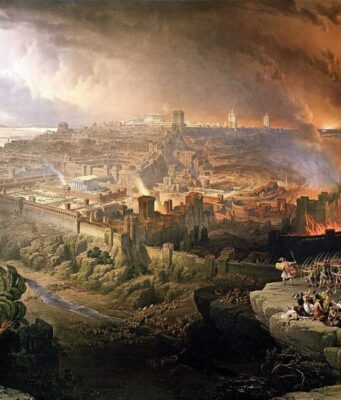
R.A. Alpert argues that the differences between Hamas and the Zealots outweigh the similarities.

Is Liberal Zionism Dead?
Steven Gotlib reviews Shaul Magid’s new, provocative book about a contemplated “counter-Zionist” future for Israel.

Capra Dei, or Had Gadya: Isaiah 53 and Jewish Redemption
Aton Holzer offers a novel interpretation of Isaiah 53 based on current events in Israel.

A Philosophical Reflection on the Halakhification of Warfare
Alex Ozar explores wartime law in the Rambam.

My War Diary
This war diary, presented by Susan Weingarten, relates her experience in a kibbutz on the Gazan border on October 7th and the days following her return to Jerusalem after the Hamas massacre.

Thoughts on Aliyah and the Akeidah from Israel at war
Alan Jotkowitz looks at the current situation in Israel through the lens of modern interpretations of the Akeidah.

Living in an Old Book with Poet Haim Gouri (1923-2018)
Wendy Zierler interprets a 2015 poem by the late Haim Gouri, reflecting on the challenges of aging, and on the complex and often mournful relationship between the Jewish people, their history, and their literature.

Letters to the Editor: Raphael Jospe and Zach Truboff
Raphael Jospe and Zach Truboff write regarding recent articles that have driven conversation.



 Site Operations and Technology by The Berman Consulting Group.