


This was wholly unexpected and life-changing. Here was one of the leaders of the Jewish world taking time—considerable time—to listen to an unknown undergraduate student from thousands of miles away and speak to him as if he mattered, as if he could make a difference.
—Chief Rabbi Jonathan Sacks, 2014[1]
Introduction
Rabbi Jonathan Sacks frequently acknowledged[2] the significant influence of the seventh Lubavitcher Rebbe, Rabbi Menachem Mendel Schneerson, on his precipitous journey: from a brilliant yet unassuming student of philosophy at Cambridge University to Chief Rabbi of the British Commonwealth—and his subsequent elevation to the role of respected Jewish thinker, moral philosopher, and educator to an indebted global audience.
This essay documents the circumstances that facilitated the unique interaction between R. Sacks and R. Schneerson and records R. Sacks’s reflections on R. Schneerson’s influence on his trajectory. Though R. Sacks—with characteristic humility—referred to himself in his reflections as “an unknown undergraduate student,” the special guidance that he received from R. Schneerson over several decades is indicative of the exceptional gifts of intellect, empathy, and leadership that R. Sacks possessed.
Early Days: Cambridge and Lubavitch House
In the early 1960s, Dayan Isidor Grunfeld[3] delivered a weekly Torah class in Stamford Hill, London, for teenagers from Orthodox homes.[4] At that time, he approached Rabbi Faivish Vogel—the executive director of Lubavitch, Great Britain—for a copy of the newly published English-language Tanya,[5] explaining that he wished to present it to one of his students who “has spiritual yearnings, and this is the only way I can satisfy him.” Dayan Grunfeld conveyed that the student was none other than a teenage Jonathan Sacks.[6]
The first formal contact between R. Sacks and the Habad-Lubavitch movement of Great Britain took place in early 1968. In his capacity as president of the Cambridge University Jewish Society,[7] twenty-year-old Jonathan Sacks was contacted by Rabbi Shmuel Lew,[8] an emissary of the Lubavitcher Rebbe to Great Britain who was responsible for Habad student and youth activities, with a view to organizing a shabbaton at Cambridge University on Shabbat Parashat Mishpatim, February 24 of that year. In the course of that shabbaton, R. Sacks and the participating Cambridge students were introduced by the delegation[9] to fundamental aspects of Habad philosophy and Habad melodies. Both of these aroused the keen interest of Jonathan Sacks, given his advanced study of philosophy at Cambridge[10] and his deep appreciation of music.[11] R. Sacks subsequently wrote to Rabbi Lew that he had been very impressed by the shabbaton and was motivated to visit London, to further explore with both R. Lew and R. Vogel, the concepts of Habad philosophy to which he had been introduced at the Cambridge shabbaton.[12] At this time, R. Sacks was deeply captivated by the profundity of Habad philosophy and particularly enthralled by Habad niggunim or wordless melodies—at times joyous and ecstatic and often pensive and yearning—which were sung at the Shabbat tables of both R. Lew and R. Vogel.[13] This relationship was cemented in the spring of 1968, when a special “Encounter with Habad” program for university students occurred as part of the dedication of Great Britain’s new Lubavitch Community Centre.[14] The keynote address to this encounter with students was delivered by the guest scholar-in-residence Rabbi Zalman I. Posner,[15] a noted American Habad scholar handpicked for this event by R. Schneerson. Following R. Posner’s address, R. Sacks rose to pose a very complex philosophical question that took fifteen minutes for him to enunciate. Humorously, Posner gave a one-word reply: “Yes.” The audience was stunned by Jonathan Sacks’s question, which revealed for the first time to a wide audience his profound intellectual acumen. At the conclusion of the event, R. Posner and R. Sacks engaged in a brief philosophical discussion.
1968: Visiting the USA
The same year, Jonathan Sacks undertook a trip to the USA to survey Jewish leadership and trends in American Jewry.[16] To this end, he purchased a Greyhound “Student’s Ninety-nine Days for $99” bus ticket, which provided unlimited travel within the USA. In the course of this assignment, he interviewed Jewish leaders, including the preeminent figure of American Modern Orthodoxy, Rabbi Joseph B. Soloveitchik.[17] Others interviewed by him included Abraham Joshua Heschel, who was formally aligned with the Conservative Movement; leaders of Reform Jewry in Cincinnati; as well as “secular” leadership that included Nahum Goldmann.[18] He presented a series of questions about leadership to all these leaders. In light of his prior encounters with Habad in Great Britain, and because most of his interviewees recommended that he meet R. Schneerson, he set his mind to arranging an interview with the Lubavitcher Rebbe.
On a Friday afternoon, R. Sacks arrived unannounced at the office of R. Schneerson’s secretariat in Brooklyn, seeking Shabbat accommodations. He was made aware that a private audience with R. Schneerson was not immediately available but could be several weeks away. Fortuitously, visiting the same office at that time was a Habad yeshiva student from Great Britain named Chaim Farro. Noting their shared English background, R. Schneerson’s secretary, R. Binyamin Klein, introduced them. Meanwhile, Farro invited R. Sacks to reside at his dormitory[19] for Shabbat and beyond, as Farro and several yeshiva students were soon leaving for Habad’s summer Merkos Shlihut program where they would serve as “roving rabbis” visiting isolated Jewish communities over the summer months.[20] Farro delegated the delivering of shiurim over Shabbat to three London-born yeshiva students: Daniel Goldberg,[21] Benjamin (Binyamin) Gabriel Cohen,[22] and Yehudah Leib Ives.
R. Goldberg recalled Sacks being exceptionally receptive to the Hasidic philosophy he was teaching him. Because he enjoyed the study so much, particularly the Hasidic philosophy, R. Sacks decided to extend his stay in Crown Heights and postpone his travels in order to study more. Even after he resumed his travels, he was constantly awaiting confirmation of his meeting with R. Schneerson for which he would return to New York. During this extended stay in Brooklyn, R. Sacks continued to study Hasidic philosophy[23] every weekday morning and evening with Daniel Goldberg; he was introduced to the study of Talmud by R. Binyamin Cohen, and to halakhic texts with Yehudah Leib Ives.
When it was time to resume his assessment of the American Jewish community, his Habad “tutors” arranged for Habad rabbis and academics to host his accommodations. Several of them specialized in philosophy, R. Sacks’s area of interest and expertise.[24] For example, during his visit to Montreal, he was hosted by Habad’s R. Herschel Feigelstock.[25] In Toronto, he interacted with Habad rabbi and professor of philosophy at Humber College, R. Immanuel Schochet;[26] and in London, Ontario, he stayed at the Habad home of professor of philosophy, Dr. Yitzchak Block.[27] Additionally, he traveled from Ontario to Detroit with Rabbi Yitschak Meir Kagan.[28] On his return to New York, R. Sacks constantly remarked to Goldberg on just how impressed he had been by these individuals, particularly by the modesty of Professor Block.[29] R. Sacks also remarked to Goldberg that, having now studied early Hasidic texts, he had “discovered” the origins of many of the refreshing ideas so beautifully enunciated in the writings of Heschel.[30]
Sacks was particularly struck by the informal Hasidic farbrengens [gatherings] that he witnessed in Crown Heights, where a revered mashpia [mentor] would speak to legions of Hasidic teenagers who sat visibly enthralled by the mentor’s every word. Though unable to follow the intricacies of these highly nuanced Yiddish-language communications, R. Sacks was amazed that they extended for several hours—and that an individual had so much content to deliver for such a duration that held the attention of his listeners over this time.[31] In early July, Rabbi Faivish Vogel visited New York from London and informed Habad residents that the unassuming young man they were hosting, who had said nothing of his own achievements, had attained the highest scores in philosophy at Cambridge University in the last decade. Jonathan Sacks returned to his family in California, where he received confirmation of his forthcoming yehidut [private meeting] with R. Schneerson—which was scheduled for Thursday night, August 22.[32] R. Sacks then returned by Greyhound bus for the 72-hour journey to New York.
The First Private Audience
R. Yehudah Leib Groner, R. Schneerson’s secretary—who was responsible for the yehidut appointments—had by now heard of Jonathan Sacks’s intellectual gifts and was concerned that he might want to engage R. Schneerson in lengthy late-night discussions. He explained to R. Sacks that R. Schneerson had the practice of not eating during the day before a nighttimeyehidut and that he would again not eat on the day after the meeting, as he would be visiting the Ohel [the resting place of his predecessor]. He therefore allocated to him the last yehidutof the night but urged a ten-minute limit to the meeting.
As was customary, R. Sacks had submitted his questions in writing prior to the yehidut. In one of his questions, R. Sacks included an encapsulation of complex philosophical arguments for the existence of God and sought R. Schneerson’s input relative to each argument.[33] It has been suggested[34] that the complexity of his question alone immediately revealed to R. Schneerson the exceptional, advanced intellectual sophistication of the questioner. R. Sacks later recalled,[35] “I asked him all my intellectual, philosophical questions; he gave intellectual, philosophical answers, and then he did what no one else had done: he did a role reversal.” R. Schneerson had answered the questions quite rapidly, and then he asked R. Sacks questions of his own. R. Sacks, who had hitherto assumed that he was conducting an interview, considered this to be “an extraordinary moment.”
R. Schneerson asked him, “How many Jewish students are there at Cambridge, and how many participate in the activities of its Jewish Society?” He replied that, of an estimated one thousand Jewish students, only one hundred attended the Jewish Society’s activities, and that they were losing ninety percent of the Jewish students. R. Schneerson persisted with his questioning: “And what are you doing about it, and what are you doing to enhance Jewish life in Cambridge?” R. Sacks, who once confided to R. Lew that his dream in life at that time had been to sit uninterrupted and write, had not expected this, as he had never considered himself to be a leader or someone involved in “reaching out.” He then realized that R. Schneerson was challenging him to become a leader—to do something to improve Jewish life at Cambridge rather than complaining about the situation. R. Sacks later recalled his attempts to reply to this challenge in defense of his situation:
…I used the phrase—a classic in the vocabulary of excuse-making—“In the situation in which I find myself….” The Rebbe allowed the sentence to get no further. “No one ever finds himself in a situation,” he said. “He places himself in a situation. And if he placed himself in this situation, he can place himself in another situation….”[36]
The yehidut lasted for twenty minutes rather than the allocated ten,[37] but afterward R. Sacks told others[38] that he felt the meeting “hadn’t really ended” and that it would continue at some future time.
R. Sacks later referred to the yehidutas “a meeting that changed my life.”[39] Concerning this first encounter he commented:[40]
This was wholly unexpected and life-changing. Here was one of the leaders of the Jewish world taking time—considerable time—to listen to an unknown undergraduate student from thousands of miles away and speak to him as if he mattered, as if he could make a difference.[41]
R. Sacks recalled, “That… was when I realized what I have said many times since: that the world was wrong. When they thought that the most important fact about the Rebbe was that here was a man with thousands of followers, they missed the most important fact: that a good leader creates followers, but a great leader creates leaders.”[42]
A telling indication of the profound impact that the 1968 encounter had on R. Sacks’s life is found in an essay he penned five decades later, a year before his passing, entitled “The Greatness of Humility.” After explaining that Judaism introduced to the ancient world its “radically new idea” that a king should be humble and that humility is a virtue for all, R. Sacks continued:
…One of the most humble people I ever met was the late Lubavitcher Rebbe, Rabbi Menachem Mendel Schneerson. There was nothing self-abasing about him. He carried himself with a quiet dignity. He was self-confident and had an almost regal bearing. But when you were alone with him, he made you feel that you were the most important person in the room. It was an extraordinary gift. It was “royalty without a crown.” It was, in the words of Spencer W. Kimball, “greatness in plain clothes.” It taught me that humility is not thinking you are small. It is thinking that other people have greatness within them.[43]
Post-Yehidut Interactions
R. Sacks stayed on in Crown Heights and continued his Torah study there with the three students mentioned above. Often, when R. Schneerson entered the synagogue for prayers, he noticed the young student and smiled at him knowingly. Inquisitive bystanders, surprised by this “special attention,” were told of his exceptional academic achievements, and he soon became “a personality” among the throng.
Another means of communication with R. Schneerson at that period was to approach him at a public farbrengen while niggunim were sung between his sihot. On more than one occasion, R. Sacks took advantage of this opportunity to “continue their conversation.”[44]
We know that, in one such interaction, R. Sacks asked R. Schneerson how he could reconcile his love for art, music, and literature with Judaism, since each of these domains has elements that can be antithetical to—and sometimes forbidden by—Halakhah. R. Schneerson replied that through R. Sacks’s acquisition of a deeper experience of Judaism and through his study of Hasidic texts, he would come to experience a deeper appreciation and a deeper dimension to his love of art, music, and literature. Moreover, this added dimension would amply compensate for the absence of those elements that are precluded by Halakhah.
It was at this time that R. Sacks would ask Habad hasidim to sing for him the most revered of all Habad niggunim, known as the Alter Rebbe’s niggun.[45] When they explained that Habad custom limits its singing to special events such as under the huppah at the start of a wedding ceremony, he would often ask Habad adherents to take him to Habad wedding ceremonies, which they did.
At R. Schneerson’s farbrengen on the Shabbat before his scheduled return to England, he approached R. Schneerson during the niggunim to express appreciation and bid farewell. Surprised, R. Schneerson asked him why he was leaving. He answered, “I have to get back to Cambridge; the term is beginning.” R. Schneerson replied, “But the Cambridge term does not begin until October.” R. Sacks later commented, “I never knew then—I still don’t know today—how he knew it, but he was right.”[46] He said to me, “I think you should stay for Rosh Hashanah.” R. Sacks delayed his departure, and he later recollected:
…I heard the Rebbe on Rosh Hashanah blow shofar. Quite the most remarkable experience I ever had. The purity of those notes, the sight of all the hasidim hanging from every surface, trying to catch sight of R. Schneerson blowing shofar. And I heard a sound in which heaven and earth touched. And the echoes of that shofar have stayed with me ever since. That was the challenge he threw down. A challenge to lead.[47]
Return to Cambridge and Study in Kfar Habad, Israel
Upon his return to Cambridge, R. Lew started a fortnightly shiur in R. Sacks’s dormitory room on campus. Given R. Sacks’s exceptional abilities and newly acquired knowledge of Hasidic philosophy, R. Lew would first study privately with R. Sacks for an hour before the time arranged by R. Sacks for the other students to join the session.[48] Back in England, reflecting on his private meeting with R. Schneerson, R. Sacks later told R. Lew that “meeting leaders other than the Rebbe, one could sense their greatness; in the case of R. Schneerson, one could sense that his focus was on making you realize your own greatness.”
R. Sacks disclosed[49] that after he graduated from Cambridge approximately one year after his yehidut, “that meeting was still with [him]” and prompted him to proceed to yeshiva in Kfar Habad, Israel, rather than proceeding directly to a career.
Even though, when addressing the Convention of Shluhim in 2011, he described this period in yeshiva as “a wonderful experience,” it was not without its challenges. Because of his exceptional maturity and his now finely honed approach to diligent, extremely organized study, living in the same dormitory as sixteen-year-olds who might stay up late at night did not enable the silence needed by one whose application to scholarship was absolute. Later, he would often compare the all-pervasive silence of the university library to the raucous beit midrash of a yeshiva, where study partners literally bellow at one another in spirited debate over the true meaning of a Talmudic text. This culture initially shocked him and required adjustment on his part. Later, he would explain that this commotion was indicative of a Torah scholar’s feeling and enthusiasm for the matter under analysis. He likened the sea of black suits and white shirts to the Midrashic concept of the Torah written as “black fire on white fire,”[50] where the students’ enthusiasm was represented by the fire.
The dean of the English-speaking section of Yeshivat Tomchei Tmimim of Kfar Habad, Rav Shneur Zalman Gafne, recalled Sacks’s rapid advancement in Talmudic studies, noting that very soon after his arrival he was capable of translating and deciphering the meaning of comments by Rashi on the Talmud. R. Gafne related, “Very often he would independently pose a question to me that was perplexing him; that same question had been raised centuries before by one of the great Talmudic commentators.”[51]
During his time in Kfar Habad, R. Sacks gave serious consideration to totally immersing himself in Habad teachings, with a view to becoming a dedicated hasid. However, he realized that this would entail him becoming a different person from the Orthodox academic—with a strong admiration for Habad teachings—whose return to England was awaited by his future wife (and future rebbetzin), Elaine.
R. Lew observed a significant change in him upon his return to London in 1970 after nine months at Kfar Habad. He would now accompany the Habad rabbis to a shabbatonas a speaker and contributor rather than as a listener and participant.
R. Sacks still felt that he had not done enough to meet R. Schneerson’s challenge to become a leader. So, he studied for semikhah at Etz Chaim Yeshiva and Jews’ College in London, qualified as a rabbi,[52] and thought that he was now ready to continue with the rest of his life. R. Sacks excelled in his semikhah studies and was the only student ordained by R. Noson Ordman to have scored 100 percent on his examination.[53]
Torah Studies: A Labor of Love
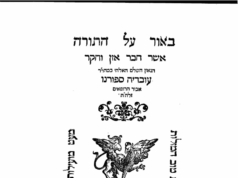
In response to R. Schneerson’s 1971 initiation of a “Campaign for Torah Study,”[54] R. Vogel sought to disseminate a weekly address by R. Schneerson in pamphlet form; he wanted R. Sacks to translate some of R. Schneerson’s Torah insights from his Likkutei Sihot, most of which were then inaccessible to the English-speaking public.[55]
As R. Sacks did not know Yiddish—the language in which most sihot were then published—the two arranged a weekly study partnership to review them. R. Lew would also be involved in this study with R. Sacks. For the next two years, R. Sacks would drive every week from his home in Hampstead Garden Suburb to either R. Vogel or R. Lew in Stamford Hill. R. Vogel recalled, “We both gained much from those weekly meetings at which we would study the sihot in depth, exploring their meaning and coming to final decisions about how to transmit them in terms comprehensible to the lay public. During our time together, R. Sacks would often point out the correct usage of certain English words or phrases and how to avoid unintended connotations. The following week he would return with the original address adapted and written up in flowing English and, after occasional correction, it would be distributed to friends and supporters of Lubavitch.” R. Aaron Dov Sufrin, director of education at Lubavitch Foundation of London, later sought and received R. Schneerson’s permission for the pamphlets to be compiled into a book.
The first edition of Torah Studies was published in 1986 by the Lubavitch Foundation.[56] After the book’s publication, R. Vogel sent R. Sacks a Lubavitch Foundation check for one thousand pounds in appreciation of his work. However, R. Sacks returned it, thanking him for the thought and declaring that it had been “a labor of love.”
In 2014, some forty years after engaging in this task, R. Sacks recalled translating Torah Studies:
When, under the impact of that first encounter [with the Rebbe], I eventually decided to study for semichah, I wanted to demonstrate my gratitude to the person who had led me in this direction. So I devoted much of my spare time that year, 5734, to translating some of the Rebbe’s sichot into English…. That was a transformative experience in itself. When you come to translate someone else’s words, you come to know their thoughts quite intimately…. In particular, I began to see how one theme ran like a connecting thread through many of his speeches—the idea of yeridah letzorech aliyah, a descent for the sake of an ascent. He was constantly engaged in what a psychotherapist would call “reframing.” Yes, the Jewish people had undergone a monumental tragedy during the Holocaust; yes, Jewish life as he found it in America when he became the Rebbe was in a weakened state. Assimilation ran high. So did intermarriage rates. But the Rebbe, with his profound belief in Divine providence, was convinced that descent is the beginning of ascent, disconnection is a call to reconnection and tragedy itself the prelude to redemption. That is how the Rebbe rescued hope and rekindled a fire that seemed almost to have died.[57]
1978: The Second Private Audience
In January 1978, R. Sacks met R. Schneerson for a second yehidut, which proved to be as life changing as the first. In his note to R. Schneerson, he set out three career options before him: (1) to pursue an academic career and ultimately become a professor at Cambridge; (2) to study economics and become an economist; or (3) to become a barrister.
Interestingly, R. Schneerson ignored these suggestions and spoke about the dearth of rabbis confronting Anglo Jewry. He urged him to “train rabbis” specifically “at Jews’ College,” adding that R. Sacks must himself become a congregational rabbi, so that his students would come hear him deliver sermons, stating, “You will give sermons, and they will learn from you.” Though initially astonished, as a rabbinic career was the furthest thing from his mind, R. Sacks respected R. Schneerson’s advice and relinquished his three ambitions. He indeed trained rabbis and taught in Jews’ College, eventually becoming its principal, while serving simultaneously as a congregational rabbi.[58]
Many years later, R. Sacks reflected:
Having given up all my three ambitions, having decided to walk in the complete opposite direction, a funny thing happened. I did become a fellow of my college in Cambridge. I did become a professor. In fact, this year I have three professorships: one in Oxford University and two in London University. I did deliver Britain’s top two economics lectures, the Mais lecture[59] and the Hayek lecture,[60] and the Inner Temple made me an honorary barrister and invited me to give a law lecture in front of six hundred barristers, the Lord Chancellor—the highest lawyer in Britain, with Princess Anne in attendance. You know, you never lose anything by putting Yiddishkeit first. And I learned something very deep: sometimes the best way of achieving your ambitions is to stop pursuing them, and let them pursue you.[61]
It is to be noted that R. Schneerson’s advice to R. Sacks ran contrary to what he advised many others[62] in similar situations. In most instances, he discouraged academics desirous of abandoning academia in order to assume rabbinic positions from doing so, suggesting that they could do more for the Jewish people in their chosen field than by serving as rabbis. It would appear that he believed R. Sacks would do more as a rabbi (and later as Chief Rabbi) than as a celebrated professor.
In accordance with R. Schneerson’s advice, R. Sacks would serve as a congregational rabbi in London for thirteen years[63] and lecture in Jewish philosophy and Talmud at Jews’ College. In May 1981, the Lubavitch Foundation of Great Britain organized the International Seminar on Jewish Mysticism at the Oxford Centre for Management Studies, featuring speakers R. Adin Steinsaltz, R. Zalman Posner, Professor Yitzchak Block, and R. Sacks. Besides delivering his own lecture entitled “The Practical Implications of Infinity,” R. Sacks was charged with putting questions to the visiting scholars.[64] An outgrowth of the seminar was the Kehot Publication Society’s 1989 publication of the 144-page book, To Touch the Divine: A Jewish Mysticism Primer, comprising essays from the symposium by R. Sacks, R. Posner, R. Schochet, Prof. Block, and R. Adin Even-Yisrael Steinsaltz.
After teaching for several years at Jews’ College, he became its principal in 1984 and oversaw the training of the rabbis for Anglo Jewry.[65]
A Doctoral Thesis
In that same yehidut of 1978, R. Sacks mentioned to R. Schneerson that he was working on his doctorate in philosophy. R. Schneerson encouraged him to write his thesis not on abstract philosophy but on a theme connected with the rabbinate and added that, on its completion, he would be interested in reading it. However, when he completed it several years later, he was reluctant to submit his 400-page thesis to R. Schneerson, considering the enormous volume of letters he received daily. R. Vogel urged him to nevertheless follow R. Schneerson’s request. Several weeks after sending a copy, he received a succinct, handwritten Hebrew letter in reply, indicating that R. Schneerson had read it. The thesis was entitled Rabbinic Concepts of Responsibility for Others: A Study of the Commandment of Rebuke and the Idea of Mutual Surety.
In his first comment, R. Schneerson made two technical observations which can perhaps be best understood in light of Hasidism’s emphasis on encouraging the latent positive potential in errant individuals, rather than focusing on the condemnation of inappropriate behavior. He first expressed his surprise and even disappointment that R. Sacks had chosen to utilize the harsh term “rebuke” to translate biblical verse Leviticus 19:17—“you shall admonish your fellow.” He was concerned the term might be misunderstood by many to imply rejection and dismissal of the unaffiliated.[66] R. Schneerson also pointed out that in contrast to the obligation to admonish, the mitzvah of “loving one’s fellow as oneself” (Leviticus 19:18) is a Torah obligation that applies even in a case of doubt, where one is required to err on the side of caution and employ love, notwithstanding the unlikelihood of its receptivity or reciprocation. Having made these inaugural observations, R. Schneerson further encouraged R. Sacks in his capacity as a rabbi and educator, rather than doing something that might inadvertently endorse the harsh approach of rebuke, to do its very opposite. He therefore urged him to publicly raise concern about the inappropriateness of the harsh attitude to the non-observant implied by the inappropriate translation of Leviticus 19:17 as “rebuke,” with its negative connotations.
R. Sacks derived the lesson from R. Schneerson’s comments that, even when we reprove others, our intention is not to reject or break them but to express our love for them. R. Sacks later told R. Vogel that he thereafter made this a central foundation of his own approach as a spiritual leader, and it became his “motto” throughout his life.[67]
In his comments, R. Schneerson also expressed surprise that R. Sacks’s thesis, which concentrated on the theme of Jewish unity and mutual responsibility as reflected in Jewish law, had omitted mention of the thirty-second chapter of Tanya, the chapter that analyzes the obligation of loving one’s fellow from a mystical perspective and with halakhic implications and unique insights.
At the time of receiving this reply, R. Sacks was initially puzzled by this reference to the thirty-second chapter of Tanya. While this chapter is a landmark in Jewish mysticism, R. Sacks had written his doctorate on the subject of Jewish law. He understood that both were about the same themes: collective responsibility, the imperative of love, and the command to remonstrate with our fellow Jew when we see him doing wrong. However, he reasoned that law is one thing, mysticism another. He had certainly included in his survey the halakhic work of R. Shneur Zalman of Liadi—his legal code, the Shulhan Arukh ha-Rav—and this contained important material for his subject, which he had duly cited and analyzed. But it had seemed to R. Sacks that mysticism lay beyond the terms of reference that he had set himself; and for that reason, he had excluded references to the Tanya. Upon reflection, R. Sacks later concluded:
The Rebbe was making a fundamental and far-reaching assertion, namely that we cannot understand even the law of collective Jewish responsibility without first grasping its basis in mysticism. There are some laws which are of their essence mystical in character. They are expressions of an irreducibly spiritual vision… I want to make explicit the remarkable line of thought at which I believe the Rebbe was hinting in his cryptic comment, for it is full of relevance to the task to which the Rebbe devoted his life.[68]
R. Sacks explained that R. Shneur Zalman was setting out the idea that all Jews are mystically united. He wrote:
Their bodies are separate but their souls are one. They share, as it were, a single collective spiritual substance. For those who live at the level of the body, ahavat Yisrael, love of fellow Jews, is a difficult command. But for those who live at the level of the soul, it is a natural emotion. Jews have in the deep structure of their consciousness a collective identity.[69]
1991: Appointment as Chief Rabbi
In 1990, Anglo Jewry was looking for a new Chief Rabbi, and it was clear that R. Sacks was one of the candidates. With the permission of his wife and children, he sought R. Schneerson’s advice—as he was unsure about his suitability for the job—setting out the advantages and disadvantages of the position. He concluded his letter by asking, “If they offer me the job, should I accept?” Using the typographical symbol that is used by proofreaders for “reverse word order,” R. Schneerson’s succinct reply changed R. Sacks’s question of “should I?” to the response of “I should.”[70]
As Chief Rabbi between 1991 and 2013, R. Sacks led a renewal of Jewish life in Great Britain. He launched innovative communal projects like Jewish Continuity, a national foundation for Jewish educational programs and outreach, and oversaw the growth of Jewish schools and the revitalization of Jewish community life.
Reflecting on his role as Chief Rabbi, he commented, “In that job I have tried to the best of my ability—if I succeeded, I don’t know—what I know the Rebbe would have wanted me to do: to build schools, to improve Anglo-Jewish education, to reach out, and to make not followers but leaders….”[71]
Global Promotion of Noahide Laws[72]
R. Sacks was described by King Charles III as “a light unto this nation” and by former UK Prime Minister Sir Tony Blair as “an intellectual giant.” In seeking to promote moral values, R. Sacks was a frequent and sought-after contributor to radio, television, and the press, both in Britain and around the world.
In reference to this endeavor, R. Sacks wrote:
There was a point in the 1970s and 80s, when the Rebbe developed a very interesting campaign … to reach out not just to Jews, but also to non-Jews. I realized that in my new position as Chief Rabbi I could do just that. So, I started broadcasting on the BBC, on radio, on television, writing for the national press. I wrote books read by non-Jews as well as Jews and the effect was absolutely extraordinary… The more I wrote the more they wanted to read, and you know what that experience told me—not only the wisdom, the vast foresight of the Rebbe in understanding that the world was ready to hear a Jewish message and that non-Jews respect Jews who respect Judaism.[73]
R. Sacks was referring to the global educational initiative formally launched by R. Schneerson in 1983[74] to promote a universal moral code by teaching and disseminating the seven Noahide Laws.[75]
In further pursuit of this goal, in 1990 R. Sacks delivered the Reith Lectures[76] on “The Persistence of Faith, Religion, Morality and Society in a Secular Age,” and, through books like The Dignity of Difference: How to Avoid the Clash of Civilizations, and in particular, Morality: Restoring the Common Good in Divided Times, he continued to teach universal ethics. A pervasive theme of R. Sacks’s communications was that Judaism can and must engage with the world. In his writings, he repeatedly demonstrated how Jewish values provide timeless instruction for the dilemmas faced by our society and world.[77]
Facing Retirement
After stepping down from the role of Chief Rabbi of the United Kingdom in 2013, R. Sacks discussed his future plans with his longtime mentor and friend, R. Lew. R. Lew shared with him the advice given by R. Schneerson to President Zalman Shazar when the president was hesitantly contemplating his imminent retirement after serving two terms as president of the State of Israel. R. Schneerson[78] had advised President Shazar that once free from the burdens of public office, he would be able to make those weighty contributions hitherto precluded by his engagement in official duties. In the course of that conversation, R. Sacks assured R. Lew that he had no intention of slowing down, likening his anticipated “acceleration” of activities to that of a car—previously constrained by the congested inner-city traffic—that leaves those speed limits behind as it proceeds to the swift, unencumbered travel of the open road.[79]
After stepping down as Chief Rabbi, in addition to his international traveling and speaking engagements and prolific writing, R. Sacks served as Professor of Judaic Thought at both New York University and Yeshiva University. He was also appointed Professor of Law, Ethics, and the Bible at King’s College in London and as Senior Fellow at the Raoul Wallenberg Centre for Human Rights. In 2016, he was awarded the Templeton Prize for work affirming life’s spiritual dimension. He was increasingly seen as a voice of moral clarity for both religious and secular audiences with his books providing his vast readership across the globe with plentiful inspiration.
Conclusion
Rabbi Sacks’s untimely passing on November 7, 2020 (20 Marheshvan 5781), at the age of seventy-two, left a world bereft of his towering intellect, his eloquent communication of Jewish values to the wider world, and his infusion of our generation with pride in its Jewish heritage.
R. Sacks himself once reflected, “At the three critical turning points in my life, the Rebbe was my satellite navigation system, showing me where to go and how. And though I didn’t always understand why at the time—in retrospect I see how extraordinary his advice was, and how wise.”[80]
In the introductory essay to his 2015 volume, Lessons in Leadership: A Weekly Reading of the Jewish Bible,[81] R. Sacks related in detail the course of his 1968 travels to America and Canada, and in particular, his meeting with R. Schneerson. About this book, and referring specifically to R. Schneerson’s advice to him, he wrote:
It is as a way of saying a belated thank you to him [R. Schneerson] that I wrote this book. One of the most important tasks of a leader is to encourage leadership in others. That is what I hope these essays do in some small way for you…[82]
In 1990, thirty years prior to his passing, R. Sacks had been interviewed on BBC Radio’s Desert Island Discs by its presenter, Sue Lawley. She asked him what singular musical item would accompany him “as most essential to his isolation on an imaginary desert island” (if only one item was allowed). In reply, he specified the Habad niggun “Tzamah Lekha Nafshi” (“My soul thirsts for You,” Psalms 63:2), adding, “I hope that one day that will be my epitaph—that my soul thirsted for God.” Indeed, in accordance with that wish, those words are inscribed on his matzevah, and the niggun was sung at his funeral.[83]
On his fifth yahrzeit, this 20 Marheshvan, as we reflect on his momentous influence as a global religious leader, award-winning author, and respected moral voice, the pivotal interactions between R. Sacks and R. Schneerson are all the more pertinent.
As we continue to derive inspiration from the vast repository of R. Sacks’s wisdom, we pray that the soul of Chief Rabbi Lord Jonathan Sacks—HaRav Yaakov Tzvi ben David Aryeh, of blessed memory—be bound up in the bond of eternal life.
[1] Jonathan Sacks, “An Unparalleled Leader,” Jewish Action, Summer 2014.
[2] Prime examples include Jonathan Sacks, “In Search of the Soul,” The Jewish Chronicle, February 1, 1980; Jonathan Sacks, “When Mysticism Saved the Jewish People: A Memorial Tribute to the Lubavitcher Rebbe,” Le’ela, no. 39 (April 1995): 2; Jonathan Sacks, “An Unparalleled Leader,” Jewish Action, Summer 2014; https://www.youtube.com/watch?v=VOGZXlux780.
[3] A member of the London Beth Din, R. Grunfeld (1900–1975) was a pioneering author of popular English-language texts on Jewish law—including The Sabbath (1954) and The Jewish Dietary Laws (1972)—and translator of R. Samson Raphael Hirsch’s Judaism Eternal (1956) and Horeb (1962).
[4] In his youth, Jonathan Sacks regularly attended meetings of the Bnei Akiva movement on Shabbat afternoons at the Finchley Central Synagogue with Lionel Rosenfeld as his madrikh (eulogy for R. Sacks delivered at his funeral on November 8, 2020, by R. Lionel Rosenfeld, https://rabbisacks.org/videos/eulogy-by-rabbi-lionel-rosenfeld/).
[5] Likkutei Amarim-Tanya, authored by R. Shneur Zalman of Liadi, is the primary formulation of the philosophy of Habad Hasidism. The English translation of the first section of Tanya by Rabbi Dr. Nissan Mindel was first published in 1962. A bilingual edition of all five sections of Tanya was first published in 1973 by The Soncino Press (London) for the Lubavitch Foundation of the United Kingdom and in 1980 by Kehot Publication Society of the United Kingdom. Since 1984, it has been published by Kehot Publication Society of New York.
[6] Related by R. Vogel to R. Shmuel Lew. “Spiritual Encounters with Rabbi Sacks,” https://www.chabad.org/multimedia/video_cdo/aid/5330595/jewish/Spiritual-Encounters-with-Rabbi-Sacks.
[7] In the 1960s, before the advent of Hillel or Habad rabbis on university campuses in Great Britain, Jewish societies were the venue for Jewish activities on university campuses.
[8] R. Lew, born in New York, became an emissary of the Lubavitcher Rebbe to Great Britain in 1965. Besides his teaching responsibilities, R. Lew gave shiurim on university campuses and took charge of Habad’s adult education program (Project Return). He has served as principal of the Lubavitch Senior Girls’ School since 1975.
[9] The contingent comprised Rabbis Faivish Vogel, Shmuel Lew (organizer), Dovid Rapoport, Yitzchak Sufrin, Yitzchak Tzvi Sufrin, and Aaron Cousin.
[10] The University of Cambridge has a distinguished reputation for philosophy and is considered the birthplace of the ‘Analytic’ School of Philosophy. Cambridge is widely regarded as one of the world’s premier publishers of philosophical research.
[11] In his 2020 essay entitled “Out of the Depths,” R. Sacks writes, “The great musicians have the power to take pain and turn it into beauty.” In a corresponding footnote, he adds, “For me the supreme example is the Adagio of Schubert’s String Quintet in C Major Op. 163, written just two months before the composer’s death.” In the essay that follows it, “The Struggle of Faith,” R. Sacks’s analysis of Jacob begins with his comparison of the musical gifts of Mozart and Beethoven. R. Sacks introduces this analysis with the personal modest disclosure, “I have only the most amateur knowledge of music…” Jonathan Sacks, Judaism’s Life-Changing Ideas (Maggid Books, 2020), 34–5.
[12] Interview with R. Shmuel Lew, December 14, 2021, as well as R. Lew’s responses to multiple text messages between December 2024 and June 2025.
[13] R. Sacks’s appreciation of Hasidic music is confirmed by an episode—several years after his visit to the United States—when, at a Shabbat meal in the home of R. Lew, he remembered a fragment of a Habad niggun he had heard years before at Chabad Headquarters and asked Rabbi Lew to teach it to him.
[14] Popularly known as “Lubavitch House.”
[15] Posner (1927–2014) first translated into English the third (Igeret Ha-Teshuvah) and fifth [Kuntres Aharon] sections of Rabbi Shneur Zalman of Liadi’s magnum opus, Likkutei Amarim–Tanya, as separate booklets in 1965 and 1968, respectively; these were later incorporated into the bilingual edition. Posner served as rabbi of Congregation Sherith Israel of Nashville, Tennessee, from 1949 to 2002 and, together with his wife, founded the Akiva day school of Nashville in 1954. He also translated into English other fundamental Habad texts. In 1978, he published a collection of essays titled Think Jewish: A Contemporary View of Judaism, a Jewish View of Today’s World (Kesher Press).
[16] Sacks later related, “I was studying secular philosophy at the time, and it was almost taken for granted, in Britain at least, that being a philosopher meant that you were an atheist, or at the very least an agnostic. I wanted to know how Jewish thinkers in America were responding to these challenges. In 1966, Commentary, an American Jewish magazine, had published an issue titled The Condition of Jewish Belief, in which thirty-eight leading rabbis and theologians gave their answers to a series of questions about faith.” (Lessons in Leadership: A Weekly Reading of the Jewish Bible [Maggid Books, 2015], xxv.)
[17] R. Sacks described Rabbi Soloveitchik as “the outstanding Jewish mind of the age, an intellectual giant who combined, as few have done, Talmudic mastery with philosophical depth, exegetical genius, and poetic insight into the human condition” (ibid.). He later wrote, “Rabbi Soloveitchik had challenged me to think… Rabbi Schneerson had challenged me to lead” (cited in Ari L. Goldman, “Jonathan Sacks, the U.K.’s Inclusive Former Chief Rabbi, Dies at 72,” The New York Times, November 9, 2020).
[18] Nahum Goldmann was then president of both the World Jewish Congress and the World Zionist Organization.
[19] The dormitory at 749 Eastern Parkway in Brooklyn served as home to several English-born Habad students.
[20] Had Chaim Farro not been present, Jonathan Sacks would presumably have been referred to R. Kasriel Kastel of the Lubavitch Youth Organization, whose role included finding Shabbat accommodations for visitors to Crown Heights.
[21] Interview with R. Daniel Goldberg of New York, April 19, 2023. Born in London, he served as an educator at the United Lubavitcher Yeshivot between 1973 and 2000, including several years as the assistant principal of its General Studies Department.
[22] In England, Cohen studied at the Gateshead Yeshiva—where he gained a reputation for his exceptional application to Torah learning—from late August 1963 until April 1966. He then transferred to Yeshivat Tomchei Tmimim in Kfar Habad, where he studied from April 1966 until March 1968, after which he continued his studies at the Central Lubavitch Yeshiva in New York. From 1971 to 1974, he served as a maggid shiur at Yeshivat Hadar HaTorah in New York. Since July 1974, he has served as rosh ha-yeshivah of Habad’s Yeshivah Gedolah in Melbourne, Australia. During a pastoral visit to Australia as Chief Rabbi, R. Sacks was reacquainted with R. Cohen and expressed gratitude for his daily personalized Talmud classes in 1968 (interview with R. Cohen, December 24, 2024).
[23] R. Goldberg (interview of April 19, 2023) related that the Habad texts he studied with Sacks included R. Shneur Zalman’s Tanya–Sha’ar Ha-Yihud Ve-Ha’emunah and section 1; various discourses from Likkutei Torah; discourse Mitzvat Ha’amanat Elokut by Habad’s third admor, Tzemah Tzedek; and Sefer Ha-Ma’amarim Kuntresim by Habad’s sixth admor, R. Joseph Isaac Schneersohn. Whenever Goldberg would ask R. Sacks which text he wished to study, he would reply, “Whatever you teach me is good.”
[24] Interview with R. Daniel Goldberg of New York, April 19, 2023.
[25] Principal of the Lubavitch Yeshiva of Montreal from 1953–1994.
[26] R. Schochet was a prominent Habad scholar, translator of the fourth section of Likkutei Amarim-Tanya (1968), prolific author of books on Jewish mysticism and Hasidism, and an international lecturer. He held a PhD in philosophy and served as a professor of philosophy at Humber College in Toronto for over twenty-five years. R. Schochet’s specialties in philosophy were logic, epistemology, ethics, and philosophy of religion.
[27] Block held a PhD in philosophy from Harvard University. An expert on Aristotle and Wittgenstein, he lectured in philosophy at the University of Western Ontario for over twenty-five years. He was a keynote speaker at “Encounter with Habad” weekend programs in New York in the 1970s and 1980s.
[28] R. Kagan was associate director of the Lubavitch Foundation of Michigan. An innovative educator and author, he compiled A Thought for the Week from the works of R. Schneerson—adapted as a popular weekly synopsis of R. Schneerson’s addresses—initially distributed internationally in leaflet format and later published in twelve volumes between 1972 and 1982 by Merkos L’Inyonei Chinuch of Detroit.
[29] Besides his academic career in philosophy, Block later founded an Orthodox synagogue, established a mikvah, and inaugurated a Jewish school in London, Ontario.
[30] Interview with R. Daniel Goldberg of New York, April 19, 2023.
[31] Ibid.
[32] The night before erev rosh hodesh Elul. This was the final yehidut before Elul in 1968 (no yehidut was scheduled during Elul).
[33] R. Sacks later referred to these as “the questions of a young sophomore student.” Jonathan Sacks, “Taking the Lead,” interview with Jewish Educational Media, https://www.youtube.com/watch?v=0aSqsSg078o.
[34] Interview with R. Shneur Zalman Gafne, November 14, 2021.
[35] Jonathan Sacks, “Keynote Address to the International Conference of Chabad Shluchim,” November 27, 2011.
[36] Jonathan Sacks, Tradition in an Untraditional Age: Essays on Modern Jewish Thought (Vallentine Mitchell, 1990), 211.
[37] At ten minutes, Rabbi Groner had partially opened the door to remind him of the agreed time limit, but R. Schneerson, who by this time was leading the discussion, dismissed his reminder.
[38] Interview with R. Daniel Goldberg of New York, April 19, 2023.
[39] Jonathan Sacks, “Taking the Lead,” interview with Jewish Educational Media, https://www.youtube.com/watch?v=0aSqsSg078o.
[40] Jonathan Sacks, “An Unparalleled Leader,” Jewish Action, Summer 2014.
[41] It is to be noted that other London university students received empowering directives from R. Schneerson during their yehidut. One such example was Ephraim Shaltiel (“Freddy”) Hager, an Orthodox student studying economics. R. Schneerson told him that just as the world of economics consists of both consumers and producers, so too does Judaism. It is not sufficient to be only “a consumer”—an observant Jew in a private capacity. One must also be “a producer,” someone who engages in activity that inspires others to become observant.
[42] Jonathan Sacks, “Keynote Address to the International Conference of Chabad Shluchim,” November 27, 2011.
[43] Jonathan Sacks, Studies in Spirituality: A Weekly Reading of the Jewish Bible (Maggid Books, 2022), 264.
[44] R. Binyamin Cohen recalled that elder hasidim seated behind R. Schneerson, anxious for the farbrengen to continue, were generally uneasy about these lengthy conversations and suggested to R. Groner that he curtail them. Groner did not do so.
[45] Composed by R. Shneur Zalman of Liadi and known as the Niggun Daled Bavot (“The Melody of Four Stanzas”).
[46] Oxford University and Cambridge University traditionally begin their terms later than other universities in Great Britain.
[47] Jonathan Sacks, “Keynote Address to the International Conference of Chabad Shluchim,” November 27, 2011. R. Sacks would frequently recount his experience of that tekiat shofar blown by R. Schneerson in his Rosh Hashanah sermons, including his last Rosh Hashanah sermon, delivered at the Marble Arch Synagogue a year prior to his passing.
[48] By facilitating a meeting between a Jewish student at Cambridge and R. Lew during one of his visits, R. Sacks and R. Lew succeeded in rescuing a student from his contemplated conversion to Catholicism. The student had been attracted to Catholic mysticism and was utterly unaware of the existence of Jewish mysticism. Following a lengthy conversation with R. Lew, the student reevaluated his priorities. (Interview with R. Shmuel Lew, December 29, 2024.)
[49] Jonathan Sacks, “Taking the Lead,” interview with Jewish Educational Media, https://www.youtube.com/watch?v=0aSqsSg078o.
[50] Tanhuma, Bereishit, 1; Midrash Tehillim 90:12; Rashi on Deuteronomy 33:2. The Jerusalem Talmud (y. Shekalim 6:1, 25b) states that the Torah given to Moses was written “in black fire on white fire.”
[51] Interview with R. Shneur Zalman Gafne, November 14, 2021.
[52] He was ordained by Rabbis Nahum Rabinovitch of Jews’ College and Rabbi Noson Ordman of the Etz Chaim Yeshiva.
[53] Related by R. Ordman to Rabbi David Freedman, who served as rabbi of the Belmont Synagogue, London (1973–1987), and who is currently rabbi of Central Synagogue in Sydney, Australia (interview of December 31, 2024). R. Ordman told R. Yitzchak Meir Hertz, rosh ha-yeshivah of Habad’s Yeshiva Gedolah in London, that R. Sacks was “one of the two best intellects [he] had ever taught” (the other being R. Kasriel David Kaplan), including students during his seventeen years in the pre-war Telz Yeshiva in Lithuania. R. Hertz knew R. Sacks well and stated publicly that he was baki be-Shas—totally familiar with the entire Babylonian Talmud. (Exchange of text messages of October, 2025 with London-born R. Chaim Dovid Kagan, dean of the Monsey Beis Chaya Mushka Girls High School, October 2025.)
[54] Inaugurated on 15 Shevat, 5731 (February 10, 1971). See Likkutei Sihot, vol. 4, 312 and Torat Menachem-5731, vol. 63, 186–9.
[55] R. Faivish Vogel, “Lord Rabbi Jonathan Sacks: Relationship with Chabad & the Rebbe,” December 9, 2020. https://www.youtube.com/watch?v=Ii_P9_EjBGU&t=24s.
[56] Since 1996, Kehot Publication Society of New York has republished the book several times.
[57] Jonathan Sacks, “An Unparalleled Leader,” Jewish Action, Summer 2014.
[58] Although simultaneously holding a rabbinic position and attending Jews’ College had previously been prohibited by the by-laws of the United Synagogue, the relevant by-laws were amended—at the request of Jews’ College principal R. Nahum Rabinovitch and Chief Rabbi Immanuel Jakobovits, and in deference to R. Schneerson’s advice to R. Sacks—by the president of the United Synagogue.
[59] The Mais Lecture, which hosts prestigious speakers, is regarded as a leading event for the banking and finance community of the City of London. R. Sacks’s address on “Markets, Governments and Virtues” took place in May 2000.
[60] The Hayek Lecture is hosted annually by the Institute of Economic Affairs. I was addressed by R. Sacks on “Markets and Morals” in June 1998.
[61] Jonathan Sacks, “Keynote Address to the International Conference of Chabad Shluchim,” November 27, 2011.
[62] Such individuals were Dr. Yaacov Hanoka, Professor Yitzchak Block, and others.
[63] He was rabbi of the Golders Green Synagogue between 1978 and 1982, and of the Marble Arch Synagogue between 1983 and 1990.
[64] A Hidden Reality: Extracts from the Proceedings of the International Seminar on Jewish Mysticism (Friends of Lubavitch Foundation, 1981).
[65] Jonathan Sacks, “The Legacy of the Lubavitcher Rebbe: On the 25th Yahrzeit of Rabbi Menachem Mendel Schneerson” July 2019, video, https://rabbisacks.org/videos/the-legacy-of-the-lubavitcher-rebbe/.
[66] It has been pointed out that the English word “rebuke” is derived from the French rebuker, meaning “to beat” or “strike.”
[67] R. Faivish Vogel, “Lord Rabbi Jonathan Sacks: Relationship with Chabad & the Rebbe,” December 9, 2020, https://www.youtube.com/watch?v=Ii_P9_EjBGU&t=24s.
[68] Jonathan Sacks, “When Mysticism Saved the Jewish People: A Memorial Tribute to the Lubavitcher Rebbe,” Le’ela, no. 39 (April 1995): 2–6.
[69] Ibid.
[70] It would seem that R. Sacks was impressed by R. Schneerson’s use of this succinct yet powerful style of communication. Ten years later, when writing that happiness is about what we contribute rather than what we own, he chose to relate the following episode: “Someone had written to the Rebbe in a state of deep depression. The letter went something like this. ‘I would like the Rebbe’s help. I wake up each day sad and apprehensive. I can’t concentrate. I find it hard to pray. I keep the commandments, but I find no spiritual satisfaction. I go to the synagogue but I feel alone. I begin to wonder what life is about. I need help.’ The Rebbe wrote a brilliant reply that did not use a single word. All he did was this: he circled the first word of every sentence and sent the letter back. The disciple understood. The Rebbe had answered his question and set him on the path to recovery. The ringed word was ‘I.’” (Jonathan Sacks, Celebrating Life: Finding Happiness in Unexpected Places [Bloomsbury, 2000], 47–48.)
[71] Jonathan Sacks, “Keynote Address to the International Conference of Chabad Shluchim,” November 27, 2011.
[72] These laws, directed to all humanity, include: belief in God and prohibition of the worship of false gods; respect for God and prohibition of blasphemy; respect for human life and prohibition of murder; respect for the family and prohibition of incest; respect for others’ rights and property and the prohibition of theft; the mandate to establish a system of laws, police, and courts of justice to uphold a moral society, together with the prohibition of political oppression or anarchy; prohibition of eating flesh of a living animal and, by extension, any cruelty to all living creatures.
[73] In the 1980s, non-denominational groups in America founded societies based on the Noahide principles.
[74] Addresses of 19 Kislev 5743 (December 5, 1982) and second day of Shavuot, 5743 (May 19, 1983).
[75] Likkutei Sihot, vol. 4, 1094–95, and ibid., vol. 5, 159–160. R. Schneerson argued that Jewish history had previously never enabled opportunity for the promotion of ethical monotheism, given the antisemitic feelings which prevailed at the time. To R. Schneerson, the comparative freedom of speech prevalent in the contemporary world rendered obligatory the promotion of this ideal. This campaign was largely aimed at government and educational leaders, seeking their support for a worldwide ethical code that could become the basic foundation for ethical behavior.
[76] This is the most prestigious lecture series in Great Britain, broadcast nationally by the BBC on its major spoken-word station, Radio 4, and delivered each year by a leading intellectual.
[77] Interview with R. Shmuel Lew, December 14, 2021. R. Lew believed that through his endeavors, R. Sacks had done more than any other individual in our day to promote the Noahide Laws.
[78] Igrot Kodesh, vol. 28, 220 and 326–27.
[79] Interview with R. Shmuel Lew, December 14, 2021.
[80] Jonathan Sacks, “Keynote Address to the International Conference of Chabad Shluchim,” November 27, 2011.
[81] Jonathan Sacks, Lessons in Leadership: A Weekly Reading of the Jewish Bible (Maggid Books, 2015), xxv–xxvii.
[82] Ibid.
[83] This niggun was sung by his closest friend, Rabbi Lionel Rosenfeld, who once stated of him: “At heart, R. Sacks was a Habadnik.” (Interview with R. Shmuel Lew, December 14, 2021.)





 Site Operations and Technology by The Berman Consulting Group.