

Daniel Brauner
By chapter 31 of Numbers, the story of Balaam has long been in the distance. It was seven chapters since the Torah last mentioned him, and between then and now are recorded the tragedy of Baal-Peor, Pinehas’ covenant, an order to go to war against Midian, a census, the case of the daughters of Zelophehad, the semikha of Joshua, and details of sacrifices, festivals, and hafarat nedarim. That is, until the execution of the Midianite war in parashat Mattot:
Along with their other victims, they [the Israelites] slew the kings of Midian: Evi, Rekem, Zur, Hur, and Reba, the five kings of Midian. They also put Balaam son of Beor to the sword” (Numbers 31:8 NJPS).
In uniquely noting his death by sword, this closing portion of the verse suggests that Balaam was especially guilty[1] of something, and indeed, Hazal affirm his wickedness. But what was his guilt?
Balaam’s Positives?
While part of the answer arrives eight verses later, Balaam’s story itself, in parashat Balak, does not seem to present him in a particularly negative light. He has a prophetic relationship with God to begin with, so much so that Hazal compare him to Moses:
“A prophet did not rise in Israel like Moses” (Deuteronomy 34:10): In Israel there did not rise, but amongst the nations of the world there rose; And who is this? This is Balaam son of Beor (Sifrei Deuteronomy 357).
More specifically, he listens to God’s instruction not to join the emissaries of the Moabite king Balak, who wants to hire him to curse Israel, explaining that “the LORD will not let me go with you” (Numbers 22:13 NJPS). To the second group of messengers, he doubles down: “Though Balak were to give me his house full of silver and gold, I could not do anything, big or little, contrary to the command of the LORD my God” (22:18 NJPS). Later, he tells Balak, “have I the power to speak freely? I can utter only the word that God puts into my mouth” (22:38 NJPS). Additionally, he does end up blessing Israel. True, he beats his donkey and is condemned for such by the angel, but he declares, as would King David centuries later, “I have sinned” (22:34). And yet, Hazal consider Balaam to be among the most wicked men in history.
Hazal on Balaam
In the Mishna, Hazal state: “four commoners have no share in the World-to-Come… Balaam, Doeg, Ahithophel and Gehazi” (m. Sanhedrin 10:2[2]). The moniker “Balaam the wicked” appears in six tractates of the Talmud.[3] And Rashi, citing Hazal, criticizes Balaam even where it does not appear that he is doing anything wrong. Consider comments of his, drawing on the Tanhuma, on three consecutive verses. On 22:9, he writes of Balaam’s attempt to outsmart God:
WHO ARE THESE MEN WITH THEE? — By putting this question He [God] intended to delude him. And indeed he (Balaam) thereupon said: “It seems, then, that there are times when everything is not manifest to Him; His knowledge is not always alike. I will select a time when I can curse and when He will not observe it” (Midrash Tanchuma, Balak 5).[4]
On the next verse, his insecurity is highlighted:
BALAK THE SON OF ZIPPOR [KING OF MOAB, HAS SENT TO ME] — Although I am of no importance in Your [God’s] eyes, I am of importance in the eyes of kings (Midrash Tanchuma, Balak 5).
And on verse 11, he seizes on Balaam’s hatred for Israel:
AND I WILL DRIVE THEM OUT, meaning from the world; but Balak had said only, (v. 6) “and I will drive them out from the land”: I seek only to make them move away from me. Balaam, however, hated them even more than did Balak (cf. Midrash Tanchuma, Balak 5).
Even when it comes to some of the above verses that seem to shine a positive light on Balaam, he gets no respite. On 22:13, Rashi reiterates his arrogance:
[THE LORD REFUSES TO GIVE ME LEAVE] TO GO WITH YOU, but only with princes greater than you. This tells us that he was of a proud nature and he did not wish to divulge that he was under the control of the Omnipresent except in arrogant terms (“God will not permit me to go with you”). Consequently (v. 15), ויוסף עוד בלק “Balak sent yet again [more princes, and more honorable than these] (Midrash Tanchuma, Balak 6).
And on 22:18, his jealousy and insincerity is noted:
[IF BALAK WOULD GIVE ME HIS HOUSE] FULL OF SILVER AND GOLD — This tells us that he was avaricious and covetous of other people’s wealth. He said: He ought to give me all his silver and gold, for, behold, he would otherwise have to hire many armies to fight against them. Even then it is doubtful whether he would conquer or not conquer, but “I” would certainly conquer (Midrash Tanchuma, Balak 6).
I CANNOT GO BEYOND [THE WORD OF THE LORD] — Against his own will he divulged to them that he was under the control of others, and he prophesied here that he would be unable to annul those blessings with which the patriarchs had been blessed by the mouth of God (Midrash Tanchuma, Balak 6).
It is evident that Hazal have a big problem with Balaam. But while this may be difficult to understand in parashat Balak, his sinister character becomes clear once one arrives at this week’s parasha, after which a closer read of Balak is warranted. All in all, three items may be noted to support Hazal’s negative view of Balaam: (1) his portrayal in Numbers 31, (2) his portrayal in the rest of Tanakh, and (3) a close examination of Numbers 22-24 that reveals his flaws.
Balaam in Numbers 31
The most obvious fault of Balaam is described in Numbers 31:15-16, after Israel failed to kill the women in the war on Midian:
Moses said to them, “You have spared every female! Yet they are the very ones who, at the bidding of Balaam, induced the Israelites to trespass against the LORD in the matter of Peor, so that the LORD’s community was struck by the plague.” (NJPS)
Granted, as NJPS notes, verse 16 is difficult to translate, but translations largely agree with the above one in asserting that Balaam caused the sin of Numbers 25,[5] and its juxtaposition with Balaam’s story cannot be ignored. How exactly did Balaam cause this sin (and was it the Moabite (25:1) or Midianite women)? According to Shadal, Balaam added the Midianites to the already-unfolding disaster:
Balaam, when he left Balak to return to his land, traversed in Midian and heard there that Israel began engaging in promiscuity with the daughters of Moab and, as a result of this, were bowing to their gods, and then he understood that this alone is the effective way to weaken Israel, and he gave advice to the sons of Midian to send there their daughters who were more important, in order to seduce Israel and lead them astray to worship their gods.[6]
Hazal indeed postulate how Balaam caused Israel to sin.[7] According to Sanhedrin 106a,[8] Balaam crafted an intricate plan to trick the men of Israel into tents where they would commit acts of promiscuity and idolatry, and Sifrei[9] Numbers 157 states that Balaam had the idea to use Midian to seduce the Israelites such that God would turn on them.
Returning to Balaam’s death by the sword in verse 8, it is worthwhile to note its significance beyond its face value. For one, the two closest phrases to “haregu be-harev” (“they killed with the sword”) (31:8) in Humash are both cases of justice after wrongdoing, one being “haregu lefi harev” (“they killed by the sword”) (Genesis 34:26) regarding Hamor and Shekhem, who wronged Dinah, and the other being “ve-haragti etkhem be-harev” (“I will kill you with the sword”) (Exodus 22:3) regarding one who wrongs the widow or orphan. Indeed, Sifrei describes Balaam’s death as an execution:
R. Nathan says: With the four judicial death penalties they slew him.[10] As it is written (Joshua 13:22) “And Bilam the son of Beor the sorcerer the children of Israel slew by the sword together with their slain.”[11]
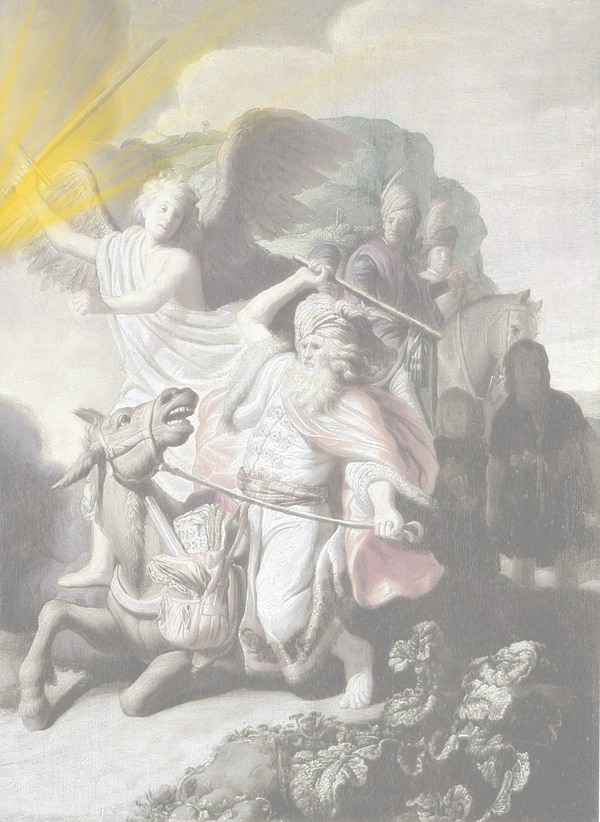
More than this, however, recall that the word “herev” (sword) featured prominently in the story of Balaam such that its usage here may be evoking it intentionally.[12] [13] There are three such instances in Numbers 22. First:
[T]he ass caught sight of the angel of the LORD standing in the way, with his drawn sword in his hand. The ass swerved from the road and went into the fields; and Balaam beat the ass to turn her back onto the road (22:23 NJPS).
Next: “Balaam said to the ass, “You have made a mockery of me! If I had a sword with me, I’d kill you” (22:29 NJPS). And finally: “Then the LORD uncovered Balaam’s eyes, and he saw the angel of the LORD standing in the way, his drawn sword in his hand; thereupon he bowed right down to the ground” (22:31 NJPS). Since the sword in chapter 22 indicates Divine wrath against Balaam (22:22) as well as Balaam’s cruelty to his donkey, it can be suggested that his death by the sword in chapter 31 indicates that he received the justice he deserved, or as put by Sifrei:
“and Bilam the son of Beor they slew by the sword”: Israel gave him his full reward and did not stint him. For he said to them: When you were six hundred thousand (in the days of Balak), you could not withstand them, and would you withstand them now? Whereupon they gave him his full “reward” (for his sound advice) and did not “stint” him.[14]
Balaam in Tanakh
The depiction of Balaam in the rest of Tanakh further suggests his ill-intent. Deuteronomy 23:6 indicates that Balaam’s true intention was to curse Israel,[15] and it was God who ensured this did not happen: “But the LORD your God refused to heed Balaam; instead, the LORD your God turned the curse into a blessing for you, for the LORD your God loves you” (NJPS). Joshua and Nehemiah state similarly:
but I refused to listen to Balaam; he had to bless you, and thus I saved you from him (Joshua 24:10 NJPS).
they… hired Balaam against them to curse them; but our God turned the curse into a blessing (Nehemiah 13:2 NJPS).
Additionally, note Joshua 13:22’s characterization of Balaam: “the Israelites put Balaam son of Beor, the augur, to the sword” (NJPS). Malbim (Numbers 31:8 s.v. “ve-et Bil’am ben Be’or haregu be-harev”), citing this verse, suggests that his status as a sorcerer may have been his death warrant, citing R. Yosei’s view that Noahides are liable to death for this sin. Tzofnat Pa’neah of the Rogatchover (31:8), citing Sifrei, makes the same point, as does Mizrahi (s.v. “va-yeitzei mi-Midyan”) and Kitzur Ba’al HaTurim (31:13).
The Story of Balaam: a Closer Look
One may begin a criticism of Balaam in parashat Balak with the classic observation of Balaam’s (mis)quotation of Balak. Rashi (22:11 s.v. “kavah li”) writes:
CURSE [KAVAH] FOR ME — this is worse than ara li (the expression which Balak had actually used, v. 6), for in the case of this verb it means that one mentions and pronounces in full [the name of God] when cursing (cf. Rashi on Leviticus 24:16) (Midrash Tanchuma, Balak 5).
Regardless of how one understands the two verbs, it still seems noteworthy that Balaam used a different one than Balak.
Next, God gets angry at Balaam in 22:22 for going with Balak’s emissaries, despite apparently allowing him to do so two verses earlier, suggesting that Balaam somehow either failed to understand God’s message or deliberately defied it.[16] Along these lines, the Torah contrasts him with his donkey that is able to perceive God’s angel whilst he cannot, emphasizing three times that “the ass caught sight of the angel of the LORD” (22:23 NJPS, see v. 25 and 27, and v. 33), demonstrating that he has less awareness of God than even his animal.
Finally, and perhaps most importantly, it appears that God is using Balaam as a tool, such that Balaam’s good is not to be attributed to his own character. Rashi (22:18 s.v. “lo ukhal la’avor”) writes:
I CANNOT GO BEYOND [THE WORD OF THE LORD] — Against his own will he divulged to them that he was under the control of others, and he prophesied here that he would be unable to annul those blessings with which the patriarchs had been blessed by the mouth of God (Midrash Tanchuma, Balak 6).
Later verses substantiate the notion that he was “under the control of” God. Balaam himself says, “have I the power to speak freely? I can utter only the word that God puts into my mouth” (22:38 NJPS); rather than a pious comment, this can be read as a statement of fact; perhaps even these words themselves are forced. Indeed, 23:5 states that “the LORD put a word in Balaam’s mouth and said, ‘Return to Balak and speak thus’” (NJPS), and the immediately following verse does not include Balaam speaking, meaning that even when a verse of Balaam’s speech is not prefaced by a statement that it is forced by God, it still can be so.[17] Then, 24:1 states: “Now Balaam, seeing that it pleased the LORD to bless Israel, did not, as on previous occasions, go in search of omens, but turned his face toward the wilderness” (NJPS). True, Ramban argues, against Rashi, that this time Balaam acted with sincerity and an embrace of God’s will and not sorcery,[18] but this verse precisely highlights that Balaam was not sincere previously. As Ramban writes:
AND HE WENT NOT, AS AT OTHER TIMES, TO SEEK FOR ENCHANTMENTS. [This means] that on the previous [two] occasions Balaam acted as an enchanter, and wanted to curse them by means of enchantment, and G-d came to him as if by chance, and not because he [Balaam] had concentrated on [attaining] prophecy, nor because of any superior status that he had achieved.[19]
Additionally, Balak makes it clear to Balaam that he wants Balaam to curse Israel in 23:13 and 23:27, and yet Balaam participates anyways, demonstrating his willingness to harm God’s people. So too, he tells Balak’s men in 22:19 that he will see what God says about their request, even though he was already told earlier, “Do not go with them. You must not curse that people, for they are blessed” (22:12 NJPS).
Conclusion
Upon a quick glance at parashat Balak, it is difficult to see why Hazal consider Balaam to be among the most wicked figures ever. However, once one engages with Balaam’s portrayal in parashat Mattot, namely his death by the sword and involvement in the sin of Baal-Peor, his references elsewhere in the Bible, and the details of his own story, one understands his sinister character. Thankfully for Israel, “the LORD your God turned the curse into a blessing.” Indeed, as Maimonides (Hil. Melakhim 11:1) writes, Balaam’s words are more than just any blessing: “A star goes forth from Jacob’ (24:17), this is David. ‘A scepter rises from Israel,’ this is the king messiah.” May Balaam’s blessings actualize in our times.
[1] For the sword as administerer of justice in Humash, see Deuteronomy 32:41 (“When I whet My flashing blade And My hand lays hold on judgment, Vengeance will I wreak on My foes, Will I deal to those who reject Me” (NJPS)); Genesis 34:26; Exodus 22:23, 32:27; Deuteronomy 13:16; etc.; as well as, of course, the death penalty of hereg (m. Sanhedrin 7:1), which commentators here appeal to.
[2] Translation from R. Adin Even-Israel Steinsaltz, The William Davidson Edition Koren Noé Talmud (Koren). This passage of the translation only uses the basic, bolded translation, not the full explanatory one.
[3] M. Avot 5:19; Berakhot 7a, 55b; Ta’anit 20a; Sanhedrin 105b, y. Sanhedrin 10:2; Zevahim 116a; Niddah 31a.
[4] Translations of and citations within Rashi are from Sefaria digitization of M. Rosenbaum and A.M. Silbermann, Pentateuch with Targum Onkelos, Haphtaroth and Prayers for Sabbath and Rashi’s Commentary (London: Shapiro, Vallentine and Co, 1929-1934).
[5] See Rashi on 22:5 s.v. “eretz benei ammo,” Sefaria digitization of Rosenbaum and Silbermann, Pentateuch and Rashi’s Commentary.
[6] R. Samuel David Luzzatto, Il Pentateuco, volgarizzato e commentato da Samuel Davide Luzzatto (Padua: F. Sachetto, 1871-1876), Numbers 31:16 s.v. “bidvar Bil’am,” digitized by Sefaria.
[7] These following passages from Sanhedrin and Sifrei are cited by Rashi on 31:17, Sefaria digitization of Rosenbaum and Silbermann, Pentateuch and Rashi’s Commentary.
[8] R. Steinsaltz, The William Davidson Edition Koren Noé Talmud.
[9] R. Shraga Silverstein, Sifrei Bamidbar (Sefaria).
[10] The Hebrew Wikisource Sifrei simply renders “be-beit din haraguhu” (“they slew him at court”)
[11] R. Silverstein, Sifrei Bamidbar 157.
[12] The importance of a recurring word in a passage is, if I recall, noted by Rabbi Moshe Bernstein, “Close and Distant Readings at the End of Beha’alotekha” (lecture, 2026).
[13] See Rashi on 31:8 s.v. “be-harev,” Sefaria digitization of Rosenbaum and Silbermann, Pentateuch and Rashi’s Commentary, and Gur Aryeh on this Rashi.
[14] R. Silverstein, Sifrei Bamidbar 157. See Rashi on 31:8 s.v. “hameishet malkhei Midyan,” Sefaria digitization of Rosenbaum and Silbermann, Pentateuch and Rashi’s Commentary; as well as Siftei Hakhamim s.v. “sekharo mishaleim ve-khulei,” Birkat Asher, Hatam Sofer and Ha’ameik Davar s.v. “haregu be-harev” on this verse.
[15] The Talmud states this and invokes this verse: “they recite three verses of transformation from bad to good… [including] “Nevertheless the Lord your God would not hearken unto Balaam; but the Lord your God transformed the curse into a blessing unto you” (Deuteronomy 23:6)… just as You transformed the curse of Balaam the wicked into a blessing, so transform all of my dreams for me for the best” (Berakhot 55b, R. Steinsaltz, The William Davidson Edition Koren Noé Talmud).
[16] See Rashi on 22:20 s.v. “kum leikh itam,” Sefaria digitization of Rosenbaum and Silbermann, Pentateuch and Rashi’s Commentary, as well as Rashi and Sforno on 22:22 s.v. “ki holeikh hu.”
[17] Similarly, “The LORD… put a word in his mouth” (23:16 NJPS) that is perhaps only “activated” in verse 18 once Balak asks what God said (v. 17).
[18] R. Nosson Scherman, The Artscroll Series Stone Edition Chumash (Brooklyn: Mesorah, 1993), 869, commentary.
[19] 24:1, translation of Charles B. Chavel, Commentary on the Torah by Ramban (New York: Shilo, 1971-1976).






 Site Operations and Technology by The Berman Consulting Group.