



Avot 5:6: The Mouth of Korah’s Earth and the 2nd Edition of the...
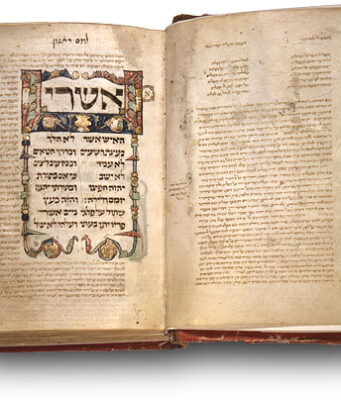
We only rarely have the opportunity to compare and analyze instances where a rabbi or scholar changed his interpretation over time, yet R. Yom Tov Lipman Heller published his Mishnah commentary, Tosafot Yom Tov, twice in his lifetime. Yaakov Jaffe examines the evolution of R. Heller's interpretation of the term “the Mouth of the Earth” in Pirkei Avot.

The Nazir and the Priest
Yoni Nouriel examines an episode in the Talmud where Shimon Ha-Tzadik describes his encounter with an impure Nazir.

Titus and the Tripartite Soul: A Lesson on Leadership and Jewish Survival
With a novel reading of Josephus and Gittin, Shana Schwartz proposes that the tragedy of the second hurban and the mystery of subsequent Jewish survival may be understood by reference to the physiological knowledge available in classical antiquity.

Of Divine Nostrils and the Primordial Altar: A Pipeline of Sanctity
What does the makeup of the altar drainage pipes tell us about the nature of holiness? Shlomo Zuckier explores!

Born to Return
Alex Ozar explores the significance of Torah study in the womb.

Legal Fictions: A Narrative Reflection on Yevamot 16:6
As part of his Legal Fictions creative project, Dovid Campbell reimagines the content of Mishna Yevamot 16:6 in an evocative narrative.

The Haunted Yeshivah: Abaye and the Torah of ADHD
Elli Fischer examines the interplay between Talmudic Halakhah and Aggadah.

Nine Measures
Tehila Wenger offers a short story on loss, eternity, and olive trees .

Don’t Forget David’s Literary Temple! A Rebuttal to Levi Morrow
Harvard Professor Jon Levenson weighs in on what stops the floodwaters:
rabbinic creativity or the Temple!

A Time to Mourn: Aveilut as Minor Holiday
Ben Greenfield’s essay, winner of Hadar's annual Ateret Zvi Prize, explores why Hazal chose to situate Hilkhot Aveilut in tractate Moed Katan.



 Site Operations and Technology by The Berman Consulting Group.