




The Trees of Eden and the Trees of the Siege: Conquest and Protection
The significant linkages between the Garden of Eden narrative and the commandment concerning cutting down trees in time of war suggest a profound message about how we should live in an imperfect world.

Legal Fictions: A Narrative Reflection on Yevamot 16:6
As part of his Legal Fictions creative project, Dovid Campbell reimagines the content of Mishna Yevamot 16:6 in an evocative narrative.

Sustainability in the Headship: Lessons from Calev and Yitro
Jordan Soffer examines the two narratives of Calev and Yitro through a lens of effective community leadership.

“Asthenes” as a Jewish Textual Reference to Obsessive-Compulsive Disorder
The classification of certain people as "athenes" receives wide expression in Talmudic stories and even practical halakhic application. Shayna Herszage-Feldan considers the varieties of asthenes descriptions in Talmudic texts, proposing that the category encompasses the condition that is today diagnosed as contamination-focused obsessive compulsive disorder.

Wine Not? The missing holiday whose time has come
Aton M. Holzer
The fifteenth of Av – among the most minor of minor festivals on the Jewish calendar – is marked in the diaspora...

Still We Rejoice: How Halakhah Guides Emotional Complexity
In the wake of recent painful times for the Jewish people, Batsheva Leah Weinstein discusses the ways halakha guides emotion through pain and joy.

The Daring Theology of the Kinnah of the Maharam
Yaakov Jaffe examines the anti-Christian polemic in Maharam of Rottenberg's Kinnah about the burning of the Talmud.

God’s Estranged Wife: Rashi on Song of Songs, Lamentations and Hosea
Through analyses of Rashi's commentaries on Song of Songs, Lamentations, and Hosea, Devorah Schoenfeld explores narratives of the Jewish nation's relationship to God.

The Day After Pardes
Max Hollander analyzes the Talmudic narrative of Pardes and the four rabbis who entered it.

Two Men Enter the Vacated Space ...
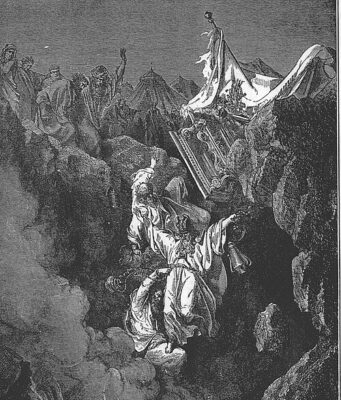
The death of Nadav and Avihu is difficult to explain, perhaps even impossible to approach through the medium of language. In a composition crossing the boundaries of original drashah, Breslov thought, poetry, visual art, and historical fiction, Akiva Weisinger renders the tragedy of Nadav and Avihu as a reflection of the Vacated Space beyond human language.




 Site Operations and Technology by The Berman Consulting Group.