



A Parable of Barriers
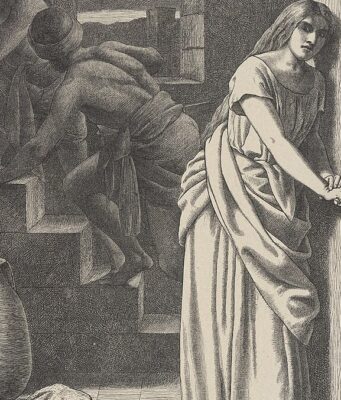
In honor of Rosh Hashanah 5786, Akiva Weisinger retells and reimagines the parable of the king "who wished to be seen, but did not want to be seen."

A Religion Without Visual Art? The Rav and the Myth of Jewish Art
If Kant or Hegel had read Rambam or the Shulhan Arukh, they might have known that Jewish law does not actually proscribe the creation of images. But that was not the way of history. It is important to reclaim visual culture and aesthetics for religious Judaism so that beauty can be allowed to inspire halakhically bound actions, to color worship, and give meaning to our rituals.

Divinity Redefined- Review of Christine Hayes, What’s Divine About Divine Law?: Early Perspectives
Rabbi Daniel Reifman reviews Christine Hayes' Whats Divine about Divine Law?

The Written Law
In this whimsical story, David Zvi Kalman takes an information theory perspective in tackling what it might have been like for Moses to receive the Law.

The Birthplace of Infertility
Infertility figures as a tragic theme not only on Rosh Hashanah but also in biblical narrative and modern life. This morning, Yael Leibowitz writes lyrically on The Birthplace of Infertility.

Written and Sealed (and Stamped) in the Book of Life
We will all be much more distant from each other this Rosh Hashanah. That’s why, argues Ranana Dine, it’s time to revive the tradition of sending physical greeting cards.

Is Remix Judaism for Everyone?
Steven Gotlib reviews Roberta Rosenthal Kwall’s book Remix Judaism, which has an important message about navigating Jewish practice in the modern world for non-Orthodox and Orthodox Jews alike.

The Zogerke’s Vort
The zogerke or firzogerin, once the vernacular translator in the women’s section of the synagogue, has faded into distant memory. Dalia Wolfson reimagines her for our times.

Hamilton and the Orthodox Underdog
Alex Fleksher explores the intersection between Hamilton and the ba'al teshuvah experience.

Epilogue
Tikva Hecht’s moving elegy for her mother, a lyric essay told in verse and art, reflects on the fragility of life and the final confession we recite in the Yom Kippur Amidah.




 Site Operations and Technology by The Berman Consulting Group.