




Star-Spangled Synagogue: Do National Flags Belong in Our Houses of Worship?
On this flag day, Moshe Kurtz surveys the arguments for and against displaying national flags in synagogues.

The Laws of Asmakhta Are Already Written in Our Hearts
Yonah Lavery-Yisraeli explores the relationship between the Talmudic term of "asmakhta" and the way we view our past, present, and future.

Extra-Communal Philanthropy – Forbidden, Permitted, or Mandated?
Mikey Lebrett examines the various Halakhic opinions on giving charity to non-Jewish people and causes.

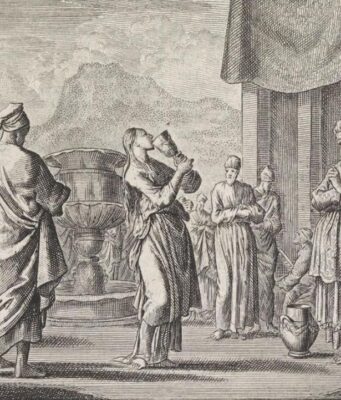
The Pregnant Sotah: A Case Study in the Ethics of Abortion
Yisroel Ben-Porat grapples with whether the case of the pregnant Sotah has implications for the debates surrounding abortion.

From Polemic to Pandemic: The Past, Present, and Future of Hazarat ha-Shatz
Post-pandemic proposals to omit hazarat ha-shatz on a permanent basis have been soundly rejected by halakhic authorities. Is this due exclusively to halakhic considerations, or are additional factors at play? Yosie Levine contends that Ashkenazic rabbinic opposition to 19th-century attempts to eliminate hazarat ha-shatz may still be shaping halakhic discourse today.

Sexual Assault: A Torah Analysis and Its Modern Implications
Rena Kosowsky compares the treatment of sexual assault in the Bible and the Talmud, and explores the implications of what that means for how we should address it today.

Streamlining Services: What Can we Learn from High Holidays 5781?
Many synagogue goers found the abbreviated High Holiday services we recently concluded quite appealing. Need we eventually go back to the way it was before coronavirus? Not really, argues Moshe Kurtz, surveying the substantial halakhic support for shortening the services every year.

The Directional Shaking of the Lulav: Bible, Mysticism, and Religious Polemics
Yaakov Jaffe traces the origins and evolution of the custom to shake the lulav in different directions.

Michael Broyde Responds Regarding Abortion, Halakhah, and Secular Law
What exactly did Rav Moshe Feinstein hold regarding our obligations toward secular law? Does Halakhah distinguish between the first forty days and afterward for gentiles? Michael Broyde responds to his critics.

Is Silence Complicity?: An Analysis of Shtikah Ke-Hoda’ah from Classic Halakhah to Current Events
Moshe Kurtz explores the different meanings of silence in Halakhah in light of recent political events



 Site Operations and Technology by The Berman Consulting Group.