

I. Introduction: The Puzzle of Vayikra 17
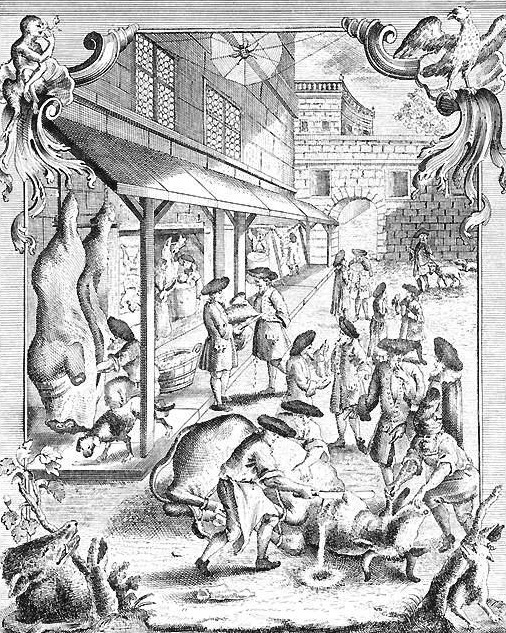
The mitzvah of kisuy ha-dam, the commandment to cover the blood of a slaughtered bird or wild animal, is introduced in a highly conspicuous and complex literary setting. Vayikra 17 initially continues the theme that has dominated the first half of the book: the laws of sacrifices, detailing how offerings must be brought to the Tent of Meeting and forbidding offerings elsewhere. But then the text takes a sharp and perplexing turn.
Without any clear shift in context, the Torah prohibits the consumption of blood and addresses this warning not only to the Israelites but also to the ger toshav, the resident alien — a category that would not have existed in the wilderness setting of Sefer Vayikra. Why introduce it now?
The passage continues with another surprising move: it speaks not of offerings, but of hunting, and requires that the blood of hunted animals be covered —i.e., the mitzvah of kisuy ha-dam. Moreover, this passage is clearly referring to non-sacrificial meat (hullin), yet this category of slaughter is not formally introduced until Devarim 12, when Benei Yisrael are about to enter the land of Israel. This raises the question: what is the purpose of covering the blood, and why is this aspect of hullin slaughter introduced here, seemingly before its time?
Other oddities can be found throughout the chapter. The Torah uses post-facto language: “If a person slaughters…” rather than the normative “You shall slaughter…” which is the usual form for commandments. Even more strangely, the Torah describes ritual slaughter as “spilling blood” — a phrase far more reminiscent of violence or crime than of sacred ritual. This language is first used regarding sacrifices in the beginning of the chapter, and then repeated in the context of kisuy ha-dam at the end of the chapter.
It is unlikely the Torah simply progressed from sacrifices to discussing other laws pertaining to ritual slaughter of hullin simply because sacrifices also involve slaughtering. These questions point to a deeper meaning of kisuy ha-dam. Through a careful reading of some of the commentaries on kisuy ha-dam, and by comparison to other places in Tanakh that use similar language, we will show that the placement of kisuy ha-dam here in Vayikra 17 is not only appropriate, but imbues it with additional layers of meaning that represent our most fundamental values, and allows it to serve as the fulcrum that connects the two halves of Vayikra.
II. Classical Explanations for Kisuy Ha-Dam
1. Preventing Blood Consumption
The most straightforward interpretation of the commandment offered by classical commentators is that covering the blood serves as a safeguard against violating the prohibition against eating blood. Rashbam and Hizkuni both explain that blood must be covered so that it is not consumed inadvertently.[1]
Though plausible, this explanation fails to account for the Torah’s elaborate language and symbolic emphasis, nor the unusual placement of the mitzvah. A technical safeguard cannot fully explain why the Torah places kisuy ha-dam where it does, or why it surrounds it with literary allusions to violence and murder.
2. Negation of Pagan Practice
A second category of interpretation sees the mitzvah as a response to pagan practices. Ibn Ezra explains that blood left uncovered outside the Temple grounds risked giving the impression that paganism was being practiced, and that the blood came from pagan sacrifice. The Torah, he argues, insists on covering the blood to prevent confusion with these practices.[2] Similarly, Shadal (Samuel David Luzzatto) notes that in ancient pagan culture — including Homeric texts — blood left on the ground was believed to be consumed by spirits or even the dead. Covering the blood negates a belief in such a ritual.[3] Conversely, Seforno argues that the covering of the blood is actually an acknowledgment of a demonic presence. He writes that wild animals are typically slaughtered in the field, away from the living spaces of people, and where demons concentrate. Uncovered blood may attract demons, and the act of covering the blood serves to prevent the proliferation of demons in the land.[4] While perhaps explaining the connection of kisuy ha-dam to sacrifices, and specifically the preceding prohibitions against eating blood and offering sacrifices outside the Temple, these interpretations do not explain the unusual language that describes this mitzvah.
3. Preservation of Social Order
Shadal offers two additional interpretations. First, he argues that leaving blood uncovered invites other animals to drink it, an act he sees as degrading to the dignity of the slaughtered creature. More significantly, he writes that exposed blood might be mistaken for human blood, which may lead to the misconception that the land of Israel experiences a high rate of murder. To leave blood visible is to create an image of a land marked by violence, lawlessness, and anarchy.
Both of these explanations offered by Shadal resonate deeply with biblical imagery. In Tanakh, the ultimate degradation is to be consumed by animals after death.This fate is threatened against Ahav in Melakhim I 21:19, where he is warned that dogs will lick his blood. Regarding his second interpretation, exposed blood is often the symbol of societal breakdown and moral horror. In Melakhim II 21:16, Menashe is said to have spilled so much blood that it filled Jerusalem from end to end, signaling a breakdown in civic order.[5] More profoundly, in the earliest story of fratricide, God says to Cain, “The voice of your brother’s blood cries out to Me from the ground” (Bereishit 4:10). This image of uncovered blood as a testimony to injustice is one of the Torah’s most enduring symbols of moral depravity.
Thus, kisuy ha-dam becomes a symbolic act of societal order and morality. Covering the blood is a way to uphold dignity in death, and represents the most basic aspect of civilization: the rejection of anarchy and murder.
III. Kisuy Ha-Dam as a Ritual Expression of Moral Tension
A different interpretive thread suggests that both ritual slaughter and covering blood are almost akin to killing while skirting responsibility. Several components of the language of Vayikra 17 strongly support this reading. As noted above, the Torah uses post-facto language, implying a concession rather than a command, and describes slaughter as spilling blood, a phrase usually reserved for murder. Furthermore, in Tanakh, covering blood is associated with murder and its concealment, or the concealment of justice that should be wrought against its perpetrators. Yehudah questions his brothers regarding Yosef, “what benefit do we gain by killing our brother and covering his blood?” (Bereishit 37:26). Here, covering the blood clearly means to hide a crime. Yehezkel 24:7-8 states that blood left uncovered on a rock is prone to scrutiny and invites punishment of those who spilled it, implying that covered blood would be immune from such scrutiny. In Yeshayahu 26:21, God says that uncovering blood that was previously covered by the land will allow Him to take vengeance on those who spilled the blood. In Iyov 16:18, covering blood would preclude Iyov from crying out about the injustice that happened to him.
Previous authors have suggested that this association of ritual slaughter and covering blood with murder and concealment is an intentional attempt to portray the gravity of what slaughter entails, even when permitted.[6] The act is not framed as neutral or morally indifferent, but as one that flirts with danger, with desensitization, with the erosion of reverence for life. The Torah deliberately invokes the imagery of murder to impress upon us the moral weight of what is being permitted.
This theme also aligns with the Torah’s broader narrative progression regarding eating meat. In Bereishit 1, humans are permitted only plants. After the Flood, meat becomes allowed — but only alongside severe warnings against eating blood and strict prohibitions on shedding human blood (Bereishit 9:3-6). R’. Yishmael’s position (Hullin 17a) is that, during the forty years in the desert, meat from animals eligible to be brought as sacrifices could only be eaten if brought as a sacrifice.[7] Only in Devarim 12 is it revealed that, upon entering the land of Israel, meat consumption outside the sacrificial system will be permitted. Even then, it appears as a concession that is only granted because it would be impractical to require those living far from the Temple to bring their animals to the Temple every time they wanted to eat meat. Within this context, one could argue that the presentation in Vayikra 17 highlights ritual slaughter as a necessary evil that is only permitted as a concession to mankind. Even then, permission is granted only once boundaries are created to ensure moral discipline is retained, such as the prohibitions against sacrificing or eating meat away from the Tabernacle, eating blood,[8] and the mitzvah of kisuy ha-dam.
IV. Conflicting Symbolisms
On first blush, it appears we have two dueling symbolisms. In Tanakh, uncovered blood is associated with moral depravity and anarchy, and thus covering it implies civility. On the other hand, the imagery of covering up blood in Tanakh is akin to covering up a murder. The reconciliation between these is that the Torah maintains both symbolisms simultaneously, as part of an intentional moral pedagogy, conveying moral ambiguity and tension regarding the practices of ritual slaughter and kisuy ha-dam. The introduction of the mitzvah of kisuy ha-dam using the language of spilling blood and its placement adjacent to the prohibition of eating blood hearken back to Bereishit 9, when the permission to eat meat is first explicitly introduced. This is meant to trigger the reader to recall that meat consumption was not always permitted, and that the permission came only with strict boundaries meant to prevent sliding to a place of devaluing animal life. Invoking the image of covering up blood being akin to covering up murder is meant to strengthen this message. Although consumption of meat has been permitted, the act of ending a life, even an animal life, must be taken with the utmost sense of gravity. The astute reader is made to notice the violent tone in Vayikra 17, while also noting its place in the larger context of the progression of the permissibility of meat eating, and internalize the message that one should not dismiss the gravity of the act of ritual slaughter.
Placement of kisuy ha-dam adjacent to rules of sacrifices adds force to this same message. The sacrifice produces atonement once the offerer places his hands on the animal, identifies with it, and acknowledges that their own life might be forfeit were it not for God’s mercy. In the process of causing the human to see his own vulnerability reflected in the animal’s death, the animal is “humanized.” If part of the purpose of kisuy ha-dam is to encourage the slaughterer to really appreciate the gravity of ending an animal life, the context of sacrifices is the optimal place to introduce this mitzvah, even though it is largely only applicable outside the world of sacrifices.[9]
At the same time, kisuy ha-dam comes at the inflection point of Vayikra. It is used as the fulcrum to transition from descriptions of the rituals surrounding sacrifices, to society-building, the theme of much of the second half of Vayikra. Here, the aspect of kisuy ha-dam that represents not concealment of crime, but respect for the animal carcass and the elimination of uncovered blood and its symbolism, becomes crucial. The most fundamental moral principle for the type of society the Torah encourages building is respect for the sanctity of life. The mitzvah of kisuy ha-dam extends that respect to animal life. The first step in building a just society is recognizing that all life — even animal life — matters. A society that begins by covering the blood of animals is one that will treasure the blood of its brothers. Because this aspect of kisuy ha-dam pertains to all members of the future society of the nation of Israel, it is addressed to the ger toshav and applied to hullin slaughter that will become permitted once the people enter the land of Israel.
V. Conclusion: Kisuy Ha-Dam and the Sanctity of Life
Consumption of meat is permitted and sometimes even encouraged and obligatory. But the Torah’s gradual granting of permission to eat meat, along with its choice of language, particularly in Vayikra 17, themselves comprise a moral pedagogy. Permission to eat meat is not unconditional; it comes after an extended moral education. This does not imply the Torah’s ideal is to be vegetarian. The ideal is to consume meat in appropriate measure, after having internalized the moral lessons that the Torah wishes to convey.
The introduction of kisuy ha-dam comes in an unexpected context, surrounded by surprisingly violent language, because these are components of the ethical education. Permission to consume meat is granted together with a plea to remain ethically conscious of the value of life. And even once this permission is granted, it is bound by ritual — by the act of covering the blood — as a symbolic expression of reverence and restraint. Hullin slaughter is granted only after that reverence has been internalized.
Moreover, the duality of kisuy ha-dam allows it to serve as the optimal bridge from sacrifices to mundane society building. Although typically reserved for hullin slaughter, kisuy ha-dam is in part an expression of the lessons inculcated via the humanization of sacrificed animals. The transition in Vayikra 17 from sacrifices to hullin is seamless precisely because of this connection. At the same time, kisuy ha-dam represents respect for the sanctity of life and dignity in death that form the foundations of our moral society.
[1] See Rashbam to Vayikra 17:13, s.v. “ve-khisah be-afar”; Hizkuni ad loc., s.v. “ve-khisahu be-afar.”
[2] See Ibn Ezra to Vayikra 17:13, s.v. “o of asher yei’akheil.”
[3] See Shadal to Vayikra 17:13, s.v. “ve-khisahu be-afar.”
[4] See Seforno to Vayikra 17:13, s.v. “ki ya-tzud tzeid.”
[5] Of note, the same theme is expressed even more strikingly in rabbinic literature. Sanhedrin 96b records the story of Zekhariah’s murder in the Temple courtyard, after which his blood remained boiling when Nevuzaradan came to conquer the city.
[6] Beth Lesch, “Are We Supposed to Eat Animals?,” Aleph Beta.
[7] This applies to domesticated animals, whereas wild animals and most birds which are not brought as offerings could be eaten as hullin. The quail that was miraculously provided in the desert could thus be eaten, as it is not a bird that is brought as an offering. I should note that R. Akiva maintains the position that all meat could be eaten as hullin in the desert.
[8] The recurring refrain used to explain the prohibition of eating blood is telling. The blood is the nefesh. Although nefesh is typically translated as “soul,” this is not the most accurate translation. The cognate Akkadian word means “throat” – in Hebrew, a nefesh is a creature’s life’s-blood, the pulse in their jugular.. The purpose of vital organs such as the heart is to maintain blood flow throughout the body. Death occurs only when the flow of oxygenated blood ceases, as occurs in cardiac death. In light of this, nefesh could be translated as “life force.” What differentiates animals from plant life is cognition; this distinction was formalized by Hasidic thinkers such as the Alter Rebbe (see Tanya 38). The Torah enjoins us to refrain from eating the life force of beings who are aware of the life provided by this life force.
[9] This might explain why kisuy ha-dam applies only in certain situations. Hullin slaughter carries greater risk for devaluation of animal life compared to the sacred context of a sacrifice in which the animal is humanized. Covering the blood and the lessons it entails are therefore more necessary in the setting of hullin slaughter. Similarly, the message requires further emphasis when slaughtering wild animals, in comparison to domesticated animals which do not require kisuy ha-dam (see Hullin 83b), perhaps because, through their domestication, the value of their life becomes more recognizable to their owner. (Although domesticated birds do require kisuy ha-dam as do all birds, perhaps the degree of affection an owner has towards them is less than domesticated animals due to their cheaper value and less direct engagement with them by the owner.)




 Site Operations and Technology by The Berman Consulting Group.