

Michael J. Broyde
Close to forty years ago, I was privileged to be a student in R. Dr. Haym Solovietchik’s Talmud class at YU; unlike every other shi’ur at YU that one semester (it was supposed to be a year-long shi’ur, but ran only one semester), we learned Yerushalmi Terumot. To the best of my knowledge, this was the only time a tractate of Yerushalmi was taught as a regular Talmud shi’ur. It was a remarkable experience, and it taught me rigorous Talmudic skills I had not previously encountered, from manuscript work to the methodology of both Seder Zera’im and the Yerushalmi and so much more. Furthermore, the unique pedagogical style of R. Dr. Haym Soloveitchik was on full display. It was something singular and special, and I am in his debt.
The greatest tribute to a Torah scholar is engagement with their ideas, and I write this short piece in that spirit to engage with R. Dr. Haym Soloveitchik’s work.
The great historian of medieval Ashkenazi rishonim, R. Dr. Haym Soloveitchik, makes the following observation about Meiri in his famous essay entitled “Rupture And Reconstruction: The Transformation of Contemporary Orthodoxy,” in note 54. He writes:
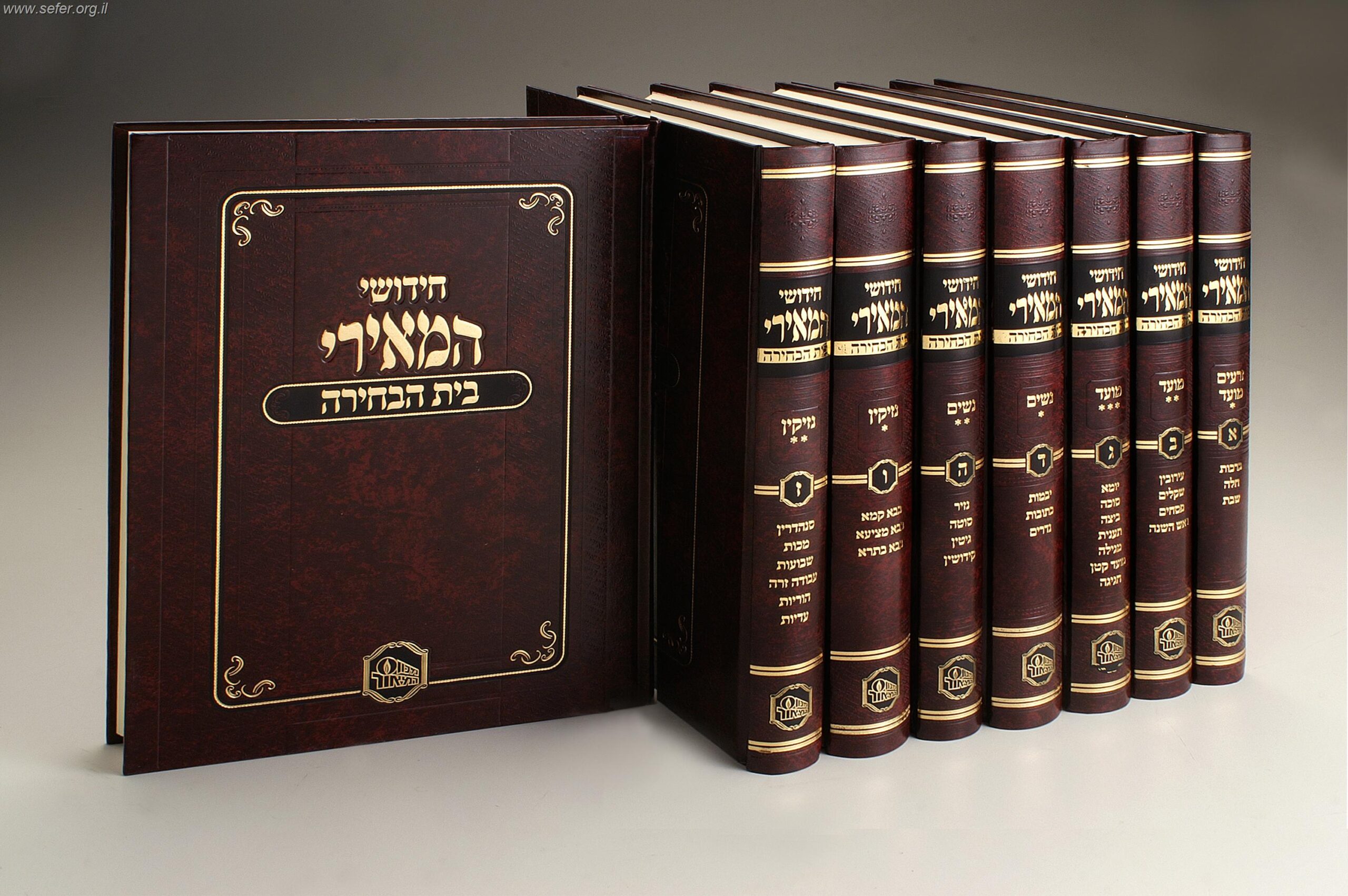
Meiri is the only medieval Talmudist (rishon) whose works can be read almost independently of the Talmudic text, upon which it ostensibly comments. The Beit ha-Behirah is not a running commentary on the Talmud. Meiri, in quasi-Maimonidean fashion, intentionally omits the give and take of the sugya, he focuses, rather, on the final upshot of the discussion and presents the differing views of that upshot and conclusion. Also, he alone, and again intentionally, provides the reader with background information. His writings are the closest thing to a secondary source in the library of rishonim. This trait coupled with the remarkably modern syntax of Meiri’s Hebrew prose have won for his works their current widespread use. It is not, as commonly thought, because the Beit ha-Behirah has been recently discovered.[1] …. Rather, Meiri’s works had previously fallen stillborn from the press. Sensing its alien character, most scholars simply ignored them, and, judging by the infrequent reprintings, if any, they also appear not to have found a popular audience. They have come into their own only in the past half century.[2]
This footnote, often cited and even centrally featured in the Meiri entry on Wikipedia, is important. Yet, I do not think this valuable suggestion as to why Meiri disappeared from rabbinic discussion for close to 700 years and yet has come back in the last century is the full story. (Meiri is the only rishon to disappear and come back as a mainstream source.[3])
In the spirit of keeping the conversation open and exploring further directions, I propose in this article a few additional ideas that I suspect were also important factors in explaining both why Meiri disappeared for centuries and why his works have returned to the front and center of Torah discourse in the last century. This is not to argue that the unique intellectual approach of Meiri was not a factor, but that it was not the only important factor in Meiri’s being discarded and then revived.
- Far more than any other rishon, Meiri deeply and regularly quotes the Yerushalmi on every tractate. His work, more than that of any other rishon, closely compares the reasoning of the Bavli with the flow of the Yerushalmi in ways that, for one who thinks that the Yerushalmi is hardly a core text, makes Meiri hard to use and of much less value and interest.[4] Hakhmei Ashkenaz (Ashkenazi rishonim) and others generally thought the Yerushalmi was not a core text and hardly learned it.
- Meiri has many Yerushalmi texts that we do not have, such that even if one has a Yerushalmi and cared about it – as for example, Ritva seemed to[5] – the text used by Meiri did not match the standard text of others. For example, any reasonable read of Meiri’s commentary on Rosh Hashanah 4a, s.v. “ehad ha-nodeir” concludes that Meiri had a whole Yerushalmi tractate on Menahot (which, as far as I can see, no one else had), and he has countless other references to either Talmud Ma’arav (Western Talmud) or Yerushalmi that others do not have.[6]
These two reasons combined made his work less interesting to many early scholars, because he quoted a primary text that they did not agree was primary, or he used a text different from their own in significant ways.
3. Meiri uses a cryptic citation system in which he does not reveal either the name of the authority he is discussing or the location of the page/chapter/tractate to find the work. This bizarre mode of non-citation (one of his unique linguistic features, not found in any other rishon) makes integrating Meiri with the other commentators around him considerably more complex.[7] As R. Dr. Soloveitchik himself notes: “Since readers had no way of knowing who advanced a specific doctrine, they were at a loss as to what specific weight should be assigned to it.”[8]
4. The Provencal rabbinic literature to which Meiri belongs is deeply insular and not well-cited (other than Ra’avad’s comments on Rambam). Much of it functionally disappeared from the mainstream rabbinic tradition (consider for example Sefer Ha-Hashlamah of Rabbeinu Meshulam, the novellas of R. Avraham Min Ha-Har, or Sefer Ha-Mikhtam of Rav David ben Levi of Narbonne and more, many of which were published only recently by Moshe Yehoshua Blau as part of his Shitat Ha-Kadmonim). Maybe Meiri simply suffered the same fate as others in his and neighboring Provencal communities, which can be attributed to the increasing French persecutions beginning in 1306, and their lack of continuity elsewhere, rather than anything else.[9]
Scholars have offered two additional, less flattering, explanations.
One is that Meiri’s writings were lost because he was not stellar – ‘big pen, small mind’ is the quip. For example, R. Dr. Shlomo Pick subtly proposes this in his dissertation,[10] writing “One must conclude that despite all his writings, Meiri was at most a local sage, himself appealing to Rashba on Halakhic issues.” Pick proposes this since (1) Meiri wrote almost no responsa, so he seems not to have been a major communal decisor; (2) “For the most part, he is found in the position of questioner in some of the Rashba’s responsa,” and (3) Other major sages — even within Provence — did not turn to him.
A second theory, advanced by the always thoughtful Dr. Moshe Halbertal, is that the lack of use of Meiri was the conscious result of antagonism to Meiri’s view of Maimonidean philosophy by Rashba and others in that era. Dr. Halbertal’s thesis might well be correct in the context of its time and the relationship between Meiri and Rashba, but I am unpersuaded as to the value of this explanation in the context of a discussion of why Meiri was not used for nearly 700 years and yet is now widely used, since at best this explains the approach of the school of Rashba and not centuries of abandonment or his modern revival.[11]
In truth, more than one factor might be at play at one time, and no single factor accounts for why Meiri was discarded or revived.
Meiri’s Modern Revival
Each of the following factors helps explain the revival of Meiri in the last century.
First, the return of Jewish learning to Israel revived the study of the Yerushalmi in our current generations: serious Torah scholars in rigorous institutions in Israel learn all of the Yerushalmi Zera’im and much more. At least five commentaries on the entire Yerushalmi have appeared in the last few decades, and manuscript work abounds showing variations in the Yerushalmi.[12] That change makes Meiri’s comparative work between the Bavli and the Yerushalmi, and his citations to missing Yerushalmi volumes, fascinating rather than distracting.[13]
Second, Meiri’s cryptic citation system, while once obscure, has become intelligible thanks to the one critical edition of each of the many Meiri tractates with their notes that identify every nickname and provide referenced sources for nearly all rishonim he is citing. Now, understanding the views Meiri is synthesizing is easy since the code has been broken. The code – which impeded learning for centuries – is not an important impediment any more.
Third, in line with the view “that Meiri’s popularity owes more to his prolific pen than to deep originality,” Meiri’s revival in the last century is explained by the contemporary halakhic fixation (by Mishnah Berurah and others) to counting rishonim rather than deeply analyzing them. The prolific pen of Meiri became popular because he wrote on much and had opinions easy to understand and classify. This helps explain why aharonim who analyze quote Meiri much less frequently than Rashba, for example, but aharonim who count cite him much more frequently.[14] Similarly the revival of modern Jewish philosophy in the Maimonidean model has made Meiri’s philosophy even more appealing, and his philosophical approach hardly disqualifies; indeed, it is now normative.
Finally, the wide availability of digital and printed editions of the rishonim has made Meiri’s extensive commentaries far more accessible. Unlike so many other lost rishonim manuscripts which were published, Meiri wrote on nearly the whole Talmud. It is for good reason that he joins Rashba, Ritva and other great rishonim in string citations in the Encyclopedia Talmudica so many times.[15]
I suspect that these factors–as much as the methodological comments of the great R. Dr. Haym Soloveitchik–likely contributed both to the disappearance of Meiri and his modern resurgence. Of course, there is no definitive hard data on any of this, and no distinct prooftext supporting any theory.
In the end, the deepest tribute one can offer to R. Dr. Haym Soloveitchik is precisely this kind of sustained engagement with texts, methods, and historical puzzles—an intellectual posture that he himself has modeled for decades with unmatched rigor and grace. His reading of Meiri, like so much of his life’s work, exemplifies a rare synthesis of philological precision, historical imagination, and fearless methodological clarity, illuminating not only a single rishon but the very contours of how Torah history is written and understood. Few scholars have so profoundly reshaped the questions we ask of our tradition while remaining so deeply rooted in its sources, languages, and lived realities. For generations of students and readers, R. Dr. Soloveitchik has taught us that genuine reverence for Torah is expressed not through preservation alone, but through disciplined, courageous, and loving inquiry—and for that, the world of Torah scholarship stands enduringly in his debt. I look forward to many more years of insightful contributions from the erudite R. Dr. Solovietchik.
[1] This continues with the following prooftext: “True, the massive Parma manuscript has been in employ only for some seventy years. However, even a glance at any Hebrew bibliography will show that much of the Beit ha-Behirah on Sefer Mo’ed, for example, had been published long before Avraham Sofer began his transcriptions of the Parma manuscript in the nineteen twenties. (E.g. Megillah Amsterdam, 1759; Sukkah Berlin, 1859; Shabbat Vienna, 1864.)” The text then continues as above.
[2] Haym Soloveitchik, “Rupture and Reconstruction: The Transformation of Contemporary Orthodoxy,” Tradition 28:4 (Summer 1994): 120-121. This one long paragraph is elaborated on and explained in more detail in Haym Soloveitchik, “The Riddle of the Me’iri’s Recent Popularity,” in Collected Essays III (The Littman Library of Jewish Civilization, 2020), 393-401. R. Dr. Soloveitchik’s “Rupture and Reconstruction” is available online at https://traditiononline.org/rupture-and-reconstruction-the-transformation-of-contemporary-orthodoxy/ and was recently republished in book form along with responses to criticism as Rupture and Reconstruction: The Transformation of Modern Orthodoxy (Littman Library of Jewish Civilization, 2021).
[3] For example, the Bar Ilan Responsa project (v. 31) lists (1) Rashi, (2) Tosaphot, (3) Ramban, (4) Rashba, (5) Ritva, (6) Ran, (7) Meiri, (8) Tosaphot Rid, (9) Mordechai, and (10) Shita Mekubetzet and Kovetz Shitat Kamai as the primary rishonim. It then lists more than forty additional rishonim (under the term “Other Rishonim”).
[4] For example, Rami Reiner notes (in “The Yerushalmi in Rabbeinu Tam’s Library”, REJ 178 (2019) https://doi.org/10.2143/REJ.178.3.3287130) that Rabbeinu Tam has no real familiarity with the Yerushalmi, and all of his citations are derivatives of the works of others, and the same is true for most of the Ashkenazi rishonim, who either did not have a Yerushalmi or did not care what it said. According to the Bar Ilan Responsa Project CD (v. 31) there are 1,968 references to the “Western Talmud” and 210 to the Yerushalmi in the works of Meiri, for a total of 2,178 references. There are 472 in Rabbeinu Hananel, 123 in Rif, 938 in Rosh, no more than 65 in Rashi, and 835 or so in Ramban. I want to add that, in the context of Meiri, in my subjective opinion, the Yerushalmi is employed in a far more complex, involved, and regular way than in any other rishon I have seen, for deeper analytical comparison. Indeed, Meiri actually wrote a commentary on one volume of the Yerushalmi (Shekalim), the only established rishon to do so.
[5] There are 1,851 references to the Yerushalmi in Ritva on the Bar Ilan Cd (v. 31)–fewer than Meiri, but close!
[6] As Wikipedia notes simply, “Unlike most rishonim, he frequently quotes the Jerusalem Talmud, including textual variants which are no longer extant in other sources.” Indeed, it is possible that Meiri had whole tractates of Yerushalmi that we are lacking. It is possible that Ra’avad had such as well. See Ra’avad commenting on Rambam, Bikkurim 2:6. (Ra’avad is also a product of Provence and made extensive use of the Yerushalmi. His commentary on the Talmud is not extant.) For more on this see Shmuel K. Mirsky, “R. Menachem Meiri: His Life, Outlook, and Works” [Heb.] Talpiot 4:1-110 (1944), at pages 43-46. This excellent work was also published as an introduction to some editions of Meiri’s work on repentance. More on the Yerushalmi issue will follow below in the text accompanying note 12.
[7] It is easy to miss how different this citation system is from that of everyone else, since we now all use the critical editions of Meiri prepared over the last eighty years, in which the notes provide both the code for whom is being cited and the location of the work. Without the notes, Meiri is difficult to learn. (This makes, by the way, Meiri’s use – unique among authorities in the late nineteenth century—by the Mishnah Berurah worthy of more study. For example, there are just two references to Meiri in the Arukh Ha-Shulhan, Orah Hayyim, but there are more than 400 in the Mishnah Berurah.)
On the question of why Meiri uses this system, no satisfying explanations have been produced. See R. Nissan Alpert’s introduction to Meiri, Bava Metzia, at page 5 for one speculative approach, and R. Mirsky, “R. Menachem Meiri: His Life, Outlook, and Works”, 47-48 for another speculative approach. Dr. Gregg Stern, in Philosophy and Rabbinic Culture (Routledge Jewish Studies Series, 2009), 76-77, proposes as follows: “Our puzzlement at this name usage is perhaps lessened by consideration of Meiri’s expressed desire to incorporate many of the literary features of Mishneh Torah into Bet ha-Behirah. By obscuring the relationship between individual interpretations and specific historical figures, Meiri produced a summary of Talmudic interpretation with an air suggestive of an apodictic code. By the use of sobriquets, Meiri may not have wished so much to characterize the interpreters whom he cited as to maintain an aura of authority that befits the ‘testimony’ style for which Bet ha-Behirah was named.” This is also very speculative. Dr. Susan Einbinder suggested by email to me that this might have been a cultural norm in the community around him, and pointed to medical work from that era that does the same. But, in truth, it remains a mystery why Meiri adopted this unique and exceedingly awkward reference system. No scholar since him has adopted it, as far as I am aware.
[8] Soloveitchik, “The Riddle of the Mei’ri’s Recent Popularity,” 399n2. See also, Stern (cited in note 7) in note 56 on page 100 who also notes how early authorities were unsure who was being cited and this “give[s] some indication of the difficulty that the reader frequently experiences in discerning to whom the Meiri refers.”
[9] R. Dr. Ephraim Kanarfogel suggested this reason to me in electronic conversation. Thanks to him for these wise comments. This explanation does not fully explain his revival.
[10] Shlomo H. Pick, The Jewish Communities of Provence before the Expulsion in 1306, PhD diss., Bar-Ilan University, 1996. Something close to this is expressed by Ephraim Kanarfogel, in the name of Rav Soloveitchik in “The History of the Tosafists and their Literary Corpus According to Rav Soloveitchik’s Interpretations of the Qinot for Tishah B’av,” in Scholarly Man of Faith: Studies in the Thought and Writings of Rabbi Joseph B. Soloveitchik, eds. Ephraim Kanarfogel and Dov Schwartz (Yeshiva University Press, 2018), 75-107 at pages 76-77, in note 5: “The Rav also noted that the method and content of the Beit ha-Behirah (including the lack of clear citations and its relative verbosity) suggest that its author was not as highly regarded as someone such as the contemporary Rashba.” See also the statement on page 77: “Some have suggested that the Rav’s dismissal of the Meiri actually had more to do with Meiri’s broad method of summation.”
[11] See Moshe Halbertal, Bein Torah le-Hokhmah: Rabbi Menahem haMe’iri u-Va’alei Halakhah Ha-Maimuniyim Be-Provence, (Magnes Press, 2000), 217–22. R. Dr. Haym Soloveitchik in note 6 of the work cited above disagrees with this hypothesis as well, as does an unpublished paper by Dr. Gregg Stern graciously shared with me. If pressed to explain Dr. Halbertal’s thesis and its application here, I would propose that this view explains why so few manuscripts of Meiri survived, and that lack of manuscripts contributed to Meiri’s lack of use over the centuries. The reply to that view is R. Dr. Haym Soloveitchik’s observation that even when Meiri was published “Meiri’s works had previously fallen stillborn from the press” even in the eighteenth and nineteenth centuries.
[12] See (1) the Artscroll commentary (translation), which is not yet complete at 24 volumes; (2) the complete Yedid Nefesh commentary (translation) of R. Yechiel Avraham Ha-Levi Bar Lev; (3) the commentary of R. Chaim Kanievsky (complete); (4) the Ohr Le-Yesharim commentary (which is incomplete) and (5) the Toledot Yitzhak commentary of R. Yitzhak Isaac Krasilschikov. On top of that, of course, there is Dr. Jacob Neusner’s (rarely used outside of academia) translation and R. Ze’ev Wolf Rabinowitz’s Sha’arei Torat Eretz Yisrael, a significant early twentieth-century commentary on many tractates. In short, more has been published on the Yerushalmi in the last century than in the five hundred years before, I suspect.
[13] See for example Shavuot 10b, Megillah 29a and so many more. The problem of missing Yerushalmi citations has fascinated many great scholars. For a classical review of this issue, see R. Avigdor Aptowitzer, “Nechte Jeruschalmizitate,” Monatsschrift für Geschichte und Wissenschaft des Judentums 55 (New Series 19, July/Aug 1911): 419–425 (German) (which I have not read) and his summary of his review of this argument again in his Sefer Ra’avyah (Jerusalem 1938). See also the classic analyses of Saul Lieberman: Al Ha-Yerushalmi (Jerusalem, 1929), especially the introductory chapters, documents cases in which rishonim preserve Yerushalmi traditions absent from extant manuscripts; Ha-Yerushalmi Kifshuto, Vol. 1 (Jerusalem: Darom, 1934), in the introduction and early methodological chapters, develops a framework for reconstructing the Yerushalmi from parallel rabbinic corpora and assessing the evidentiary weight of medieval citations; and Yerushalmi Neziqin, Sources and Studies in Rabbinic Literature, vol. 15 (Jerusalem: Israel Academy of Sciences, 1983), especially the introductory essays and textual notes, offers detailed case studies of missing or divergent Yerushalmi sugyot. Everyone who is interested is aware of the fact that Meiri cites Yerushalmi passages that we do not have. When all is said and done, a fast count of the citations to the Yerushalmi in Meiri (by checking references and looking at the notes in many volumes) indicates that about 4% of the citations to Talmud Ma’arav are unknown. (This estimate is necessarily impressionistic rather than statistical in the modern sense: it reflects a hand-count of Meiri’s Yerushalmi citations across multiple tractates, excluding cases of clear paraphrase or loose allusion, and counting only those passages for which no parallel exists in known Yerushalmi manuscripts, Genizah fragments, or early printings when so noted in the notes.)
[14] Consider for example that there are 76 references to Meiri and 1,220 to Rashba in Iggerot Moshe (a 1:16 citation ratio), but 2,315 references to Meiri and 5,426 to Rashba in Yabia Omer (a 1:2.3 citation ratio). This explains the contrast cited in note 7 above about the uses of Meiri in Mishnah Berurah as opposed to in Arukh Ha-Shulhan.
[15] Which, in volume 31 of Bar Ilan, contains 702 citation references which list Ramban, Rashba, and Meiri in a string cite form. This is a tribute to Meiri’s influence on modern Jewish law.





 Site Operations and Technology by The Berman Consulting Group.