


Yehoshua November
Climbing
This morning,
in the small basement shul,
amidst several Chassidic students lost in prayer,
I looked up from my siddur
to see a man in worker’s clothes climb a ladder
and enter through an open ceiling panel.
And I thought, Oh yes,
he is just another one
like all of us
trying desperately to ascend,
but knowing full well he must come back down
to perform the work of this earth.[1]
Despite the obvious overlap in the area of liturgy, poetry and prayer hold two different aims for me. If prayer is a direct address to the Divine and poetry “is a projection of the subjective self onto the page,” as I once heard the poet David St. John note, then only one of the poems in my three poetry collections qualifies as prayer. And even that single second-person reference to God in “A Religion of Tests,”[2] a poem I wrote nearly two decades ago, came as a late—and, in retrospect, somewhat unnatural—addition suggested by an editor.
Why, in my personal experience, do I see prayer and poetry as two activities largely at odds with one another? Perhaps it’s because poetry and prayer might be grouped into two different movements which, from a Hasidic perspective, serve as counterweights ensuring the fulfillment of creation’s purpose—to connect the physical to the spiritual, the finite to the infinite. Or, to use the midrashic phrasing expounded on in Hasidut, the purpose of creation is to transform this lowest world into a home for God, a dirah be-tahtonim (Tanya 36). Rooted in Ezekiel’s vision of angels running toward spiritual light and then returning to their obligatory posts in the Divine chariot, the two motions Hasidic thought associates with the dirah be-tahtonim process are ratzo, running toward transcendence, and shov, returning to the everyday, the life of a soul in a body.[3] As one who prays and writes poetry, it has always seemed to me that prayer parallels the act of “running” from earthly life toward transcendent Divinity, while composing contemporary poetry involves “returning” to the world to uncover the Divine or the wondrous in the ordinary. Like in any two-part system, both modes—running and returning—are essential. Without the transcendent moment of prayer lifting the worshiper (or poet) above the world, it may be difficult to return to the world and uncover the Divine in the mundane or difficult moment. Yet if one remains in, or overly prioritizes, the transcendent moment, he or she will neglect creation’s purpose—the midrashic mandate to spiritualize the ordinary, to make the physical world a home for God.[4] Of the two modes, “returning,” with its earthward focus, plays a more crucial role in the dirah be-tahtonim theology of sanctifying the physical world. Yet, as noted, “returning” proves successful only when preceded by the heavenward impulse of “running.”
On Yom Kippur—the holiest day of the year when we behave more like angels than human beings, wearing white and devoting hours to prayer before suddenly resuming our ordinary existence only at nightfall—the disparity between running and returning is felt more acutely. The approach of the High Holiday season, therefore, begs a closer look at the run-and-return system. It calls for an examination of the unique spiritual possibilities we run toward on Yom Kippur, followed by the equally—if not more—important return trip we take once we’ve harnessed Yom Kippur’s powers. As suggested, analysis of this system might also help highlight the distinctions between prayer and contemporary poetry, placing poetry in the camp of “returning”—a modality more central to creation’s purpose.
Before focusing on Yom Kippur, it’s useful to explore the run-and-return model more generally, as it plays out throughout the year. As noted, if not in the liturgical wording then at least in the act, prayer is ratzo—running away from the world toward a transcendent, supernatural God. Of course, prayer entails requests for basic physical needs, but reciting this wish list takes only a few seconds, and—as those who avoid synagogue attendance know—services run much longer than that. As Hasidic teachings emphasize, at its highest state prayer constitutes a meditative moment when we divorce ourselves from our worldly lives—a supremely spiritual exercise when we run toward, and solder ourselves to, God. Thus, the Hebrew word for prayer, tefillah, recalls the Hebrew word for solder, as in the mishnaic expression ha-tofel kli heres—one who solders a vessel (Kelim 3:5).[5] In this sense, prayer embodies an effort to leave the world behind and follow the soul’s magnetic pull as it races headlong toward the spiritual, culminating in a reunion with the Divine.
In contrast, contemporary poetry—with its emphasis on finding wonder in the particular and the mundane—might be rooted in shov: a return to the body and the world, the work of incorporating physicality into Divine service via charity and action-oriented mitzvot. Or, more broadly, shov is the work of uncovering and noticing God in the profane or even the seemingly heretical. Pick up virtually any contemporary poetry collection—the back cover will feature testimonials praising the poet’s ability ‘to render ordinary moments as bright epiphanies,’ to ‘celebrate the sublimity of everyday life.’ In this spirit, Jack Gilbert’s iconic poem “A Brief for the Defense”[6] reads as a kind of ars poetica, calling upon humanity to celebrate the wonderment held in the mundane, even amidst tragedy. The poem closes with the nocturnal scene of a rowboat on the waterfront. Gilbert goes on to highlight the delight felt in “hear[ing] the faint sound of oars in the silence”—a moment so ordinary yet so wondrous that it renders “all the years of sorrow that are to come…” “truly worth” living through.
To spiritualize the physical, to draw the Divine into the ordinary—to know God in all your ways, as Proverbs 3:6 puts it—is difficult, given our worldly demands and drives. Indeed, it’s no secret that our earthly lives pull us down, and we soon forget—or see as impossible—the charge to elevate the mundane. Thus, paradoxically, the first step to making the world a home for God, a dirah be-tahtonim, is running away from the world: prayer.
And so, we engage in ratzo; we flee from the world’s trappings, thirsty for inspiration and a higher perspective. We leave the office, the bills, the deli—all that mires us in the quicksand of responsibilities and distractions—and enter the sanctuary. For a few moments, we give the soul the floor. And maybe the soul speaks in a way that affects the body—if the body doesn’t heckle it, if the body is somewhat refined, if it’s willing to listen to the soul’s song. If, before prayer, we spend some time learning about the One to whom we pray—,so that prayer is not like going on a blind date or trying to love a stranger—if we learn something mystical that bursts open the mind’s box of time and space, that is very good. If one isn’t worried about keeping up with the other worshipers per se but goes at the pace of his or her individual soul, that’s good too. And maybe the Jew will start to sway. Maybe—as the Zohar claims,[7]—as prayer intensifies, the soul becomes a flickering flame trying desperately to escape—to run away from—the wick of the body: a small fire attempting to lose its identity in a larger fire. Because that is the nature of a flame: to rise up, to flee toward its source—an individual soul trying to lose its identity in the larger soul of God.[8]
Indeed, the structure of the prayer service itself facilitates the soul’s escape. And in this case, the soul doesn’t just run; it climbs. As the Zohar also notes, prayer is Jacob’s ladder—the base dug into the earth, the top reaching the Heavens. Yes, prayer is a ladder whose words were written by prophets and mystics. It is a four-part shaharit service, its words as rungs leading up through the four spiritual worlds,[9] climaxing at the amidah, where the soul is consumed in God and can no longer speak for itself. Therefore, as we begin the silent prayer, we whisper: God, open my lips, and my mouth will speak Your praise.[10] And from this selfless space, from God’s vantage point, the spiritual and physical are equal, not contradictory. For God transcends both equally and—therefore, not locked in either—can fuse the two. In the amidah, at the top of the ladder, one makes requests for physical and spiritual needs, seeing neither as an end to itself but as a fusing.[11] Tefillah is the soul running to and reconnecting with its source, an invigorating preparation for fusing the physical and the spiritual after prayer.
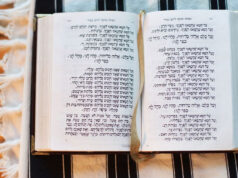
Does anybody really feel these things as we race through the words? At the end of the day, prayer is called avodah she-hi ba-lev—the work of the heart (Taanit 2a). Prayer is work, not a spectator sport or a concert; there are no shortcuts. In my experience, the more I prepare for prayer—the more I learn just beforehand—the more the body and the consciousness share in the soul’s journey, in the soul’s replenishment. Oftentimes, I fail. At the very least, prayer is submission to God: acknowledgement that God resides beyond nature’s rules and is so much greater than them. We reach upward and request that God intercedes from above. But prayer, running toward our source, is only one piece of a two-part framework.
Shov—the soul must return to its post. Above all else, God desires a dirah be-tahtonim—a home in the lowest realm—and so the soul, God’s ambassador, cannot linger too long in the spiritual moment.[12] Though it retains its drive to run toward and be subsumed in light, the soul submits to God’s larger plan: for the Divine to dwell in the world through the soul’s pairing with the body and its engagement in the mundane. Hence, according to Hasidut, the world was designed so that most spend the majority of their days earning a living and tending to life in a body—albeit with Divine intent and purpose.[13] Similarly, far from transcendent, much of Jewish ritual life incorporates physical items of prescribed measurements whose usage is governed by finite time and space restrictions—a way of drawing God into the details.
As noted, contemporary poetry appears to celebrate and underscore shov far more than it does the purely transcendent posture of ratzo—of prayer, of running away from the world. And often, poetry goes further than simply unearthing the spiritual behind the everyday, which, as noted, is perhaps poetry’s central ambition. Often, poetry demands that we find redemption—what a believer might label the Divine—behind our darkest moments, the truly lowest realm. Not via transcendence or escape, but head-on. And so, poetry emerges with its unflinching renderings of life’s difficulties as they are (which is another laudatory line one finds on the back cover of so many volumes of contemporary poetry). Not as a prayer for salvation but as an assertion that the imperfect holds a kind of perfection—a holiness filtered through the messy human experience, in the physical world, rather than at the top of a spiritual ladder the soul has fled and scaled for a transcendent recharge.
On the other hand, as mentioned, absent the supremely spiritual experience of ratzo—of prayer lifting worshipers above the maze of their everyday circumstances—returning to the world to uncover the Divine in the mundane or the difficult can feel impossible. Only the worldly surface is seen, and life remains too overwhelming or distracting to be spiritualized. In the synagogue, by contrast, we untether ourselves from all that weighs us down and run toward a purely spiritual encounter. Then, newly inspired, we close our prayer books, ready to mine the world for the spiritual concealed within it. And if we are poets, we now stand poised to document what we unearth.
We practice Judaism’s “run-and-return” model daily. Each morning, we pray and then emerge from the synagogue to sanctify our everyday encounters. We repeat the process with the afternoon and evening prayers, which offer additional transcendent boosts that keep us buoyed above the waves of the daily grind as the hours wear on. Yet, the run-and-return model plays out with the greatest poignancy on Yom Kippur, the holiest day of the year—especially during the day’s fifth and final prayer, neilah.
The word neilah means “locked” or “closing,” connoting how, as the Yom Kippur sun sets, the gates of Heaven have almost shut. And so, we feverishly utter our requests in a last-ditch effort to secure a year of blessing. Yet in Hasidic teachings,[14] neilah means something else entirely: the moment when the rest of the cosmos is “locked out” of a unity shared only between the soul and God—the most transcendent encounter of the year.
It is worth taking a moment to describe the five levels of the soul to better understand the extent to which, on Yom Kippur, we race away from the world and climb to the loftiest heights. Invested in the body, the three lower soul levels animate our thoughts, speech, and actions. A fourth almost subconscious soul level resides in the spiritual Heavens, basking in Divine light. The fifth and highest level, the yehidah, as its name suggests, shares an inseparable oneness with God. And just as God precedes and, in a sense, transcends creation, so the yehidah—the soul’s essence that is one with God—inhabits a spiritual “space” loftier than creation, loftier even than the Heavens. Thus, the yehidah enjoys a unity with God more profound than the connection forged via Torah study, mitzvot, or repentance (the realms of thought, speech and action)—and loftier still than the connection achieved via prayer during the rest of the year, when the soul runs away from the world to revitalize and fuse itself to the Divine. For, at the yehidah level, the soul and God are already—and always—one. Relative to this soul level, our daily sins and shortcomings—which blemish our lower soul components related to thought, speech, and action—fade from the radar.[15] For on the transcendent plane of the highest soul level, nothing exists save for God and His oneness with the yehidah.
Remarkably, during neilah—the fifth prayer of Yom Kippur, the only day on which we pray five times)—this final and loftiest level of the soul-God relationship, the yehidah, manifests, overriding all else. Neilah is so sacred and otherworldly that it parallels the moment in Temple times when, once a year, the High Priest entered the Holy of Holies—and, as the Jerusalem Talmud states, not even an angel was present in that chamber (y. Yoma 1:5). For even angels were “locked out”—overwhelmed by the oneness God shared at that yehidah moment with the High Priest, the representative of all the Jewish people.
And yet, as noted, transcendence—running away from and rising above the world—is only a stepping stone, meant to facilitate the larger Divine plan: shov, return, holiness channeled into the ordinary, physical world. Thus, as Maimonides emphasizes,[16] as transcendent as it was, the High Priest’s Yom Kippur service was not officially complete until he entered “the locker room” to put on his ordinary clothes and, with great fanfare, return to his home and family life—the mundane stuff of contemporary poetry.
Let me close with one of my own Yom Kippur–themed poems, which appears to fit the shov paradigm—or at least whose setting is of this world, not a synagogue or far-off Heaven to which the soul sometimes flees:
ONCE, STOPPED AT A LIGHT ALONG RT. 27
Once, stopped at a light along Rt. 27
on my way home from class,
I saw an older man stretch out his hands
over a younger man’s forehead:
“…May His countenance shine upon you
and be gracious to you…”
A father bestowing the priestly blessing
on his son beside a Toyota
in a supermarket parking lot
the Eve of Yom Kippur.
“…turn His Countenance to you
and grant you peace.”
The man lifted his body
into the driver’s seat of his sedan.
His son resumed loading groceries
into the back of his minivan. The God of Abraham,
Isaac, and Jacob descending
through the shopping cart’s metal grates
and onto the asphalt
of the state highway.[17]
[1] Yehoshua November, God’s Optimism (Main Street Rag, 2010), 34.
[2] Yehoshua November, “A Religion of Tests,” Chabad.org, 2008, https://www.chabad.org/media/pdf/540/bgYt5404873.pdf.
[3] See Hasidut Mevo’eret: Moadim, vol. 1, 267-268, and Hasidut Mevo’eret: Avodat Ha-Tefillah, vol. 4, 225.
[4] In a number of his sihot, the Lubavitcher Rebbe associates tragic episodes in Jewish history with an overemphasis on “running”—a spiritual shortsightedness that precludes “returning” to sanctify the world. See, for example, Likkutei Sihot 4, 1041-1047, where the Rebbe suggests that the spies charged with scouting the land of Israel sabotaged their mission because they wanted to maintain the largely spiritual existence (running) they enjoyed in the desert. They feared that the agricultural life they would commence once they inhabited Israel (return) would distract them from prayer and Torah study. According to the Rebbe, the tribes of Reuben and Gad incurred Moses’s criticism for a similar reason: they desired to remain in the Transjordan—to live as shepherds rather than farmers—so that they could devote their lives more readily to prayer and meditation. See Likkutei Sihot 8, 186-191. The Rebbe also links the death of Aaron’s two sons to a desire to get “too close” to God: they were seized by an overwhelming urge to “run” toward the Divine in the Holy of Holies and failed to consider that this move might render them incapable of “returning” to sanctify the profane. In the same sihah, the Rebbe links this error to that of Rabbi Akiva’s colleagues who entered Pardes, the mystical orchard, with him. In the Rebbe’s reading of the episode, only Rabbi Akiva safely exited the orchard because, going in, he knew that the purpose of “running”—of a transcendent venture—is to harness the inspiration and then “return” to the world. In contrast, his colleagues failed to realize this; as the Rebbe observes, based on the phrasing of the Talmud, they did not “enter in peace.” Thus, they did not “exit,” or return, in peace. See Likkutei Sihot 3, 987-993.
[5] See Torat Menahem Hitva’aduyot 5713, vol. 3, 17. Here the Lubavitcher Rebbe also adds that when ha-tofel is spelled with the letter tet (instead of tav), the word links to taful, meaning secondary or insignificant. This is fitting, he explains, because in prayer one transcends the parameters of his own selfhood and becomes secondary to—and thus one with—the Divine.
[6] Jack Gilbert, “A Brief for the Defense” (2005), Poetry Society of America, accessed September 18, 2025, https://poetrysociety.org/poems/a-brief-for-the-defense.
[7] See Likkutei Sihot 4, 1162.
[8] See Tanya, chap. 19.
[9] Various Jewish mystical texts parse out four parts of the shaharit service and suggest that, as the worshipper recites each of the four parts, his or her soul ascends through one of the four corresponding worlds. See, for example, J. Immanuel Schochet, Deep Calling Unto Deep, Chabad.org, https://www.chabad.org/library/article_cdo/aid/114927/jewish/Four-Rungs-of-the-Ladder.htm.
[10] See Likkutei Sihot 2, 350.
[11] Ibid.
[12] Tanya, chap. 33. Also see chap. 36. Here the Alter Rebbe notes that, relative to God’s Essence—which equally transcends all of creation—the highest spiritual worlds represent no less of a descent than our physical world. It is therefore inaccurate to suggest that God saw the higher spiritual worlds as primary when He envisioned and created the universe. Rather, drawing on Midrash Tanhuma’s dirah be-tahtonim theology, the Alter Rebbe argues that God created the universe because He desires a home in the lowest realm. This desire, he explains, is rooted in God’s Will and Essence, a “space” which transcends reason and hierarchies. See also the first discourse in the Rebbe Rashab’s Yom Tov Shel Rosh Hashanah 5666. Here the Rebbe Rashab elaborates on the notion that the “impulse” for a dirah be-tahtonim is rooted in God’s Will and inexplicable Essence and is, therefore, the ultimate purpose of creation. In contrast, reasons for creation cited by other Jewish texts are rooted in Divine reason or emotion—more external Divine levels that come into play only once there is a relationship between God and the world.
[13] See Likkutei Sihot 8, 190.
[14] R. Menahem Mendel Schneerson, “Ve-Khol Adam,” Sefer Ha-Ma’amarim Melukat al Seder Hodshei Ha-Shanah, vol. 1, 81.
[15] See Likkutei Sihot 4, 1152.
[16] See Mishneh Torah, Hilkhot Avodat Yom Ha-Kippurim, the end of chap. 4. Also see Likutei Sihot 32, 106-111.
[17] Yehoshua November, Two Worlds Exist (Orison Books, 2016), 60.




 Site Operations and Technology by The Berman Consulting Group.