


Nathaniel Helfgot
A critical moment in the history of the kulturkampf between the Israeli secular Jewish world and the Israeli Haredi world occurred more than 75 years ago with the famous meeting between Prime Minister David Ben Gurion and R. Avraham Yeshaya Karelitz, the outstanding Haredi Talmudic scholar and leader of the mid-twentieth century, universally known by the title of his multi-volume halakhic novelle, Hazon Ish. The run-up to the meeting and its details have been well documented and analyzed in several essays in Hebrew over the decades in the secular, religious, and Haredi presses.[1]
In short, during the summer and fall of 1952, one of the first religious-secular legal and ideological crises erupted regarding the question of enshrining into law the conscription of girls/women into the armed forces of the fledgling Israeli state. The religious community across its entire spectrum rejected this move, and the Haredi community vowed to give up their lives rather than submit to this law if passed, which they termed an “evil decree.” The religious-Zionist camp settled for a compromise position of drafting women to national service (sheirut le’umi), which the Haredi community continued to reject.
In the midst of that firestorm, Ben Gurion reached out to the leading Haredi figure at the time, R. Yitzhak Ze’ev Ha-Levi Soloveitchik, known as the Brisker Rav, for a meeting to discuss the underlying impasse, but was rebuffed. He then turned to Hazon Ish, who accepted a meeting with Ben Gurion. This meeting took place on October 20, 1952 at the home of Hazon Ish in Bnei Brak. During the meeting, that lasted about an hour, Ben Gurion asked his interlocutor, (as recorded by Ben Gurion’s personal secretary, Yitzhak Navon, the only other person who was in the room at the time): “I have come to ask you: how can we, religious and non-religious Jews, live together in the land, without us imploding from within?”
Hazon Ish famously responded with a reference to a Talmudic statement in Sanhedrin 32b, that when two camels are traversing a narrow path and there is not enough room for both to pass at the same time, the camel that has no burden on its back should compromise and make way for the camel that is laden with a burden.. (In subsequent imprecise retellings, the camels turned into wagons, yielding the famous catchphrase of the secular community having “an empty wagon”).
The exact import of Hazon Ish’s reply has been subject to various interpretations, including the popular conception (both in the secular, religious, and Haredi media and in popular consciousness) that he intended to state that the secular world is empty and bereft of any values. More likely, as Navon himself, Israeli scholar Binyamin Brown, and others who have examined the source material argue, Hazon Ish was contending that religious Jews have many obligations and “burdens” that secular Jews do not, e.g., kashrut restrictions, Shabbat observance, and sexual mores that require the secular side to accommodate them to be able to function in society. Ben Gurion’s response as reported by Navon and Haredi literary sources was: “Do only religious Jews have the yoke of mitzvot and others do not?… Is not settling the land of Israel a mitzvah? And what of the obligation to work the land? And protection of life and the borders? Is this is a small mitzvah in your eyes? The secular Jews are ready to give their lives for these mitzvot…for eradicating the desolation of the land, the work of the army, and the building of the land are also not easy or pleasant work.”
The meeting ended with no solid conclusions, nor, surprisingly, do we have any written documentation that they discussed the immediate point of contention, women’s conscription into the IDF, before its conclusion. In his journals for that day, Ben Gurion wrote that Hazon Ish concluded the meeting with the statement that “there are things we are willing to give up our lives for; we are a minority, but when we give up our lives we will be strong, and there will be no force that will overpower us.” Ben Gurion wrote in his journal that the atmosphere at the meeting was pleasant and that Hazon Ish spoke “in a pleasant and jovial manner, without any zealous anger, though it is certain that he has an element of zealotry in him, though it is hidden.” However, Ben Gurion, as he expressed later in his writings, left the meeting disappointed and with the feeling that the chasm was too wide to be bridged.
* * *
But the relationship between Ben Gurion and Hazon Ish does not end there. Below is an account of the “sequel” to the meeting and the publication of a number of letters between Hazon Ish and Ben Gurion, most of which have not yet been translated into English.
On November 21, 1952, Hazon Ish wrote a short letter to Ben Gurion regarding the issue of conscription of women. (All translations are my own):
“The Honorable Prime Minister, may his light shine.
After inquiring as to your welfare,
I would be honored to request of you the following:
I believe that the Prime Minister, who is full of the choice quality of freedom of conscience, is troubled by promulgating an obligation of conscription of girls for national service, lest it harm the freedom of conscience of the many or the individual.
I thus dare to express my great pain before you regarding this decree, and to request that the Prime Minister forego it.
Until now I could not make this request as this concession would have been seen as made under pressure. Now that the Prime Minister has cleared all the obstacles in his path,[2] the concession will be viewed as a product of the pure gentleness of the Prime Minister, to recognize the pain of the religious community and their conscience.
This will now be to the honor of the Prime Minister and his glory in the eyes of others.
I bless you that from peace with the religious community everyone will emerge blessed.
With the proper respect,
Avraham Yeshaya
This letter is fascinating and calculated in its deployment of arguments. First, it does not proffer any claim based on religious principles or classic Jewish values, but entirely rests on a purely secular western value, freedom of conscience. This value, Hazon Ish would have correctly assumed, would potentially have more sway with Ben Gurion than anything else he could have written. While it is doubtful that Hazon Ish himself would have subscribed to this value in the western sense of the term, using the language and values system of his interlocutor rather than a Talmudic metaphor, as he had done a month before in person, must have seemed the more proper course to achieve his aim at this point. Moreover, Hazon Ish subtly introduces his perception that Ben Gurion’s opposition to making any concessions may have been motivated by his political standing and how he would be perceived rather than by pure ideological commitment.
On both accounts, Hazon Ish turned out to be wrong. Four days later, Ben Gurion sent the following letter to Hazon Ish:
To the Honorable Ga’on Hazon Ish, Bnei Berak.
My honorable sir,
I was happy to receive your letter, but I am very sorry that I cannot respond to your request in the affirmative. Regarding conscription of girls there is a dual problem of freedom of conscience:
There is a religious wing (not all the religious factions agree to this) whose conscience is harmed by conscription; and there is a great number of people in Israel whose conscience is troubled by the lack of conscription. There is also a legal debate. Though I know that there is a debate amongst scholars of halakhah about this issue, I am not about to place my head between these mountains and I will certainly not dare to oppose you on a matter of halakhah as I know you are the greatest of the generation . However, I do know the security needs of the nation of Israel, and the survival of the nation pushes aside, in my eyes, all other factors.
I am pained that you describe conscription of girls into national service as a “decree.” The laws of the nation of Israel in its own land are not a “decree.” …Let me add that the meeting and discussion with you were an important experience, and I will never forget it.
With great respect and recognition,
David Ben Gurion
In subsequent years, Ben Gurion occasionally mentioned the meeting with Hazon Ish in his letters and journal entries while noting his disappointment that this “man of the spirit,” as he called him in his journal entry from the day of the meeting, did not appreciate the depth of the dilemma. In a letter to one of the heads of the religious-Zionist community, R. Yehuda Leib Maimon, on June 25, 1954, Ben Gurion wrote:
I even turned to the late Hazon Ish, not to discuss the issue of conscription of girls, as a number of newspapers reported, but regarding the question how he, after the establishment of the state…sees the joint existence of the secular and religious publics, who willy nilly, will have to live and work together, without one of them coercing the conscience of the other. To my regret, I did not find that the deceased comprehended the problem.
Despite this disappointment, Ben Gurion continued to hold the person of Hazon Ish in high esteem, an esteem that grew in later years as he was exposed to some of his non-Halakhic writings. After receiving a copy of the small philosophic-ethical treatise Emunah U-Vitahon (Faith and Trust), written by Hazon Ish, from a religious minister of parliament alongside another book, he wrote back:
I must thank you, not only for the first volume of the Yad Ha-Hazakah (Maimonides’ Code of Law), but even more so for the precious pamphlet of the Hazon Ish. It is a long time since I have had such pleasure in reading, as I had in reading the vision of the Hazon Ish on faith, good character traits, and more. The text is worthy to be read by every young person in Israel.
When, a few years later, Ben Gurion received a copy of the collected letters of Hazon Ish, he cited a poignant section from one of the letters in his journal and expressed in amazement: “How many people like this still exist amongst our religious leadership today?”
More than a decade later in 1966, when he was asked about that fateful meeting in 1952, Ben Gurion said:
At the time I had the impression that the question [I had posed to him] did not really trouble him, and, as someone who knew him well told me, he lived only in the world of halakhah. However, after his death, I read his letters and saw that he was a man of the spirit, in addition to being an expert in halakhah. And till this day, I wonder why he did not appreciate the gravity and significance of the question that I posed to him?
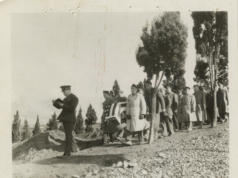
On the day of Hazon Ish’s funeral, on Sunday, October 26, 1953, at the start of the weekly cabinet meeting, Prime Minister Ben Gurion rose and said: “Before we turn to the day’s agenda, let us all rise in honor of Hazon Ish zt”l who passed away. We lost a great human being and a great Jew, who was without a doubt one of the greatest scholars of halakhah, the area to which he devoted all of his days.”
In a letter a few months later to members of Hazon Ish’s family, Ben Gurion wrote:
I merited to meet with the deceased, and was impressed with his outstanding wisdom. The [day of the] death of Hazon Ish was a day of personal mourning to me.”
* * *
The culture battle between Haredim and the rest of Israeli society has not abated in the last seven decades since the fateful meeting between Ben Gurion and Hazon Ish. The conflicting value systems and the sense of clashing ideals has only heightened with the growing political and demographic power of the Haredi community, which many thought would wither away with the passing of time.
During the course of the last two years of war in Gaza, Lebanon, and other locales, the deep tensions between the secular majority and the Haredi community, as well as the religious Zionist community, have crystallized around the issue of army service for young men in Haredi yeshivot. The sense of the “unequal nation burden” not being shared by the Haredi community has only exacerbated with the mounting casualties and injured of IDF soldiers, the need for many more soldiers for fighting battles on many fronts and long term security needs, the long tours of reserve duty and the impact it has had on families and marriages. The extreme rhetoric of some of the leaders of the Haredi community against any attempt to conscript yeshiva students into the IDF, and statements on the ground from activists such as “namut ve-lo nitgayeis” (we will die rather than enlist), harken back to, and echo Hazon Ish’s words to Ben Gurion that:
There are things we are willing to give up our lives for; we are a minority, but when we give up our lives we will be strong, and there will be no force that will overpower us.
How this issue, central to the future and cohesion of the State of Israel, will play itself out is a burning question that has its roots in the early days of the State and the conflicting world views that were already articulated at the time.
[1] For an overview of this literature, and for the Hebrew texts translated into English below, see Benjamin Brown, Hazon Ish: Ha-Posek, Ha-Ma’amin, U-Manhig Ha-Mahepekhah Ha-Hareidit (Magnes Press, 2011), pp. 265-274.
[2] Ben Gurion had by that point been able to establish a coalition without any of the religious parties. As such he would not be perceived as caving in to coalition deal-making and pressures.





 Site Operations and Technology by The Berman Consulting Group.