

Michael Kurin
Introduction[1]
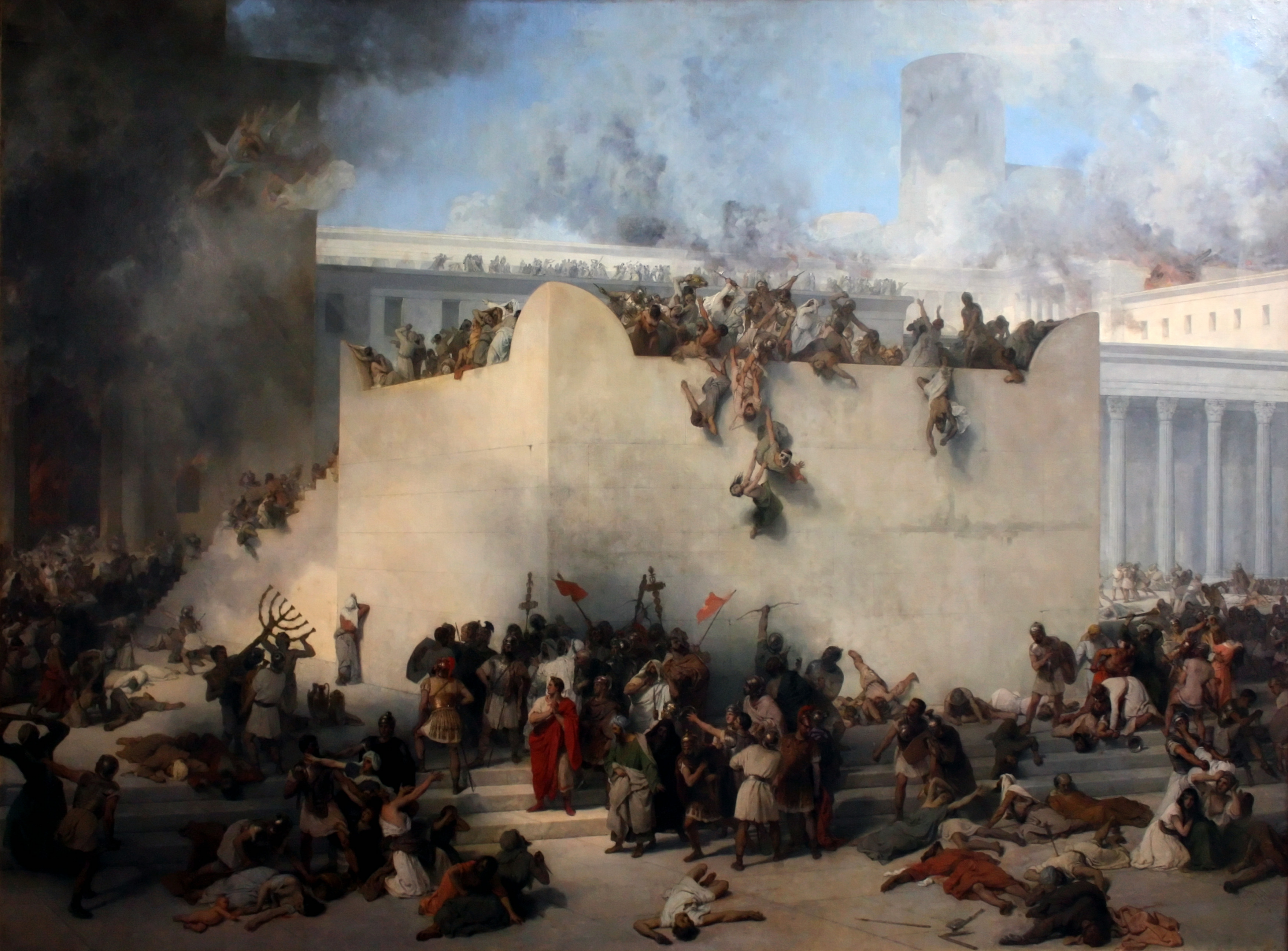
While the tragic events of October 7th, 2023, have brought new meaning to Tisha B’Av, the observance of Tisha B’Av in modern times continues to be fraught with several challenges. Previous authors have noted several, including the difficulty of identifying with the churban while we live comfortable lives.[2] The presence of a thriving state of Israel over which Jews are sovereign has led some authorities to amend the Nachem insertion said on Tisha B’Av,[3] while other Jewish thinkers have questioned the need for ongoing observance of the day altogether.[4]
In this essay we will examine the treatment of the Tisha B’Av question during the Second Temple Period and apply its teachings to our current situation, with a modern state of Israel, from both a halakhic and hashkafic perspective.
The Second Temple Period
The founding of the modern state of Israel is not the first return of the Jewish people to Israel that led the Jewish community to question the relevance of Tisha B’Av. The book of Zecharya records a question sent from the diaspora Jewish community to the religious leaders in Jerusalem in the very early years of the Second Temple Period:
Bethel-sharezer and Regem-melech and his men sent to entreat the Lord to address this inquiry to the priests of the House of the LORD and to the prophets: “Shall I weep in the fifth month, as I have been doing all these years?”[5] (Zecharya 7:2-3)
The fifth month is Av, according to the Biblical count (beginning from Nissan). We see that the return of a Jewish community to Jerusalem and the rebuilding of the Temple led the Jewish community in Persia to wonder if fasting on Tisha B’Av was still appropriate. After an interlude of more than a chapter, Zecharya eventually answers the question:
Thus said the LORD of hosts: “The fast of the fourth month [the 17th of Tamuz], the fast of the fifth month [Tisha B’Av], the fast of the seventh month [Tzom Gedalya], and the fast of the tenth month [10th of Tevet] shall become occasions for joy and gladness, happy festivals for the House of Judah; and truth and peace will be loved.”[6] (Ibid. 8:19)
The Divine answer is that there will be a time when all public fast days, including Tisha B’Av, will be converted into holidays. However, it is not apparent whether this conversion was to take effect immediately during the Second Temple Period, or whether Zecharya was referring to a time in the more distant future. If the latter is true, Zecharya never actually answered the question that was posed regarding the Second Temple Period.
Chazal attempted to add clarity to the statement in Zecharya. The Mishna (Rosh Hashana 18a) states that messengers were sent out each month to inform distant communities about the proper time to observe holidays, based on the proclamation of Rosh Chodesh for that month. Messengers were sent in Av to inform communities when to observe Tisha B’Av, but they were not sent for the other public fast days. The Gemara attempts to explain this distinction through the following discussion:
As Rav Chana bar Bizna said that Rabbi Shimon Chasida said: What is the meaning of that which is written: “Thus said the Lord of Hosts: The fast of the fourth month, the fast of the fifth month, the fast of the seventh month, and the fast of the tenth month shall become occasions for joy and gladness, happy festivals for the house of Judah” (Zecharya 8:19)? It calls them days of “fast” and it calls them “occasions for joy and gladness”! … Rav Pappa said that this is what it is saying: When there is peace, these days will be times of joy and gladness; when there is a decree from the kingdom, they are days of fasting; and when there is no decree but no peace, if people wish, they fast, and if they wish, they do not fast. If so, the Ninth of Av should also [be like the other fast days, i.e., optional when there is no decree but no peace]? Rav Pappa said: The Ninth of Av is different, since multiple calamities occurred on that day. (Rosh Hashana 18b)
Tisha B’Av is distinct from the other fast days because of the multiplicity of tragedies that occurred on that day. For this reason, it is treated with greater import and, apparently, not made optional even when the other fast days are.[7] More importantly for our topic, in the course of this discussion, Rav Chana and Rav Pappa define the criteria by which it is determined whether public fast days should be observed as fast days or celebrated as holidays: when the Jewish people live under the rule of a kingdom that imposes decrees upon them, we continue to observe fast days; when there is peace, the fast days are converted to holidays; when neither condition is met, the fast days become optional. Because the fast days are optional, the Mishna did not require messengers to be sent to inform communities of their proper dates.
Unfortunately, while this discussion in the Gemara came to clarify Zecharya’s answer regarding the status of Tisha B’Av, the explanation given is no less ambiguous than the verse itself. The Gemara does not explain how to define or determine when one lives in a time of “decrees of the kingdom,” or a time of “peace,” or neither. All that is known is that in a time of “peace,” however that is defined, Tisha B’Av and other public fast days can be celebrated as holidays. Thus, the definition of a time of “peace” is the key factor that determines when it is appropriate to not observe Tisha B’Av as a fast day.
The medieval authorities, as one could expect, offered a multitude of opinions on the definition of “peace” as utilized in this passage of the Gemara.
- Rashi, followed by Meiri, writes that “peace” is a time when the Jewish people are not being ruled over by idol worshippers.
- Rashba explains the term “peace” as describing a time when the nation of Israel dwells in their land.
- Rabbeinu Chananel defines “peace” as the time that the Temple is standing.
- Ritva combines the latter two approaches and writes that “peace” means the nation of Israel dwells in their land and the Temple is standing.
- Ramban also defines “peace” as a time when the Temple is standing. However, he also defines “no peace, but no decrees of the kingdom” as: after the destruction of the Temple, [at a time when] there is no distress in any known Jewish community. Therefore, it seems that according to Ramban, if any Jewish community in the world remains in distress, all public fast days are obligatory for all.
- Tashbetz (shu”t 271) agrees with the Ramban’s definition of “peace,” but does not accept his very expansive definition of “no peace, but no decrees of the kingdom,” claiming Ramban has no proof for it. Instead, he offers a modified version: the Jewish nation is obligated to fast when its entirety is under distress. Otherwise, if only a particular community is under distress, that community is obligated to fast but the rest of the Jewish world has the option to fast or not.
Applying the opinions of these medieval scholars to real-world scenarios is not a simple task. It seems fairly clear that according to Rabbeinu Chananel, Ritva, and Rashba, the public fast days would have been celebrated as holidays during the Second Temple Period, as the Temple was standing and the Jewish people dwelled in Israel. However, Meiri’s opinion is less clear, as even the Jewish community in Israel was beholden to the Persian king, and later to the Greek and Roman empires. The ambiguity of these criteria leaves open the possibility of debate on this question. Finally, although Tashbetz is explicit that the public fast days were celebrated as holidays during the Second Temple Period, neither he nor Ramban explain how to fit this with their opinion that fasting was actually obligatory when the Jewish community was under distress – which was certainly the case on at least several occasions while the second Temple stood. It is also interesting that although a scenario of “no peace, but no decrees from the kingdom” is considered, the permutation of “peace, but decrees from the kingdom” is not discussed by either the Gemara or the commentaries, even though this is in fact the most accurate description one could give to the Second Temple Period.
Implications for Medieval Times
Rashba, Ritva, Rabbeinu Chananel, and Meiri all seem to hold that their medieval time periods constituted a time of “no peace, but no decrees of the kingdom.” The criteria for “peace” – namely, the Temple standing, or Jews living in Israel free from non-Jewish control – were certainly not fulfilled then. Interestingly, despite the frequent and systematic persecution the Jewish communities were often subject to, they felt these did not constitute “decrees of the kingdom” such that the fast days would be obligatory. Ramban and Tashbetz, on the other hand, argue that the status during their lifetimes was one of “decrees of the kingdom,” because there were at least some Jewish communities that were under distress. Thus, Ramban felt that all Jews in his day had an obligation to fast on all public fast days, while according to Tashbetz, at least the Jewish communities that were under distress had an obligation to observe the fasts.
These opinions are summarized in the following table.
| Definition of “peace” | Second Temple | Medieval Times | |
| Meiri | Free from non-Jewish control | ? | Optional fasting |
| Rashba | Jews dwelling in Israel | Celebrate as holiday | Optional fasting |
| Rabbeinu Chananel | Temple is standing | Celebrate as holiday | Optional fasting |
| Ritva | Israel dwells in her land and Temple is standing | Likely celebrate as holiday | Optional fasting |
| Ramban | Temple is standing | Celebrate as holiday | Obligatory fasting |
| Tashbetz | Temple is standing | Celebrate as holiday | Obligatory for suffering communities, optional for others |
These opinions are not only important because they are the criteria by which we discern whether or not the public fast days are obligatory, but also because they give us insight from an ideological perspective into what, according to each scholar, we should be mourning on the public fast days. Once the object of our mourning has been resolved, it is appropriate that the day should no longer be observed as a fast day or day of mourning. Thus, for Meiri, we are mourning the loss of Jewish self-determination. For Rashba, we mourn the loss of our homeland. For Rabbeinu Chananel, we mourn the loss of the Temple. For Ramban and Tashbetz, we mourn both the loss of the Temple and our ability to protect ourselves from dangers that come with being ruled over by a hostile nation.[8]
Implications for Modern Times
With all this in mind, it is possible to surmise how these different scholars would have reacted to our contemporary condition, in which the Jewish people have established a state in their ancestral homeland, as a sovereign nation equipped to defend itself against hostile nations. As the Temple has not yet been rebuilt, it is safe to assume that Ramban, Tashbetz, and Rabbeinu Chananel would not deem it appropriate to change the observance of Tisha B’Av in any way. Rashba’s criterion of Jews dwelling in Israel, however, has certainly been fulfilled. Meiri’s criteria of the Jewish nation not being controlled by a non-Jewish nation is more ambiguous, but it could certainly be argued that this has been fulfilled as well.[9] It would be fascinating to see how Rashba and Meiri would react to some of the contemporary movements to change the observance of Tisha B’Av in our times.
The Opinion of Rambam
Thus far, I have omitted the medieval authority with the most surprising view: Rambam. Rambam writes that the Gemara’s description of “no peace, but no decrees from the kingdom,” in which the public fast days except for Tisha B’Av are optional, was applicable in the Second Temple Period. In other words, Tisha B’Av was observed as an obligatory fast even then.[10] It is a view that perplexed many. The Tashbetz (ibid.) was so exasperated by this that he simply remarked: If they fasted on Tisha B’Av during the Second Temple Period, when would Zecharya’s description of the fast days becoming holidays occur?! He goes on to claim that Rambam’s recorded opinion is actually a scribal error and does not represent the true opinion of Rambam.
How are we to understand Rambam’s view? One could conjure up a legal defense of Rambam based on the sources. The mishna cited above (Rosh Hashana 18a) seems to imply that messengers were sent on Rosh Chodesh Av to inform communities of the proper date for Tisha B’Av even during the Second Temple Period. Furthermore, aside from the implications of this passage in the Gemara, we have no other legal or historic record of the public fast days ever being celebrated as holidays. Lastly, although the Gemara implies that the Navi made the transformation of the fast days into holidays dependent on the rebuilding of the Temple, perhaps the Gemara used the rebuilding of the Temple as a reference to the messianic era and not the Second Temple Period. Nonetheless, the image of the Jewish people literally sitting on the floor of the rebuilt Temple, crying and fasting about the Temple’s destruction, is one that begs further examination. How are we to understand the worldview that would lead Rambam to believe this is what indeed happened?
Sfat Emet (to Rosh Hashana 18b) offered a historical justification for Rambam. He says a “time of peace” should be defined as a time of total Jewish sovereignty in Israel. He points out that during the Second Temple Period, the Jewish state lived under control of the Persian and Greek empires, and thus that could not be considered a “time of peace” even though the Temple was rebuilt. Although he does acknowledge that there may have been specific points in time when the Jewish state was more autonomous, such as during the rule of the Hasmoneans, he argues that the majority of the Second Temple Period did not meet the criteria for abolishing Tisha B’Av. This acknowledgement of the complexity of Jewish sovereignty during the Second Temple Period is historically accurate and makes Rambam’s opinion easier to accept.
On a hashkafic level, Rambam’s opinion plagued Rav Soloveitchik. He offered several explanations of Rambam’s view:[11]
A. Although some of what was destroyed in the churban may have been rebuilt, the destruction is still relevant today as the original source of much of Jewish suffering. In a sense, all persecution against Jews was made possible because of the churban.
B. Even once the Temple was rebuilt, Tisha B’Av remained a harsh reminder of our vulnerability. If the Temple could be destroyed once, if we could be exiled from Israel once, then the fear that it could happen again remains ever-present, especially on Tisha B’Av.[12] Ritva (Rosh Hashana 18b) actually makes a similar argument to explain why the public fast days, which are all tied to the first Temple’s destruction, were not abolished after the Temple was rebuilt. He answers that the Jews of the time knew the second Temple would eventually be destroyed and we would find ourselves in a prolonged exile. This knowledge gave the rebuilding of the Temple diminished importance in their eyes, and the existence of the Temple was thus insufficient to abolish the public fast days. It is possible that what Ritva has in mind here is not true prophetic knowledge of the future but an awareness of their own vulnerability, the knowledge that the Temple could very well be destroyed again, which made them feel less comforted or less secure in its rebuilding.
C. The question of theodicy and the injustice of the destruction of the Temple has never been resolved. “Can the proclamation of the State of Israel, with all of its glory and all of its kiddush Hashem, ever rationalize the cataclysmic events which befell our people in the 1940s under the Nazis? Does Yom Ha’atzmaut answer the question of Eichah?… Did it answer our problem? Did it solve our doubts?… As long as Eichah remains as inexplicable as it was during the dark nights of hester panim …Tisha B’Av cannot be abandoned.”[13]
Rav Soloveitchik’s explication of Rambam’s view helps explain the ongoing relevance of Tisha B’Av in the modern era of Jewish sovereignty in Israel. His three explanations of Rambam’s view are certainly as relevant today as they were 2000 years ago, and even more so in the aftermath of October 7th, 2023. Thus, Rambam can certainly be added to the list of medieval authorities above who would be very unlikely to abolish Tisha B’Av in our present time.
Other modern authorities also tried to address why Tisha B’Av should remain a fast day in the context of the modern state of Israel. Rav Yoel Bin Nun was once asked in an interview why we still observe Tisha B’Av nowadays. He explained that reaching the messianic era involves more than just having a state or even a Temple. It involves the creation of an ideal sovereign state with justice, no corruption, and care for the vulnerable people in society.[14] In other words, until we correct the societal problems that led to the destruction of the Temples, we still have reason to fast. As long as we continue to deal with problems of corruption, injustice, lack of care for the widow and orphan, and baseless hatred, we have more than enough reason to observe Tisha B’Av.
Back to the Pesukim
Looking back to the verses in Zecharya that we began with, it dawned on me that this is the simplest explanation for an anomaly about the pesukim in Zecharya that I did not understand before hearing this last answer.
The Navi’s immediate response to the question of whether to observe Tisha B’Av during the Second Temple Period seems to skirt the question:
Thereupon the word of the LORD of Hosts came to me: “Say to all the people of the land and to the priests, When you fasted and lamented in the fifth and seventh months all these seventy years, did I also fast? And when you eat and when you drink, who but you does the eating, and who but you does the drinking?” (Zecharya 7:4-5)
Rather than answering the question directly, God responds rhetorically, then proceeds with a lengthy diatribe castigating the Jewish community for failing to focus on social justice or to remedy the moral corruption in their society. More than a full chapter later, the Navi returns to the question about fasting and provides the ambiguous answer that was discussed above.
Thus said the LORD of Hosts: “The fast of the fourth month [the 17th of Tamuz], the fast of the fifth month [Tisha B’Av], the fast of the seventh month [Tzom Gedalya], and the fast of the tenth month [10th of Tevet] shall become occasions for joy and gladness, happy festivals for the House of Judah; and truth and peace will be loved.”
I always wondered why the question was not immediately answered and what purpose the lengthy interruption served. In light of Rav Bin Nun’s approach, the answer is clear. God’s response to the question of fasting is rhetorical because the question is audacious. The fast days will not be abolished until we have ushered in the messianic era, including the creation of a just and moral society that is free of corruption and adequately cares for the vulnerable. God’s response is that rather than focusing on the narrow question of fasting, the Jewish leadership should focus on correcting the problems that led to the destruction of the Temples in the first place. Only once those issues have been corrected can abolishing the fast days be considered.
This also explains the need for the modifying clause at the end of God’s answer, which says the fast days will be celebrated as holidays, “and truth and peace will be loved” (8:19). As Radak explains, the fast days will be converted to holidays only on condition that a society of truth and peace is created.
Another peculiarity may also be explained based on Rav Bin Nun’s approach. As noted above, the Gemara defines the time to convert fast days into holidays as a “time of peace.” This ambiguous term led to multiple definitions by different commentaries, as discussed above, and left it up for debate when such a conversion of fast day to holiday should occur. But, one wonders, why did Chazal choose this particular term? Why not just say explicitly “when the Temple is rebuilt,” as is the majority opinion among medieval scholars? Perhaps one could suggest that the term “peace” was intentionally selected by our sages to reference the clause in Zecharya, “truth and peace will be loved.” Although this is not explicitly stated by the medieval authorities, perhaps the sages themselves were attributing importance to the creation of an ideal peaceful society as a prerequisite to transforming fast days into holidays.
Additional Thoughts/Conclusion
The explanations of Rav Soloveitchik and Rav Bin Nun also serve to underscore the purpose in continuing to mourn for an event that occurred long ago and that is difficult to relate to. According to their answers, what we are really mourning are modern problems. First, our current persecution and suffering. Second, the ongoing problem of theodicy. Third, our vulnerability. Fourth, our own societal deficiencies that have not yet corrected the problems. Intellectually, we trace these challenges back to Biblical times, and specifically to the destruction of the Temple, which anchors them in the calendar date of Tisha B’Av. But emotionally, the mourning is focused on contemporary problems that are much easier to identify with.
I suspect there are many, myself included, who found increased relevance to Tisha B’Av since October 7th, 2023. Indeed, the suffering of the Jewish people, our vulnerability despite the existence of the state of Israel, the struggle with theodicy, and the imperfections of our society have never felt so acute in many of our lifetimes. We have all learned that tragedies like those of the pre-state era can continue to befall the Jewish people even within the Jewish sovereign state of Israel. This has surely changed the tone of the discussion, and the clamoring to abolish Tisha B’Av or change the way it is observed has quieted. This reawakening notwithstanding, all of these reasons to continue to observe Tisha B’Av existed before October 7th, 2023, as well. In other words, October 7th didn’t really change the equation as much as it highlighted the fact that the most relevant objects of our mourning may not have been adequately appreciated in recent times.
It is customary to end an essay like this with a wish that Moshiach should come speedily, and in our days. But I think that message is too passive. Let us work to create the utopian society so beautifully described by Rav Bin Nun – one that fixes our deficiencies, that cares for the vulnerable, and that is free of corruption. We hope that by doing our part, we allow God to do His in ushering in the messianic era and bringing an end to our modern-day suffering.
[1] I owe a great debt of thanks to Mrs. Sarah Rudolph for her help in editing this essay.
[2] See, for example, this article by Dr. Joshua Berman: https://jewishaction.com/religion/shabbat-holidays/churban/do-we-still-mourn-the-churban.
[3] As discussed by Rabbi Gil Student at https://www.torahmusings.com/2006/07/nachem-nowadays. Note also that R’ Aharon Lichtenstein (not mentioned in this post) is said to have supported skipping a part of the Nachem prayer.
[4] See, for example, https://blogs.timesofisrael.com/tisha-bav-a-slap-in-the-face-to-the-holy-one-blessed-be-he.
[5] Translation by JPS, 1985 (available on Sefaria), adapted by me.
[6] This clause at the end of the verse is difficult to translate due to its unusual grammatical form. JPS translates as “but you must love truth and peace,” while Koren translates as “therefore love truth and peace.” I will offer my opinion on the meaning of this phrase at the end of this essay.
[7] This conclusion is fraught with ambiguity as well, as it is unclear whether it means Tisha B’Av is truly optional but we still send messengers for it out of respect for the seriousness of what it commemorates, or whether it means that the seriousness of Tisha B’Av elevates it to a different status, rendering it an obligatory fast day even when living in a time of neither peace nor decree. (In this essay we will assume the latter, which I believe is the assumption of all of the Rishonim cited here.) It is also unclear whether the multiplicity of tragedies mentioned refers to the sheer number of tragedies commemorated, or the severity of them. While interesting, these questions are not relevant to our discussion here, which will focus on the definition of “peace” during which fast days are converted to holidays.
[8] It is interesting to note that none explicitly mention the coming of Moshiach as a criterion (though one could argue this is implied in having the Temple rebuilt), nor do they mention Jewish sovereignty in Israel, although the latter might be implied in several of the opinions.
[9] Dependence on allies such as the United States does not, in my opinion, detract from the ability to say Israel is not living under the control of non-Jews. Even during the First Temple Period, alliances with other nations were sometimes made. Presumably, what Meiri was most interested in was that we have sovereignty and self-determination.
[10] One may view Rambam’s opinion with skepticism not just because of the optics of fasting while there is a standing Temple, as will be noted, but because this same passage of Gemara we have been exploring implies Tisha B’Av was observed as a holiday during the Second Temple Period. On Rosh Hashana 18b-19a, the Gemara explicitly writes that the transformation of the public fast days to holidays is tied to the building of the Temple, and also that the fast of Gedalya was celebrated as a holiday when the second Temple stood.
[11] All this is summarized by Rabbi Haskel Lookstein at http://ou.org.s3.amazonaws.com/images/oupress/Kinot%20reflections.pdf.
[12] Tashbetz (ibid.) similarly points out that the destruction of the first Temple on Tisha B’Av changed the equation permanently. This is the reason future Jewish tragedies were observed as part of Tisha B’Av, and why a series of public fast days akin to the 17th of Tamuz and the 10th of Tevet were not enacted to commemorate the various phases of the fall of the second Temple.
[13] Cited here http://www.yutorah.org/lectures/lecture.cfm/838858/Rabbi_Avraham_Gordimer/Being_Confused_on_Tisha_BAv_C_Its_OK,_and_Its_and_Even_Recommended.
[14] I heard this in a shiur by R’ Yitzchak Etshalom, available at https://www.yutorah.org/sidebar/lecture.cfm/904849/rabbi-yitzchak-etshalom/shall-i-weep-the-question-with-no-answer.





 Site Operations and Technology by The Berman Consulting Group.