


David Polsky
Editor’s Note: This article was written prior to the recent ceasefire agreement between Israel and Hamas and the release of the hostages. We pray that Hamas will honor the ceasefire and that the content of this article will not be relevant anytime soon.
For much of the past year and a half,[1] there has been much discussion as to whether Israel should prevent food, water, and other forms of humanitarian aid from reaching the people of Gaza until Hamas releases the hostages and surrenders. According to many observers, the degree of starvation in Gaza has become a humanitarian crisis.[2] Recently, the situation in Gaza has been exacerbated, with many observers declaring Gaza to be in a state of famine, and many Gazans–including children– dying of starvation.
The degree to which Israel has blocked humanitarian aid from Gaza has been a contentious issue within the Orthodox community, given Israel’s denials. Therefore, in this article, I will discuss only the propriety of starving Gaza from a theoretical perspective.
Religious Jews have taken different perspectives on this situation, with many non-Orthodox and some Orthodox rabbis calling for more humanitarian aid to be allowed into Gaza.[3] On the other hand, many Orthodox rabbis have contended that preventing humanitarian aid from reaching Gaza is the Halakhically appropriate thing to do.[4] In doing so, many of them justify the idea based on a little-known passage in Sifrei Devarim that appears to sanction starvation as a military tactic. Several months ago, a Rosh Yeshiva went on a podcast and cited it as a support for starving Gaza. Recently, an article by Rabbis Ro’i Zaga and Boaz Millet similarly employed the passage as its main support for starving Gaza. The rabbis supporting aid have not–to my knowledge–responded to its usage as a Halakhic argument[5] and instead have preferred to use meta-Halakhic arguments.[6] Arguments invoking verses like Proverbs 25:21 or other meta-Halakhic arguments can come across as unserious to those familiar with this Halakhic source that appears to permit starvation.
Therefore, I would like to analyze this Midrashic passage as well as the propriety of starving Gaza from the perspective of Halakhah. Surprisingly, given the paucity of Rabbinic passages relating to wartime ethics and their increased relevance, this passage has not been analyzed in depth by any English language publication.[7]
The Midrashic passage is a Halakhic explication of Devarim 20:10-12:
When you approach a town to attack it, you shall offer it terms of peace.
If it responds peaceably and lets you in, all the people present there shall serve you at forced labor.
If it does not surrender to you, but would join battle with you, you shall lay siege to it;[8]
The Torah there first commands that before attacking a town, the army should offer the opportunity for peace, which would require them to accept some form of subjugation.[9] However, should they not accept these terms for peace, the army should wage war against the city and besiege it.
Here are the relevant parts of the Sifrei’s explication:[10]
“If you draw near to a city”: Scripture here speaks of an optional war.
“to a city”: and not to a metropolis;
“to a city”: and not to a village [le-kefar].[11]
“to do battle with it”: and not to reduce it by hunger, thirst, or plague.
(Devarim 20:11) “And it shall be, if it answers you for peace”: I might think, even (if) some (do so); it is, therefore, written “and it opens itself to you” — all of it and not part of it…
“shall be tribute to you and they shall serve you”: If they said: We accept tribute but not servitude; servitude, but not tribute, they are not heeded — They must accept both.
(Devarim 20:12) “then you shall lay siege to it” — even to reduce it by famine, thirst, or plague.
(Devarim 20:13) “Then the Lord your God will deliver it into your hands”: If you do all that has been stated, in the end, the Lord your God will deliver it into your hands.[12]
The Midrash (as well as the Torah passage on which it is based) appears to parallel the common practice of siege warfare. Classically, before attacking fortified cities, armies would surround them and cut off outside food and water supplies, to weaken the population before launching the attack.[13]
The Midrashic passage nonetheless prompts a number of questions. Why should the respective sizes of the targeted cities make a difference? And would the villages and metropolises, excluded by the Midrash, have stricter or more lenient requirements? Most significantly, the Midrash appears internally contradictory. It first appears to prohibit starving the population and then appears to permit it (at least the way most of the commentaries interpret it). Under what conditions is the Midrash prohibiting starvation, and under what conditions does it permit it? Given that the Midrash limits these requirements regarding starvation to optional wars [Milhamot Reshut], does this imply that all tactics are permitted without restriction in religiously commanded wars [Milhamot Mitzvah]?
A secondary level of questioning requires us to examine Rambam’s approach to these Midrashic passages. Rambam (Hilkhot Melakhim 6:1-2) codifies the requirement to first call for peace, even applying it to Milhamot Mitzvah.[14] He also codifies the Midrash’s requirements of taxes and subjugation. Additionally, he adds that nations making peace are required to accept the 7 Noahide commandments as well.
On the other hand, Rambam never codifies the limitations on city sizes. Even more significantly, he doesn’t incorporate the Midrashic passages permitting or prohibiting starvation at all. In order to uncover a Halakhic approach to starvation of an enemy, we must understand what reason(s) Rambam had for omitting them. Are these omissions tangential and thus insignificant in impacting their application? Were that the case, starvation would be permitted (in at least some circumstances). However, if Rambam omitted them intentionally, what would his legal justification be for omitting Halakhic rulings by Tannaim? And would this mean that starvation would be prohibited nowadays according to Rambam?
The Approach of Netziv
We will now examine some of the approaches given by the commentators.[15]
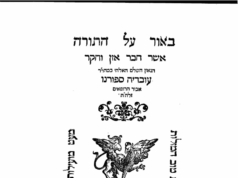
Netziv, in his commentary on Sifrei[16], explains that the seemingly contradictory directions about starvation reflect two different stages in the process leading to war. Before waging war against a locale, the Jewish army should give its target two or three days to accept its offer of peace.[17] During this time, the Jewish army should not try to starve or dehydrate them. If everyone in the town accepts these conditions for peace, there is no need for war. But if even some members of the town fail to accept them within this time span, the Jewish army can wage war against them and even include the tactic of starvation.[18] Netziv explains the distinctions in city size as reflecting practical concerns. If a city is too large, camping outside and waiting for three days could be dangerous, since it is too large to surround on all sides without fighting. The concern is that the opposing army could come out from an unguarded side of the metropolis and attack a Jewish army by surprise. On the other hand, in the case of a small town, it would be too much of a burden for a Jewish army to set up camp to surround it for three days without fighting. Conquering the town would be so easy without surrounding it for the three days in advance that they would be able to wait until peace is rejected before drawing near.
Netziv’s explanation successfully explains why the Midrash’s prohibition of starvation is connected to its commentary on the verse connected with calling for peace (Devarim 20:10), and how the permission of starvation connects with the verse permitting war if the locale fails to make peace (Devarim 20:12). However, a difficulty is the fact that the prohibition of starvation is commenting on the phrase “to wage war against it.” Netziv must explain that “lehilahem aleha” is referring to preparation for war rather than war itself. This makes the Midrashic deduction of not starving or dehydrating into a bit of a non-sequitur, since preparing for war does not necessarily exclude starvation. It would be far simpler to read the phrase by itself as saying that the Jewish army can only wage war against the city but cannot starve it. Furthermore, as Netziv himself notes, he is unable to explain why Rambam omits these Midrashic teachings from his Mishneh Torah.
Sifrei De-vei Rav
Similarly to Netziv, Rabbi Pardo, in his Sifrei De-vei Rav,[19] explains the Midrashic distinctions of city size as reflecting practical advice rather than any Halakhic principles. Because this section in the Torah is primarily speaking about an unnecessary war fought for the material benefit of the kingdom, it is inadvisable to wage war against a city that is too big, while a town that is too small would not offer enough material gains to make fighting worth it. He explains this reasoning as the explanation for why Rambam omits these teachings of the Midrash.
He further argues that the seemingly contradictory clauses refer to two different causes for the war. The clause prohibiting starvation applies when it is the Jewish army initiating the conflict by seeking new territory. Under such circumstances, the people of the town do not deserve to suffer starvation. If, however, the city initiates the conflict, it is permitted to starve and dehydrate them.
Rabbi Pardo’s distinction makes intuitive sense, though it is harder to read it into the Midrash, which states at the outset that these Biblical verses are speaking about an optional war, whereas if the city had initiated the conflict, it would generally be considered an obligatory war.[20] I would like to defend R. Pardo’s reading by distinguishing between the commanded wars of those against the seven nations (and Amalek) and defensive wars. Even though they are all called commanded wars, defensive wars do not contain any command to exterminate the entire population. This would make defensive wars more legally akin to optional wars than other commanded wars. That being the case, R. Pardo might say that, for these linguistic purposes, it is possible for the Sifrei to include defensive wars in its reference to optional wars.
Like Netziv, R. Pardo understands the Midrash as requiring complete acceptance of the peace terms by all of the people. However, R. Pardo also adds the very important caveat: “It certainly seems that if only some of the town want to make peace and you wage war against it [the town], we only kill the ones who did not want to make peace, but those who wanted to make peace–if we recognize them they should be spared.”[21]
The case of the Gaza war points to a possible tension between Rabbi Pardo’s permission of starvation in defensive wars and his principle of sparing the lives of non-combatants when possible. As I have noted in a previous publication in The Lehrhaus, many Palestinians in Gaza do not support Hamas, but are nonetheless included in the siege due to Hamas’s perpetuation of the offensive that began with the 10/7 attacks. That being the case, it must be asked whether Rabbi Pardo would forbid blocking non-combatants from having food.[22]
One might think that, presumably, non-combatants would naturally be included in Rabbi Pardo’s permission of starvation in defensive wars. Given that, traditionally, over half of any town’s population would be composed of non-combatants (women, children, and the elderly), any permission of starvation of a town would typically include them. However, I believe that there are reasons to think that the case of Gaza would be different from a “traditional” city referred to in these classical texts. It is reasonable to believe that a pre-modern polity, if not a democracy, was generally assumed to broadly have the consent of its people to live under its rule. By contrast, as I have previously noted, many Gazans do not willingly live under Hamas’s rule.[23] I would therefore argue that Rabbi Pardo’s permission of starvation in defensive wars should not apply to non-combatants in Gaza.[24] [25]
Rabbi Eliezer Waldenberg
Rabbi Eliezer Waldenberg[26] offers another valuable explanation of this cryptic Midrashic passage relevant to the starvation of Gaza. In his Hilkhot Medinah,[27] he provides a novel reason for the Midrash’s distinction between towns, cities, and metropolises. Starving a small town is forbidden because it should be easy to conquer it without resorting to such tactics. It is also forbidden to starve a metropolis due to the larger number of people who would suffer.[28] Given the approximate Gazan population of over a million people, it is patently clear that Gaza as a whole should be considered a metropolis. This means that, according to Rabbi Waldenberg’s criteria, starving the people of Gaza would be forbidden.[29] [30]
Toldot Adam
The 18th century Rabbi Moshe Avraham Troyes Ashkenazi, in his Toldot Adam on the Sifrei,[31] is perplexed by the questions we discussed on the Sifrei Devarim. While he proposes some creative readings of the text, he ultimately concludes that his explanations are implausible and the difficulties so intractable that they serve to explain why Rambam does not codify the passage. Even though, ultimately, Toldot Adam’s proposed explanations of the Midrash are not relevant Halakhically (in his own opinion), it is nonetheless necessary to critically analyze them, as they clearly reflect his thinking about these issues.
Generally, his suggested reasons assume that the Sifrei is giving the Jewish people the options that would best enable saving Jewish lives. As he puts it, “precious before Him, may He be blessed, is each individual Jewish life.”
Toldot Adam proposes this principle to answer his textual difficulties with the Midrash. Among his difficulties is why the Midrashic clause “and not to starve, etc.” is placed with the biblical phrase “to wage war against it.” He is also implicitly bothered by why that biblical phrase appears in the same verse as the call for peace. By contrast, the clause encouraging starvation is put with a completely different verse.
Based on these textual nuances, he deduces that peace is merely a preferable option to engaging in conventional warfare. Doing so would risk many Jewish lives, and therefore the verse commands the Jewish people to call for peace before risking Jewish lives in conventional warfare.
The preferability of peace over war is only when the Jewish army would be unable to employ military tactics that would avoid Jewish fatalities. If, however, the Jewish army has the ability to subdue the enemy by means of starvation and dehydration, this would enable them to accomplish their military goals without risking Jewish lives. When that is the case, there is no obligation to pursue peace.
Toldot Adam uses a similar analysis to explain the Midrash’s distinction between towns, cities, and metropolises. Regarding small towns–which can easily be conquered–the Jewish army would have enough leverage to also impose the seven Noahide commandments upon them (in addition to taxes and subjugation).[32] On the other hand, he suggests, metropolises are more likely to eventually rebel. Therefore, making peace requires removing them from the area. Nonetheless, he concludes, the difficulties with their unpersuasive explanations are likely why Rambam omits them from his Mishneh Torah.
Aside from the ethical questions this approach raises, there are additional reasons to question it as a reading of the Sifrei. If the call for peace is merely a means to save Jewish lives rather than engaging in conventional warfare, why does the Sifrei spend a paragraph speaking about the importance of peace? Rather, it suggests that peace is a value in its own right, even if the Jewish army has the ability to starve the population into submission. It is therefore problematic for Toldot Adam to assert that the Midrash is placing victory through starvation on a completely equal plane as peace.
Aside from these textual questions, his reasoning for the exclusion of metropolises does not fit the internal logic of his larger explanation. If the theoretical concern is that a large city would eventually rebel, his amoral solution of displacing its residents would not save Jewish lives. Since it is nonsensical to believe that a people would agree to be displaced without violent resistance, seeking to displace them would inevitably be no different from the fighting that Toldot Adam had discouraged. Presumably, fighting against a large city immediately would cost more Jewish lives than having them pay taxes with the distant likelihood that it would rebel in the future.
Even though he himself finds these explanations unpersuasive, Toldot Adam’s solitary focus on Jewish lives to the exclusion of all other possible values is nonetheless reflective of the attitudes of many Jews regarding the Gaza war and the IDF’s conduct. It is therefore important to note that, as he himself agrees, his explanation of the Sifrei is to be rejected as Halakhah.
Malbim
Malbim[33] infers from subtle linguistic distinctions that starvation is only permitted when a war is proportional.[34] In his commentary on this passage and on Joshua 10:29, he argues that the conjunctives used by Tanakh to surround the root לחם inform us of the nature of the battle being fought. The form “loheim be-” refers to fighting once an army has already invaded another’s territory. “Loheim al” means that an army has approached another’s fortification. “Loheim im” means that two armies are fighting equally with each other.[35]
Malbim uses this approach to delineate the parameters of the Midrash’s permission of starvation. Based on the use of “le-hilaheim al” in the verse in Devarim, he notes that an army would employ starvation as a tactic when it is fighting against a fortified city that it is unable to penetrate. It would surround the walls to prevent food from coming in until the population is starved enough to breach the walls. Such a tactic would only be allowed, in his understanding of the Sifrei, after first offering peace. He notes that the Sifrei connects this allowance with the Torah’s words, ve’aseta imekha milkhamah. As discussed, this form means that the two armies are attacking each other equally.[36] It is specifically then that the armies are fighting with each other such that starvation is permitted.
Malbim’s approach raises the question of what his parameters are for a war to be considered “equal,” as well as how they apply to the Gaza war or other cases of asymmetric warfare. Does Malbim’s standard of equality focus on how the conflict began? If that were the case, a war like the Gaza war that began as defensive would thus qualify,[37] even if the conflict proceeds to become one-sided. Or would his definition of equality also include how the conflict has proceeded? Or, do they follow the structural positions of the respective armies?
I believe that the most likely reading of Malbim focuses on military positioning. In the case of Gaza, in response to the 10/7 attacks the IDF proceeded to invade Gaza, which would ostensibly render it more comparable to Malbim’s understanding of loheim be-. This analysis is also suggested by Malbim’s statement that starvation would be used when an army is unable to penetrate a fortified enemy.[38] Considering that the IDF invaded Gaza, it would further suggest that the situation was comparable to loheim be-, rendering any starvation of Gaza unacceptable.
Rabbi Asher Weiss
Another possible approach to the Sifrei can be found in the Halakhic thought of Rabbi Asher Weiss. At the end of his Halakhic essay on civilian casualties of war,[39] R. Weiss cites the Sifrei[40] and states that the first clause of the Sifrei prohibiting starvation includes all wars of choice (Milhamot Reshut), while the second clause permitting starvation is speaking about religiously commanded wars (Milhamot Mitzvah). In doing so, he states that, in wars of choice, “we are commanded regarding compassion in war.”[41] Although he does not spell it out, he hints that there is no such obligation of compassion towards non-combatants in wars considered Milhamot Mitzvah–including defensive wars–and, as such, mass starvation would be permitted.
On the one hand, reading the second clause permitting starvation as referring to Milhamot Mitzvah might be difficult, since the text of the Sifrei gives no indication that there is any shift from Milhemet Reshut to Milhemet Mitzvah, and the Torah makes no hints about any form of Milhemet Mitzvah until Devarim 20:16. Nonetheless, it is very fair to extrapolate that, since the Sifrei states that the biblical passage is speaking about Milhamot Reshut, starvation would likely be permitted in cases of Milhamot Mitzvah.
However, I believe that such a distinction should not necessarily apply to defensive wars. Rabbis Yuval Sherlow[42] and Yehudah Gershuni[43] both argue that defensive wars are conceptually distinct from other commanded wars like those against seven nations and Amalek. In the latter, the Torah commands the extermination of entire populations,[44] while in the former it does not. In the Sifrei Devarim there is no reference to defensive wars, only to the commanded wars against the seven nations and Amalek. Therefore, when the Sifrei Devarim limits the prohibition of starvation to optional wars, defensive wars could still be included in the prohibition of starvation because there is no command to exterminate the population.[45] [46]
In a shiur delivered a week after the 10/7 attacks,[47] R. Weiss takes a differing approach to the Sifrei. Similar to Netziv, he argues that the clause prohibiting starvation applies before any fighting begins and the Jewish army is surrounding the enemy city. At that point, the Jewish army offers peace to the enemy city, and the Jewish army surrounds it on only three sides, to enable those wishing to flee to do so. Should the enemy reject such peace offers, not only is it permitted to starve the population, but the Mitzvah of leaving the enemy a passage to flee also no longer applies, and thus the Jewish army may surround the locale on all sides. R. Weiss’ reading of the Sifrei Devarim is thus similar to Netziv,[48] but, unlike Netziv and others, he combines this reading with limiting the Mitzvah of the open side to this initial stage of the war.[49]
The chart below summarizes the four interpretations we have seen of what this passage in the Sifrei is saying about starvation before we move onto the next section.
|
Commentator |
Starvation Forbidden |
Starvation Permitted |
|
Netziv |
During three days before enemy responds to peace offers |
After three days |
|
Sifrei D’vei Rav |
If Jewish army initiates the conflict |
If enemy initiates the conflict |
|
R. Waldenberg |
If it is a large metropolis or if it is a small town |
If it is a medium sized city |
|
Toldot Adam |
Never forbidden |
Always permitted, and possibly even preferred if available as an option |
|
Malbim |
When Jewish army already has the positional advantage, like being in the midst of the enemy’s city |
When positionally equal or trying to breach fortification |
|
R. Asher Weiss |
Before three days |
After three days |
The Prohibition of Enclosure and its Relationship to Starvation in War
With this background on the Sifrei Devarim, we must examine how these aspects of warfare intersect with the prohibition of enclosing an enemy on all sides without the possibility of escape. The primary source for this prohibition is a Midrash regarding the war against Midian. The Torah states that the people of Israel assembled for battle against the Midianites according to God’s command to Moses.[50] Sifrei Bemidbar[51] records a debate between an anonymous opinion and Rabbi Natan. The former states that the Israelites surrounded Midian on all sides, while R. Natan argues that they surrounded Midian on only three sides, to allow the flight of those who wished to escape. Rambam codifies the opinion of R. Natan.[52] Like Rabbis Sherlow[53] and Gershuni,[54] I believe that this prohibition applies to defensive wars.[55] Even among those who believe enclosure is permitted in defensive wars, authorities like Rabbi Shaul Yisraeli[56] and Rabbi Moshe Tzvi Neriah[57] require non-combatants to be allowed to escape.
If the prohibition of enclosure applies to defensive wars in general and the Gaza war in particular, how would it co-exist with any permission of starvation? If those who wish can flee, does that mean that a Jewish army can prevent food from coming in? Part of the complexity stems from the fact that few, if any, authorities prior to R. Asher Weiss combine the two issues.[58] Further, as previously noted, Rambam codifies the prohibition of enclosure but completely omits anything from the Sifrei Devarim on starvation from his Mishneh Torah.
In his book on Jewish military ethics, Ethics of our Fighters, R. Shlomo Brody suggests that the two Midrashim reflect differing views among the sages.[59] He expresses concerns about the “starve them out” approach.[60] At the same time, he argues that the “fourth side open” approach should be set aside when it hampers military effectiveness, instead portraying it as merely reflecting one value within his “Jewish Multi-Value Framework” of military ethics.[61] In my understanding of this passage, he seems to be arguing that either approach is legitimate depending on the circumstances. In the process of his discussion, R. Brody criticizes R. Goren for insisting “that ‘fourth side open’ is a bona fide law, and not just ‘advice.’”[62] In doing so, he omits that Rambam codifies “fourth side open” in his code of Jewish Law while omitting any codification of Sifrei Devarim.[63]
A somewhat similar, though stronger, possibility, suggested to me by Rabbi Shlomo Zuckier,[64] is that, at least according to Rambam, the two provisions are contradictory. That is, according to Rambam, the law prohibiting enclosure on all four sides means that the Jewish army cannot surround the enemy enough to prevent food from coming in. Since the two passages of the Sifrei contradict, Rambam is siding with one over the other. Rambam only codifies the enclosure prohibition because he is denying permission to starve a populace. I believe that this approach is supported by close attention to Sifrei Devarim’s reading of the biblical verses. Sifrei Devarim derives its permission to starve a populace from the words “vetsarta aleha,” you shall lay siege to it.[65] Thus, starvation is linked to besieging an enemy on all sides, which violates the prohibition of enclosure.
On the other hand, a more significant difficulty with this approach is that, as mentioned previously, the very purpose of a siege was to wear down a fortified area by cutting off supplies and wear down the besieged area until they are able to overtake it.[66] It is therefore unlikely that, forgetting about the Midrash, Rambam could have read “vetsarta aleha” in the verse as anything other than including the possibility of starvation.[67]
Rabbis Zaga and Millet argue that the two Midrashim do not contradict each other but rather complement each other. Together, they teach that the Jewish army should prevent any supplies from coming in while at the same time allowing those who wish to flee starvation. As I will explain later, this is similar to my reading of the sources. However, they make starving the populace into an absolute requirement while the enclosure prohibition is more debatable and not as applicable in defensive wars. Furthermore, they seem to argue that the practical inability of non-combatants to flee starvation should not obviate the requirement of starvation.
As I noted previously,[68] their basis for starvation as a requirement is a Midrashic clause stating that following all of the previous precepts described in the Midrash, they will be successful. However, this clause is not only speaking about starvation but rather all of the instructions, including calling for peace and subjugating the nations that do so. Rabbis Zaga and Millet seem to give primacy to starvation as an absolute requirement even though Rambam cites the requirement to make peace[69] and the prohibition of enclosure[70] but omits any mention of starvation. As I noted previously, Toldot Adam believes that starvation is good advice as a tactic rather than an absolute law. Despite my questions on Toldot Adam, his commentary indicates that commentators do not see starvation as an inherent requirement, certainly in light of Rambam’s omission. Additionally, the very language of Sifrei Devarim does not suggest an absolute, inherent command. The Midrash states “even [afilu] to starve, even to dehydrate,” etc. The word “even” does not usually have the connotation of an absolute requirement
Rabbis Zaga and Millet also elide the fact that Rambam cites the prohibition of enclosure and never cites the Sifrei Devarim on starvation. If starvation is more essential than leaving an escape route, why does Rambam only cite the latter and not the former? When they argue that the application of enclosure to defensive wars is more debatable, they cite R. Goren’s debate with R. Yisraeli. They admit that even R. Yisraeli– who believes that the enclosure prohibition does not apply to defensive wars–requires non-combatants to be allowed to escape. Yet they still try to suggest that enclosure for non-combatants is not as necessary as starvation. Finally, they cite R. Eliezer Waldenberg’s opinion that the enclosure prohibition does not apply to defensive wars,[71] but they omit his teaching from the very same work, discussed previously, that prohibits starvation of large populations.[72]
I believe the most likely approach is to reconcile the two Midrashim with each other differently from Rabbis Zaga and Millet. Accordingly, the Jewish army is to allow people to leave while still preventing food from entering. Those who wish can escape, but those who choose to remain would starve.[73] I would like to suggest that Rambam omits the Midrash in Sifrei Devarim because those who wish can leave the besieged area and thus avoid starvation. The Midrash uses the phrase “to starve, to dehydrate,” etc. Even if the Jewish army might prevent food from entering, they may do so only as long as the enemy population is free to escape from starvation or dehydration. That is, the enclosure prohibition contradicts Sifrei Devarim to the degree that the population should have the ability to avoid starvation.
I believe that Israel starving Gazan civilians unable to escape starvation would violate Jewish law. As mentioned previously, I believe that the prohibition of enclosure applies to defensive wars as well. Even Rabbis Nahum Rabinovitch and Shlomo Goren, who recommend barring humanitarian supplies in war, do so in the context of the prohibition of enclosure. Because those uninterested in fighting have the option to flee, the Jewish army can prevent food from entering the area under attack. However, as long as Palestinians would be unable to flee starvation, Israel would have no right to prevent humanitarian supplies from coming in.[74]
Another consideration is the textual context of the Midrash. The Midrashic clause permitting starvation is derived from “vetsarta aleha,” “you shall besiege them.”[75] It is thus possible to argue that, similar to Malbim, cutting off supplies is only permitted as part of an attempt to breach a fortified population. Gaza, however, is already invaded, and thus a siege is no longer necessary, which means that starvation should also no longer be permitted as a tactic.[76]
I also believe that the asymmetric nature of the Gaza war renders it outside the permission of starvation granted by Sifrei Devarim. Classically, armies employing siege warfare were attacking an entire polity, and could thus more easily assume that any adult male member of the polity was aligned with the polity such that he would reasonably be seen as a combatant. It would therefore be far clearer when conflict was over or the enemy was surrendering. In the case of the Gaza war, after the initial stages, the IDF was easily able to penetrate and control much of Gaza.
As discussed previously, while Hamas fighters are hidden among the Gazan people, many Gazans do not support Hamas. Gazans who do not support Hamas have long since “surrendered” to whatever degree they ever considered themselves part of any armed conflict. That being the case, I believe that even if the Midrash’s permission of starvation extends past the siege stage itself, it has been much longer than a year from the point at which–in my opinion–starvation would have been permitted based on classical expectations and standards.
Those justifying starving Gaza argue that doing so would lead to Hamas surrendering sooner and thus ending the war more quickly. Considering that Hamas has shown such indifference towards the lives of their own people for almost two years, I believe this assumption is both foolhardy and cruel. Starving the people of Gaza would thus have no tangible military impact other than causing many deaths through starvation.
As I have noted previously, Gazans thus have no control over Hamas’s actions, and there is no reason to think that the death of their fellow Palestinians through starvation would have any more influence on Hamas’s decision making. The only way Gazans would be able to force Hamas to surrender (and thus end starvation) would be to overthrow Hamas themselves.[77] Therefore, to Halakhically argue in favor of starvation, one must assume that the military conflict is not just with Hamas specifically but with the entire people of Gaza, or assume that Gazans should be collectively responsible for the actions of the terrorist group Hamas.[78] Otherwise, it is inconceivable to me that the Sifrei Devarim could possibly be applicable to barring humanitarian aid from Gaza.
The possibility of Hamas benefiting from aid
I would now like to address the argument of withholding aid out of the fear that Hamas could benefit from it.[79] [80] Many Israeli military officials have challenged the notion that it is a widespread problem.[81] Even if it were a significant concern, I believe that the presence of the hostages should serve to negate it as a basis for blocking aid. Many have commented that the hostages are emaciated, especially those returning recently. Considering that Hamas is responsible for feeding the hostages, it follows that denying food to Hamas means denying food to the hostages as well. The possibility that Hamas might confiscate any of the food and sell it for weapons should be obviated by the fact that it also serves to starve the hostages as well.[82]
This situation is comparable to the Mishnah in Sanhedrin 79b, in which people condemned to capital punishment get mixed together with others. According to the first, anonymous opinion, they all go free, while, according to Rabbi Yehudah, they are all confined to an enclosed area without food until they die. The Gemara there assumes that the “others” in the Mishnah cannot be those who are innocent, since Rabbi Yehudah would not starve the innocent together with those deserving of death. This basic assumption then leads the Gemara towards a different interpretation.[83] This same principle should also apply to starving the hostages in order to punish their captors.[84]
Conclusion
I believe that, based on most of the sources, the forced starvation of Gaza violates Jewish law, at least so long as there is no means for Palestinian civilians to escape. Netziv’s reading (despite my questions on it) appears to be the most likely peshat of Sifrei Devarim, and the most accepted.[85] It may have permitted starvation as a tactic immediately after the 10/7 attacks, though not combined with the IDF’s enclosure of all Gazan civilians within the war zone. The same should be the case according to the reading of Sifrei D’vei Rav. Certainly, the readings of Malbim and R. Waldenberg suggest that the blockade is forbidden.
Beyond these Halakhic reasons against the blockade, I would like to appeal to the desecration of God’s name that the blockade creates. When I asked a world renowned posek[86] whether he thought that blockading humanitarian aid to Gaza would be permitted, he answered that even if starvation is Halakhicly permitted when absolutely militarily necessary, it is, nonetheless, not advisable for two reasons. One was the international agreements to which Israel was a party. The second was because of the world’s perception of Israel’s actions, which I interpreted as concern over the desecration of God’s name.
I believe that the argument from international law[87] also intersects with desecration of God’s name. Like this posek, I had also assumed that Israel is party to accords against starvation as a military tactic. However, I recently learned that Israel is one of only a few countries that did not sign Protocol I, an update to the Geneva convention that forbids it.[88] That being the case, Israel is not technically forbidden to do so by international law. However, I believe that the same rationale exists for opposing Israel’s use of starvation in Gaza. Rambam[89] states that, once the Jewish people have agreed to a peace agreement with another nation, it is forbidden for them to violate it. According to Radbaz,[90] the basis for this statute is the Jewish people’s observance of their peace agreement with the Gibeonites, even though it came about through the Gibeonites’ deception of the people of Israel.[91] Nonetheless, Radbaz states, they were obligated to adhere to it since violating it would desecrate God’s name.
I believe that even if Israel is not technically party to the treaty banning starvation, violating what is now[92] a near universal standard of war ethics would desecrate G-d’s name. Certainly, the Talmudic teaching that nothing prohibited to gentiles is permitted to Jews[93] does not apply in the Halakhic sense. However, I believe that it can apply here in a philosophical sense. Considering that the tactic of starvation is prohibited to almost the entire rest of the world, it is unfortunately understandable for other nations to look down at Israel were it to “permit” itself a tactic forbidden to (just about) all of the rest of them. Although applications of Kiddush/Hillul Hashem are often in the eye of the beholder, I think it is fair to argue that blocking and starving Gaza would objectively be considered a desecration of God’s name.[94]
I would like to conclude with a request for those unpersuaded by any of my arguments. As we have acknowledged, there are sources and voices in our tradition suggesting that starvation is permitted in warfare. However, I ask that those supporting blockades acknowledge the moral seriousness involved. In our age devoid of prophecy, it is morally reprehensible to state that Gazans are “Amalek”[95] and thus deserve to starve to death, or to think nothing of starving children[96] that were in no way responsible for Hamas or the 10/7 massacres. If, in the conclusion of Jonah, God states that God must care about the lives of 120,000 people of Ninveh that includes innocent children,[97] we can and should certainly do so for the people of Gaza, whose population is tenfold that of Ninveh.
[1] I would like to thank the many people who offered help, suggestions, and feedback in the process of writing this essay, including Rabbi Ysoscher Katz, Rabbi Yosef Gavriel Bechhofer, and Rabbi Aryeh Klapper (and the members of his Summer Beit Midrash), Noam Weinreich, and Caroline Morganti. My thanks to them does not mean to imply their endorsement of this essay. I would also like to thank Rabbi David Fried for the countless hours he spent on editing this article. Any errors are my sole responsibility.
[2] See https://www.cnn.com/world/live-news/gaza-famine-israel-offensive-07-23-25, https://apnews.com/article/gaza-palestinians-starvation-famine-israel-children-3a7403d4f6ec483a03d6cbb0c45fd06a, and https://www.972mag.com/hunger-gaza-food-aid-siege-children/.
[3] Full disclosure: I have added my name to a number of petitions asking for aid to be allowed into Gaza.
[4] Ariel Schwartz discusses and criticizes those justifying starvation here.
[5] I have seen some Jews opposing starvation who cite the earlier clause in the Sifrei that prohibits starvation while omitting the later clause that appears to permit starvation.
[6] For example, some Jews have invoked Proverbs 25:21, which instructs one to feed their enemy. The clear and simple meaning of “enemy” in the verse is a personal enemy, not an enemy in an armed conflict. In fact, those invoking the verse are unwittingly implying that non-combatants in Gaza are also enemies. That being said, see Rabbenu Bahya on Bereshit 21:14, who invokes the the verse in the context of Abraham feeding Hagar and Yishmael, even though their descendants would eventually become enemies of the Jewish people (though he is, nonetheless, not speaking in the context of an armed conflict, nor making a Halakhic argument).
[7] The recent book by Rabbi Shlomo Brody, “Ethics of our Fighters” (Maggid Books, 2024) only obliquely references this Midrash on page 242 and on page 372 n. 15. His brief mention of it does suggest an analysis that I will respond to later in this article. In addition to the recent publication by Rabbis Zaga and Millet, the only other Hebrew article analyzing it that I could find is this article by Rabbi Yishai Jesselson of Yeshivat Har Etzion.
[8] Translation JPS, 2006.
[9] Because the Midrash–like the Torah passage itself–is primarily speaking about conquering new territory, not defensive wars (the latter of which is never brought up in the Midrash), there is no indication that the peace terms–taxes and servitude–would be required for defensive wars. Either way, there is no reason to think that they would be applicable to the Gaza war. Additionally, Hazon Ish (Hazon Ish on Rambam, Hilkhot Melakhim 6:4) states that the requirements of taxes and servitude (and, for Maimonides, acceptance of the seven Noahide commandments) are only applicable to previously idolatrous nations. By contrast, he rules, there is no permission to initiate war against nations who already observe the seven Noahide commandments, even if they are not considered resident aliens (Gerei Toshav). Therefore, for such nations, the required terms of taxes and servitude are not applicable.
[10] Translation by Rabbi Shraga Silverstein, available on Sefaria.
[11] See Raavad (Commentary of Raavad on Sifrei Devarim 199), who has a different text. Raavad’s text has le-sefar (border). He explains that the Jewish army should not make peace with a nation bordering the land of Israel, lest they wage war against the Jewish people.
[12] Rabbis Zaga and Millet argue in their article that this clause shows that starving an enemy is an absolute Halakhic requirement. There are a number of problems with this argument. First, reading this clause as suggesting a requirement would mean that earlier verses–like calling for peace–are an absolute requirement as well. Additionally, I could not find any commentators on the passage that read the line in this manner. In fact, as I will discuss later, Toldot Adam understands starvation as good advice, not as a requirement. If it is just good advice, it is, by definition, not an absolute requirement as Rabbis Zaga and Millet believe.
[13] For example, see this page for more background on siege warfare in Roman times. See also World History Encyclopedia for a description of siege warfare in medieval times.
[14] As Rabbi David Fried pointed out to me, Rambam’s omission of the other clauses of the Sifrei suggest that it was not Rambam’s source for a requirement to call for peace. Rather, as he pointed out, the most likely source is the Jerusalem Talmud (Sheviit 6:1). According to that passage, before entering the land Joshua sent a letter to the Cannanite nations giving them the option to make peace with the people of Israel. Since the wars against these nations were commanded wars, this passage is clearly Rambam’s basis for applying the call for peace to commanded wars as well.
[15] One commentary on the Sifrei that we will not address in the body of this essay is Rabbi Avraham Sava (15th century), the author of Tzeror HaMor, cited by Rabbi Jesselson (ibid.). R. Jesselson understands Tzeror HaMor as limiting starvation in the Sifrei to men, while women and children should be fed. The basis for that usage is a quote that borrows the language of Sifrei: “Therefore, you shall besiege it to starve and dehydrate it… and you shall kill its males and break and weaken the power of the male that is exerting power over you. However, women and children, who are weak–it is fit for you to keep them alive and support them with food….” The problem with this usage of Tzeror HaMor is that the context makes clear that he is not applying it to actual physical enemies of the Jewish people but rather to the evil inclination. Tzeror HaMor had previously read the biblical passage straightforwardly, even citing the Sifrei’s permission of starvation without any added comment. After his simple explanation of the passage, he provides an additional layer of interpretation of the war verses as instructions in the battle against the evil inclination. Tzeror HaMor is instructing the (presumably male) reader to conquer his powerful evil inclination. In context, the women and children referred to seem to refer to those in the reader’s household. Since they are weak in and of themselves, one should feed them enough to keep them healthy and for a small bit of pleasure. The passage is thus not actually speaking about women and children of an enemy population, and thus cannot be applied here.
[16] Emek HaNetziv on Sifrei (Mosad HaRav Kook) vol. 3, 218.
[17] Although Netziv does not cite it directly, the basis for the distinction of two or three days is clearly Sifrei Devarim 203 (discussing the prohibition of destroying fruit trees), which mentions that peace is offered for two or three days.
[18] Rabbi Asher Weiss, in a shiur given shortly after the October 7th attacks, also explains the Sifrei this way.
[19] Sifrei D’vei Rav on Devarim, Shofetim, Piska 199.
[20] Another difficulty is that he never suggests any explanation for why Rambam completely omits codification of the teachings regarding starvation (even though he does explain why Rambam omits the Midrash’s city size distinctions).
[21] Given the paucity of explicit sources regarding non-combatants in Halakhah, this statement by R. Pardo should be recognized as an important Halakhic source for saving the lives of non-combatants whenever possible. It is granted that the subjugation of taxes, etc. are seen by the Sifrei as requirements for peace. However, I would argue that those terms are inherent to optional wars, whose intent is to capture territory, rather than defensive or pre-emptive wars, for which subjugating a people should not be necessary.
[22] See Rabbi Shaul Yisraeli, Havvot Binyamin, Vol. 1, Gate 2, 81-87. In this teshuvah he responds to Rabbi Shlomo Goren’s insistence that prohibition of enclosing an enemy on all sides (discussed later in greater depth) applied to Israel’s siege of Beirut in 1982. Rabbi Yisraeli strongly disagreed with Rabbi Goren regarding terrorists but agreed that non-combatants should be allowed to escape. In R. Yisraeli’s understanding, the purpose of the prohibition of enclosure is to ensure that only those who wish to wage war against the Jewish people are killed, and non-combatants do not wish to wage war against Jews. His idea is that those who do not wish to wage war against the Jewish people do not deserve to die together with the terrorists. In that context, he does not differentiate based on whether or not they support the terrorists. See R. Shaul Yisraeli, “The Raid on Qibiyeh by the Light of Halakhah,” Hatorah ve-HaMedinah, vols. 5-6 (5713-5714): 70, in which he does differentiate regarding support in justification of unintentional civilian casualties. (See Rabbi Aryeh Klapper’s discussion of the latter teshuvah in Lehrhaus published on December 20, 2023.) It is easy to distinguish between unintentional casualties and collectively starving an entire population.
[23] The Vilna Gaon (Gra on Mishlei 27:27) associates the word “Melekh” with a king who rules with the broad consent of the people, while a “Moshel” is a ruler who rules a polity against the will of its people. I would therefore consider Hamas to be closer to Moshelim. Some have tried to make the case that the 2006 Palestinian election demonstrates that Gazans support Hamas. For example, in March, a prominent YU Rosh Yeshiva went on a popular frum podcast and gave this election as a basis for arguing that all Gazans are considered enablers of sinners (mahzike yede ovrei averah), citing Rambam, Hilkhot Genevah 5:1. Such an argument ignores the fact that Hamas received less than 45 percent of the vote, and that a sizable percentage of Gazans (those currently under 38 years old) were too young to have voted in that election. This is also illustrated by the recent courageous Gazan protests against Hamas. One might argue, contra the Vilna Gaon’s distinction, that consent of the governed is a modern concept only applicable to democracies. However, Rambam (Hilkhot Gezeilah Va’aveidah 5:18) states that bandits and thugs–which should definitely describe Hamas!– who take over a polity against the peoples’ consent would not be considered legitimate authorities.
[24] I do not believe that anecdotal evidence of some Gazans cheering the 10/7 attacks should be considered substantial enough to make Gazans morally culpable such that they would have deserved the fate of starvation.
[25] His clause about sparing those wishing to make peace is stated separately from his discussion of starvation. As one Talmid Hakham pointed out to me, the entire nature of starvation is that it does not distinguish between combatants and non-combatants. I agree that R. Pardo’s directive to spare non-combatants refers to direct killing rather than starvation. However, I contend that this broad permission to starve a population should only apply to an organized polity living under legitimate rulers. However, because, in my opinion, Hamas should not be seen as the legitimate representatives of Palestinians in Gaza, any permission of starvation in defensive wars should not apply here. That is, Gazans should be seen as individuals rather than one broadly unified polity. Therefore, I believe that the principle of sparing those who wish to make peace should apply regarding starvation as well.
[26] Better known for his responsa, Tzitz Eliezer.
[27] Hilkhot Medinah, vol. II, 175-176.
[28] Regarding the population required to consider a polity to be a metropolis rather than a city, Rabbi Waldenberg cites (but does not explain) Rashi (s.v. “Me-asarah”) and Tosafot (s.v. “Me-asarah”) on Sanhedrin 15b. Rashi there explains Rabbi Yoshia’s opinion (that a wayward city must have between 10 and 100 residents) by saying that over 100 residents would render a locale to be an entire community rather than a city. Tosafot suggests that the dispute between Rabbi Yoshia and Rabbi Yonatan (who holds that a wayward city could be any size between 100 and constituting the majority of the tribe) revolves around their respective interpretations of Amos 5:3. According to Tosafot, Rabbi Yonatan would thus be focusing on the part of the verse stating that one thousand leave for war and 100 remain.
[29] Rabbi Waldenberg unfortunately never explains why Rambam omits the city sizes and possibility of starvation from his Mishneh Torah.
[30] Although R. Waldenberg is commenting on Sifrei Devarim (which states that these laws are only applicable to voluntary wars), he does not quote that line of the Midrash in his discussion of the city sizes or other dimensions of starvation. Considering that he states principles in his work dedicated to the laws of the state, it is reasonable to assume that he would not allow for starvation of metropolises in defensive wars. When discussing the prohibition of enclosure for obligatory wars (Hilkhot Medinah vol. 2, 179-182), R. Waldenberg focuses on whether enemies who are supposed to be annihilated (the seven nations and Amalek) can be allowed to escape. Whether or not it applies to defensive wars is never discussed. One may question whether we can thus infer that he (like Rabbi Gershuni), treats defensive wars like optional wars for these purposes. Nonetheless, I believe that this is enough basis to conclude that R. Waldenberg would not exclude defensive wars from his limitations to starvation as a tactic.
[31] Toldot Adam on Sifrei Devarim, Piska 199.
[32] Ironically, Toldot Adam connects this idea to Raavad’s criticism on Hilkhot Melakhim 6:4. As we noted previously, Raavad himself had a different text, with the word le-sefar (border) than others. Furthermore, Raavad’s statement about peace including the acceptance of the seven Noahide commandments seems to be speaking specifically about the seven Cannanite nations and Amalek.
[33] Malbim on Devarim 20:10-12.
[34] Malbim’s statements regarding the role of equality are nonetheless different from the concept of proportionality in just war theory. Proportionality in that context means that any harm to civilians from a military action should be proportional to the military benefit gained from such an action.
[35] For example, in his commentary on Joshua 10:29, Malbim asserts that when the text states “vayilaheim im Livnah,” it means that Joshua had not originally intended to attack Libnah, but that the army of Libnah attacked the people of Israel when the latter were passing through. The word im thus indicates the proportionality between the two armies.
[36] Shaveh be-shaveh in the original Hebrew.
[37] Like Malbim’s example of Joshua 10:29, in which the people of Israel are attacked first.
[38] Although Malbim does not make this argument, I believe that a close reading of the Midrash also makes this suggestion. The Midrash’s line permitting starvation is attached to the biblical phrase “vetzarta aleha,” you shall besiege it (Deuteronomy 20:12). This suggests to me that employing starvation is specifically permitted during a siege, when starvation is used to penetrate a fortified enclosure. However, once the Jewish army has successfully penetrated the city, starvation is no longer permitted as a tactic.
[39] Minhat Asher on Devarim, 217-222.
[40] Ibid. 222. I should note that this is how I first discovered this passage in the Sifrei.
[41] Ibid.
[42] https://www.facebook.com/ycherlow/posts/pfbid02nY5YgvvH6hWbAEr7BHWMysKPyWa8goF4M5KdTmdUsjkL4W9HjtqhF1w5fYc1pC1Bl?rdid=wVxgil0mDWS62yY3 I would like to thank Rabbi Aryeh Klapper for connecting me with this source.
[43] Rabbi Yehudah Gershuni, “On Might and War” (Hebrew) in Tehumin 4, 54-67. At the end of his section discussing enclosure, R. Gershuni hints that “wars against the Arabs” could be more comparable to wars against Amalek, referring the reader to an essay in his work, Kol Tzofekha. In that essay (175-182), he argues that wars against Arab nations who want to drive Levantine Jews into the sea have the status of the war against Amalek, though also elements of other types of wars. Although he discusses the prohibition of enclosure in the course of the essay, he does not state explicitly that the prohibition of enclosure does not apply to wars against Arab nations, nor does he say anything about killing non-combatants of Arab nations like Amalek.
[44] Devarim 20:16.
[45] I do concede that it is possible that starvation in defensive wars might nonetheless be included in the case of the enemy refusing to make peace, since an enemy who attacks obviously has no interest in peace.
[46] I am in the process of writing a more extended treatment of this topic that will argue this point.
[47] https://minchasasher.com/he/shiur/uncategorized-he/%d7%93%d7%99%d7%a0%d7%99-%d7%9e%d7%9c%d7%97%d7%9e%d7%94/
[48] R. Weiss’s permission of starvation based on this reading of the Sifrei is subject to the same criticisms as those I mentioned earlier. Rabbi Yitzchak Brand also reads the Sifrei as permitting starvation in Gaza based on a similar reading.
[49] See the previous segment, in which I responded to R. Weiss’s statements on the prohibition of enclosure in greater depth.
[50] Bamidbar 31:7.
[52] Hilkhot Melakhim 6:7. R. Chayim Shaul Horowitz, in his critical edition of Sifrei Bamidbar (Shlem Press, Jerusalem, page 210, n. 13), writes that Rambam likely had the same textual version as that cited by Semag (Positive Mitzvah 118), which most closely resembles Rambam’s language, though it is also possible that Rambam had the version cited by Ramban (Criticisms on Sefer HaMitzvot, 5th Positive Mitzvah Omitted by Rambam) and Sifrei D’vei Rav (Sifrei Bamidbar 157).
[53] https://www.facebook.com/share/p/1CQwtQGmro/. I would like to thank Rabbi Aryeh Klapper for connecting me with this source.
[54] Rabbi Yehudah Gershuni, “On Might and War” (Hebrew) in Tehumin 4, 61-62.
[55] In an unpublished paper, I provide greater background to this prohibition and discuss its applicability to defensive wars in general and the Gaza war in particular. To summarize, there is a debate regarding whether the prohibition of enclosure applies only to an optional war (Milhemet Reshut) or to a commanded war (Milhemet Mitzvah) as well. While Rambam (Hilkhot Melakhim 6:7) does not specify its scope, Ramban (Criticisms of Ramban on Sefer HaMitzvot, Positive Mitzvot omitted by Rambam, 5), Radbaz (Radbaz on Hilkhot Melakhim 6:7), and others believe that it only applies to voluntary wars, not commanded wars. Like Rabbis Gershuni and Sherlow, I argue that the reason for this exception is that there is a command to annihilate every member of the seven Canaanite nations (Deuteronomy 20:16) and Amalek (Deuteronomy 25:19). These commands thus prevent allowing any of them to escape. Even though defensive wars are also considered to be commanded wars (Rambam, Hilkhot Melakhim 5:1), there is no similar command to annihilate an entire people. Therefore, with regard to the prohibition of enclosure, defensive wars are more akin to voluntary wars.
[56] Rabbi Shaul Yisraeli, Chavvot Binyamin, Vol. 1, Gate 2, 87.
[57] Cited in Rabbi Zvi Ryzman, Ratz Ka-Zvi, 119.
[58] Although Netziv comments on both enclosure (Emek HaNetziv on Sifrei Bamidbar, Mossad HaRav Kook, 302) and starvation (Emek HaNetziv on Sifrei, Mosad HaRav Kook, vol. 3, 218), he never discusses the possible tensions between these Midrashic passages.
[59] Ethics of our Fighters (Maggid Books, 2024), 242.
[60] Ibid. 242-243.
[61] Ibid. 243-246.
[62] Ibid. 245.
[63] R. Brody also elides the biblical basis for the enclosure prohibition. He avoids disclosing that R. Natan reads his opinion into Israelite conduct in the war against Midian, instead stating that “biblical narratives make no mention of it, and there is no clear indication of such a requirement in any verses” (242). In an endnote (371-372, ff. 14), he misrepresents Torah Temimah on Numbers 31:7 as suggesting that the enclosure prohibition originated with Joshua. Torah Temimah does no such thing. Rather, he uses a Midrash about Joshua as an explanation for why Rambam follows Rabbi Natan’s opinion over the first, anonymous opinion as well as how Rabbi Natan knew that there was such a command to provide the Midianites with an escape route when the Torah does not say so directly. According to Torah Temimah, Rabbi Natan reasoned that Joshua sending letters suggesting the possibility of flight to the Cannanites had to have been based on earlier precedent. Rabbi Natan therefore reasoned that, in Numbers 31:7, this is what Moses had been commanded. The Midrash about Joshua’s actions therefore serve as support for Rabbi Natan’s understanding of the verse, and also explain why Rambam codifies Rabbi Natan’s opinion. However, Torah Temimah is clear that, according to Rabbi Natan, the biblical battle against Midian, not Joshua, is the original basis for the prohibition.
[64] Personal correspondence on April 9th, 2024.
[65] Devarim 20:12. Although Malbim does not make this inference, it leads to a similar conclusion.
[66]For example, see https://www.historyonthenet.com/ancient-siege-warfare. I would like to thank Rabbi Yosef Gavriel Bechhofer for raising this point.
[67] Although my moral sympathies are more aligned with R. Zuckier’s approach, I eventually became convinced that it was not a likely reading of the sources.
[68] See above fn. 12.
[69] Hilkhot Melakhim 6:1.
[70] Ibid. 6:7.
[71] Hilkhot Medinah vol. 2, 179-182. As I discussed in an earlier footnote, although R. Waldenberg states that the enclosure prohibition does not apply to obligatory wars, he does not discuss defensive wars specifically.
[72] Hilkhot Medinah, vol. II, 175-176.
[73] I first heard this suggestion from Rabbi Ellie Fischer (personal correspondence on March 26th, 2025). Rabbi Nahum Rabinowitz (Yad Peshutah to Hilkhot Melakhim 6:7) and Rabbi Shlomo Goren (Meshiv Milhamah vol. 3, 225) each make this suggestion in the context of the enclosure prohibition, though neither cite Sifrei Devarim as their basis for barring food from entering.
[74] Although Israel has closed off the Raffah crossing (which prevents Gazans from fleeing to Egypt), they do so in collaboration with Egypt. In my opinion, even if Egypt were the ones solely responsible for Gazans being able to flee, Israel would not be allowed to block humanitarian aid. As long as Gazans are effectively unable to escape starvation–no matter who is to blame–starvation should not be permitted. Even if Israel were not the ones actively preventing Gazans from escaping, I would still contend that, either way, Gazans are unable to escape starvation.
[75] Deuteronomy 20:12.
[76] One reader of my earlier drafts in Rabbi Aryeh Klapper’s summer Beit Midrash (I unfortunately forgot their name) raised the question that this argument is contradicted by my contention (in a draft of an as-yet unpublished article on enclosure) that the enclosure prohibition extends past the initial siege to include the war itself. That is, they asked, if the enclosure prohibition extends past the initial siege, how could I argue that the permission of starvation only extends through the siege? First, I believe that the enclosure prohibition must encompass the battle itself. Ramban’s second explanation for the prohibition (after compassion towards the enemy) is that its purpose is to discourage the enemy from fighting to the death since those fighting realize they always have the option to flee (Ramban’s crticism of Rabam’s Sefer HaMitzvot, fifth positive commandment omitted by Rambam). This explanation of the Mitzvah is nonsensical if the Jewish army can enclose the enemy on all sides once the Jewish army breaches the barriers and direct combat begins. Once enemy fighters are enclosed on all sides, they would no longer be discouraged from fighting to the death.
Regarding starvation, its primary purpose was as part of a siege that would enable an army to breach an enemy’s fortifications, which is why it is reasonable to assume that it might only extend to the siege itself, based on the wording of the Sifrei. That being said, I believe that it is fair to argue that it should extend throughout combat as well, considering that classically, attacking armies would be no more likely to allow food in before the enemy under attack surrenders.
[77] As I have argued previously in Lehrhaus (https://thelehrhaus.com/commentary/reading-tragedy-in-gittin-and-gaza/), it would be cruel to expect unarmed Gazans to overthrow Hamas, just as it would have been for the Romans to expect the Jews of Jerusalem to overthrow the zealots.
[78] Similarly, as I noted previously, Rabbi Shaul Yisraeli (Havvot Binyamin, Vol. 1, Gate 2, 81-87) believed that even though the prohibition of enclosure should not be applied to terrorists, non-combatants must nonetheless be permitted to escape because they do not want to wage war against the Jewish people. In other words, it was inconceivable to him to include non-combatants in the collective punishment of starvation just because terrorists were intermingled amongst them.
[79] It appears that this is the reasoning for Rabbi Dov Lior (https://www.inn.co.il/news/627398) and Rabbi Yitzchak Shapira (https://www.hakolhayehudi.co.il/item/%D7%94%D7%9C%D7%9B%D7%95%D7%AA_%D7%9E%D7%9C%D7%97%D7%9E%D7%94/%D7%9E%D7%A6%D7%95%D7%95%D7%AA_%D7%94%D7%A9%D7%90%D7%A8%D7%AA_%D7%A8%D7%95%D7%97_%D7%A8%D7%91%D7%99%D7%A2%D7%99%D7%AA_%D7%95%D7%94%D7%A8%D7%99%D7%92%D7%AA_%D7%9B%D7%9C_%D7%96%D7%9B%D7%A8_%D7%91%D7%9E%D7%9C%D7%97%D7%9E%D7%94).
[80] In a recent Facebook statement calling for humanitarian aid to Gaza, Rabbi Yosef Gavriel Bechoffer writes: “We realize that some food aid will end up in Hamas’s hands and that this aid provides them with economic and social weapons they will use to hold on to power. However, given that the policy of withholding food aid was shown to be ineffective, erring on the side of mercy is called for.”
[81] https://www.nytimes.com/2025/07/26/world/middleeast/hamas-un-aid-theft.html .
[82] One commentator raised the question that, according to this argument, it should have been forbidden for Israel to have launched the war in the first place out of the risk of endangering the hostages. I certainly believe that Israel should have ended the war through a prisoner exchange to free all of the remaining hostages long ago. The many people citing Gittin 45a against freeing the hostages through prisoner swaps seem to have neglected the second clause that forbids trying to help prisoners escape out of concern for both other and future prisoners. I would also like to note that Israeli bombing campaigns have indeed killed Israeli hostages and endangered others. That being said, I think one could still distinguish between attempting to shoot specific Hamas members and starving a population, which directly affects everyone all at once, including the hostages.
[83] The Gemara cites Shmuel’s explanation that the case in the Mishnah is that of a murderer whose verdict was not finalized being mixed together with murderers whose verdicts were finalized. Reish Lakish then proposes that the Mishnah must actually be speaking about murdering oxen who were mixed together–one whose verdict is unfinalized mixed in with those whose verdicts were finalized.
[84] One commentator on social media read an Israeli statement as suggesting that Israel never intended to cause starvation among the people of Gaza. Even if Israel’s sole intent for blocking aid was merely to prevent Hamas from gaining access to it, it is equivalent to Pesik Reishei. Just as one cannot claim that they cut off the head of an animal on Shabbat but did not want it to die (see Rashi on Sukkah 33b, s.v. “ve-ha”), so, too, Israel cannot claim that it withheld food from Gazans but did not want them to starve.
[85] Sifrei D’vei Rav and Rabbi Asher Weiss, among others, appear to assume Netziv’s basic approach even though nuances of their explanation differ.
[86] Question and answer session in the Detroit community, December 6th, 2024.
[87] R. Shlomo Brody (Ethics of our Fighters, 95-99), cites Rabbi Shaul Yisraeli as recognizing international law as Halakhically binding. This is not entirely correct. R. Yisraeli (Amud Yemini, vol. 1, 128-139) employs international laws and agreements merely as a basis for permitting Jews to engage in non-defensive wars, but, in my understanding, he does not consider the possibility that international law should constrain Jews in any way. In fact, on page 131, he criticizes Mahane Efraim (Hilkhot Avadim 3) for differentiating between lawful and unlawful wars regarding gentile acquisition.
[88] https://ihl-databases.icrc.org/en/ihl-treaties/api-1977/state-parties?activeTab=1949GCs-APs-and-commentaries.
[89] Mishneh Torah, Hilkhot Melakhim 6:3.
[90] Radbaz on ibid.
[91] See Joshua, chapter 9.
[92] In March, when a prominent Rosh Yeshiva appeared on a frum podcast to speak about the Gaza war, he cited our passage in Sifrei Devarim to argue that Halakhah permits starvation as a tactic, though without noting any of the other textual nuances or interpretations discussed in this article. He also argued that starvation has always been used in warfare throughout history and it is thus hypocritical for other nations to condemn Israel’s actions. To whatever degree he is right that this is historically true, the fact that it is almost universally prohibited now means that the world’s condemnation of Israel for this is not hypocritical.
[93] Sanhedrin 59a.
[94] Rabbi David Fried pointed out to me that employing gentile standards of morality for Hillul Hashem is reminiscent of a dispute between R. Yaakov Breish (Helkat Yaakov, Even Ha-Ezer 14) and R. Moshe Feinstein (Dibrot Moshe Ketuvot, 233-234) on artificial insemination. R. Breish believes that the Catholic view of artificial insemination as immoral should render rabbinic permission for and Jewish use of artificial insemination a Hillul Hashem. R. Feinstein disagrees with that assertion because Catholic assumptions regarding sexual morality differ with Torah principles. I believe that my argument is not dependent on R. Breish’s position. Catholicism may have many adherents, but it is only one religion among many world religions. The fact that it represents the views of one particular religion means that Halakhah’s own moral standards should be able to differ with moral standards of particular religions. By contrast, starving populations in war is abhorred by the entire civilized world across many different religions. Additionally, even if one disagrees with my previous arguments, they should be able to admit that, given the paucity of Halakhic sources on war, it is impossible to say that Halakhah clearly has different beliefs about this issue than the civilized world’s consensus.
[95] There are some who (ignorantly) try to ascribe the status of Amalek to all Gazans or even to all Palestinians based on a teaching of Rabbi Soloveitchik. Rabbi Soloveitchik (Fate and Destiny, 2), in the name of his father, writes that any group of people that has hatred for all Jews (like the Nazis) has the status of Amalek. Rabbi Soloveitchik himself clarified that he did not intend to suggest that non-combatant members of such groups should be killed. For Rabbi Soloveitchik, the only practical application of such a Halakhic status would be a prohibition from benefiting from their possessions, as per Rabbeinu Bahya on Exodus 17:16. See Stanley Boylan, “A Halakhic Perspective on the Holocaust,” in B. Rosenberg and F. Heuman, eds. Theological and Halakhic Reflections on the Holocaust (Hoboken: Rabbinical Council of America, 1992), 212, note 3.
For additional comments by Rabbi Soloveitchik expressing concern over the world’s view of Jews should Israel treat Arab subordinates poorly, listen to this audio from 1958. He says in part: “The Jews are [now] the rulers, they legislate the laws, they are the masters. … But will we act like masters? … The whole of Jewish History will be interpreted in terms of what the State of Israel will do in the next 50 years. If the State of Israel will not live up to the great hopes and challenges of Jewish ethics… then the whole of Jewish History will appear in a different light… [Jews] simply didn’t have the opportunity to be wicked. As soon as they got the opportunity, they proved to the world they’re not better than anybody else. Wickedness is interdependent with power. If a man has no power, he cannot be wicked…. The Jews as a persecuted race had compassion for the weak. But if the Jews should become not the persecuted but an equal to others, how will [they] act? … Israel is Jewish. [Even] if [some] don’t consider Israel Jewish, at least the outside community considers Israel Jewish….The question is not whether the Israelis will defeat the Arabs on the field of battle… [but] whether we’ll defeat our evil within our own community and be victorious in this field.” I would like to thank Michael Bernstein for recommending this source.
[96] Even if one were to believe that Gazan children (or their descendants) will all grow up to become terrorists, that (racist) assumption should not serve as an adequate basis for starving children. Rashi (Genesis 21:17, s.v. “ba-asher”) cites a Midrash stating that God saves Yishmael from dying of thirst despite the knowledge that Yishmael’s descendants will kill Jews through dehydration in the future. Gur Aryeh on Rashi (ibid.) and others question this notion based on the fact that the rebellious son is executed based on his expected future (Sanhedrin 72a). Among his answers is that the rebellious son nonetheless became liable through his actions, even if the rationale behind this liability is the future. The same cannot be said for Gazan children who are too young to have engaged in any violent activities.





 Site Operations and Technology by The Berman Consulting Group.