

David Neustadter
Abstract:
Although it is generally accepted that the date of the Omer sacrifice in the Temple has always been the 16th of Nissan, according to some commentators Rabbi Yehuda Halevi disagrees. According to these commentators, Rabbi Yehuda Halevi understands that the original Torah law left the date of the Omer sacrifice to be determined each year by the beginning of the barley harvest, and the date was fixed by the Rabbis sometime during the first or second Temple periods. Rabbi Yehuda Halevi does not explain when or why the Rabbis set a fixed date for the Omer sacrifice. I present here two possible explanations for when and why the Rabbis might have made such a change based on two baraitot in Menachot 65a-65b: 1) to counterprogram the Baitusim who claimed that the Omer sacrifice must always be brought on a Sunday, and 2) to enable every individual to count the Omer (which, according to this explanation, was previously done only by the Sanhedrin).
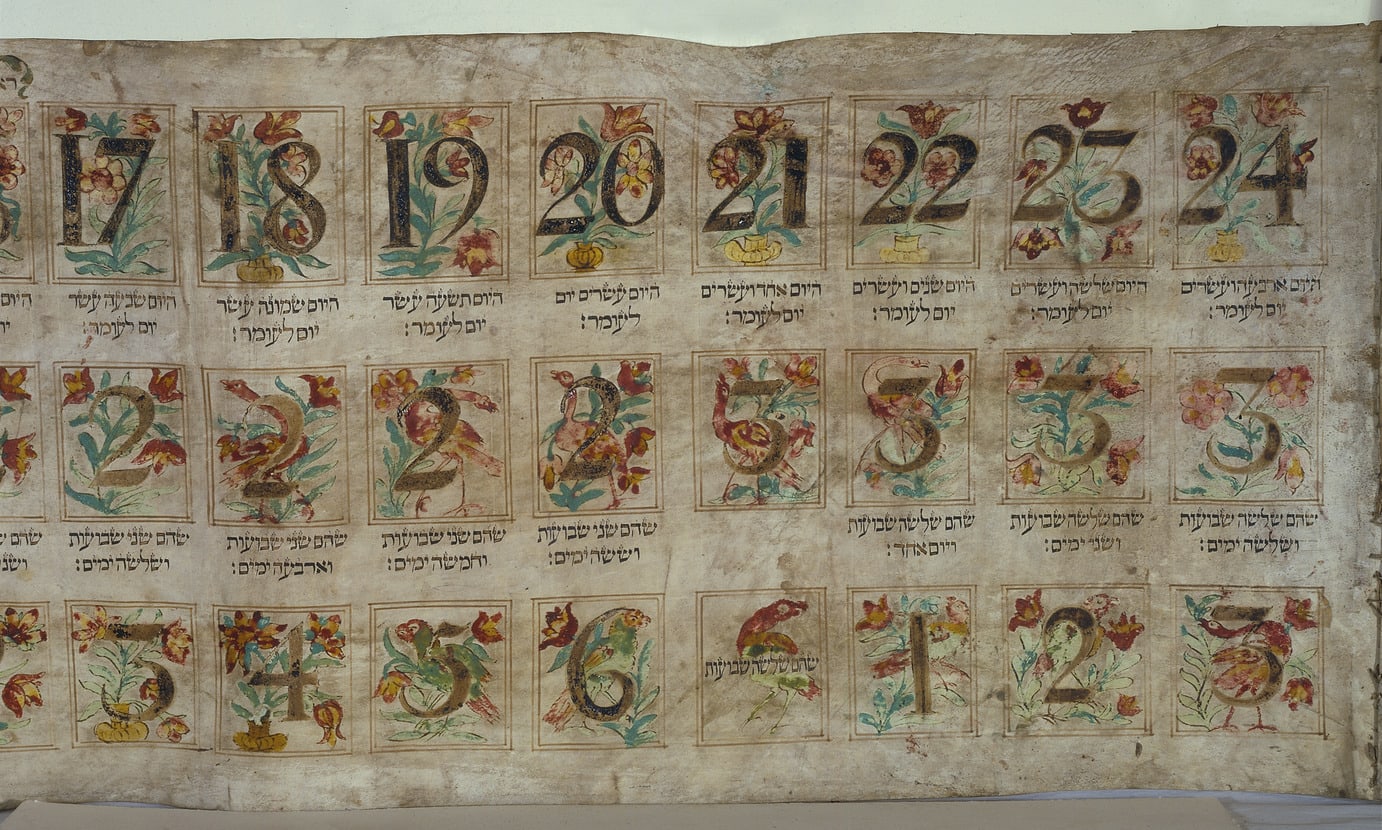
It is generally accepted that the date of the Omer sacrifice in the Temple has always been the 16th of Nissan. This opinion is clearly described by Rambam, for example, in Hilchot Temidim Umusafin chapter 7 halacha 11:
Why was all this necessary? Because of those who erred who departed from the community of Israel in the Second Temple era. They maintained that the Torah’s expression Leviticus 23:11: “From the day following the Sabbath” should be understood literally, as referring to the Sabbath of the week. Nevertheless, according to the Oral Tradition, our Sages derived that the intent is not the Sabbath, but the festival. And so, was understood at all times by the prophets and the Sanhedrin in every generation. They would have the Omer waved on the sixteenth of Nisan whether it fell during the week or on the Sabbath.[1]
Rabbi Yehuda Halevi, however, according to some commentators, disagrees with this understanding. In The Kuzari, section 3 number 41, he proposes a scenario describing how the date of the Omer sacrifice became fixed to the 16th of Nissan:
Now, suppose we allow the Karaite interpretation of the sentence ‘From the morrow of the Sabbath till the morrow of the Sabbath’ (Leviticus 23:11, Leviticus 23:15, Leviticus 23:16) to refer to the Sunday. But we reply that one of the judges, priests, or pious kings, in agreement with the Synhedrion and all Sages, found that this period was fixed with the intention of creating an interval of fifty days between ‘the first fruits of the harvest of barley and the harvest of wheat,’ and to observe ‘seven weeks,’ which are ‘seven complete Sabbaths.’ The first day of the week is only mentioned for argument’s sake in the following manner: should the day of ‘putting the sickle to the corn’ be a Sunday, you count till Sunday. From this we conclude that should the beginning be on a Monday, we count till Monday. The date of putting the sickle, from which we count, is left for us to fix. This was fixed for the second day of Passover, which does not contradict the Tōrāh, since it originated with ‘the place which the Lord shall choose’ on the conditions discussed before. Perhaps this was done under the influence of divine inspiration. It was quite possible, and it saves us from the confusion of those who endeavour to cause confusion.[2]
According to the literal reading of this paragraph[3], the words “mi-maharat ha-shabbat” in the Torah literally mean Sunday, but Sunday is meant only as an example and the Omer can actually be brought on any day of the week. The original practice, according to Halevi, was that the Sanhedrin would choose the appropriate date for the Omer sacrifice each year according to the status of the barley harvest, and count 50 days from that day until the festival of Shavuot. At some point, for some reason not explained by Rabbi Yehuda Halevi, the rabbis decreed that from then on, the Omer sacrifice should always be brought on the 16th of Nissan. This is within their authority, as it does not contradict the Torah.[4]
It is important to note what this literal reading of the Kuzari disagrees with and what it does not disagree with. The baraitot and the gemara in Menachot 65a-65b accept as fact that the halacha is that the Omer sacrifice is always brought on the 16th of Nissan. The literal reading of the Kuzari does not disagree with this halacha. What the literal reading of the Kuzari does disagree with is the generally accepted understanding that the literal meaning of the phrase “mi-maharat ha-shabbat” in the Torah is “the day after Yom Tov”, and that the halacha that the Omer sacrifice must always be brought on the 16th of Nissan dates all the way back to Moshe. Neither of these ideas are accepted as fact in the gemara. In fact, as pointed out by Elchanan Sammet, Rabbi Yochanan Ben Zakai himself, in the baraita, indicates that the verse “mi-maharat ha-shabbat” (the beginning of the verse that includes “seven weeks”) refers to Sunday (when Yom Tov falls out on Shabbat), and yet halachically we interpret it to mean the day after Yom Tov. Similarly, with regard to the origin of the Omer sacrifice being brought on the 16th of Nissan, one of the proofs brought in the baraitot requires “a counting that depends upon Beit Din”. According to one opinion brought by the Ra’avad in his commentary on the Sifra (Emor, chapter 12), this phrase refers to the fact that it was the Sanhedrin who decided that “mi-maharat ha-shabbat” means “the day after Yom Tov”, implying that it is not from the time of Moshe. Thus, the opinions attributed to Rabbi Yehuda Halevi by the literal reading of this scenario, although not generally accepted opinions, not only do not conflict with ideas accepted as fact by the gemara, but according to some commentaries are even voiced by tana’im in the baraitot.
As pointed out by David Henshke,[5] Rabbi Yehuda Halevi’s opinion on this matter has been largely ignored by rabbinic authorities and commentators. Recently this opinion has been analysed and discussed independently by David Henshke and by Elchanan Sammet[6]. Both of them raise the questions which Rabbi Yehuda Halevi himself did not address: why the rabbis decreed a fixed date for the Omer sacrifice and why they chose the 16th of Nissan. Henshke and Sammet both suggest the same answer to the first question: that the Sanhedrin choosing a different date for the Omer sacrifice each year based on agricultural considerations was problematic. There was a need to inform the population of when to start counting Sefirat HaOmer and when to observe the festival of Shavuot. Sammet adds that a rabbinic decree fixing a date for the Omer sacrifice is consistent with the trend of rabbinic decrees in general, which aim to specify halachic parameters left open to interpretation by the Torah law.
With regard to why the 16th of Nissan was chosen, Sammet explains that this is the first possible day for bringing the Omer sacrifice due to a combination of limitations: 1) Pesach must fall in the “Aviv” season, which is defined as the earliest appropriate time to harvest the barley. For this reason, the Omer sacrifice must be brought in the same season as Pesach. 2) According to the order of the festivals as described in the Torah, the Omer must be brought after Pesach. Therefore, the day after the first day of Pesach would be the first possible day on which the Omer sacrifice could be brought.
I find the explanation suggested by Henshke and Sammet for why the Sanhedrin decreed a fixed date for the Omer sacrifice unsatisfying for the following reasons:
1) With regard to the celebration of Shavuot, there is no problem notifying the entire nation of the date within 50 days. Such notification was standard practice with regard to the sanctification of the new month in order to notify the nation of when to celebrate the festivals.
2) With regard to knowing when to start counting Sefirat HaOmer, this problem is not new. The same issue would have existed from the time the Jews entered the land of Israel, so why would the rabbis have felt the need to decree a fixed date to solve it?[7]
I propose two additional plausible explanations for why the rabbis fixed the date of the Omer sacrifice, inspired by the two baraitot quoted in Menachot 65a-65b. The Mishna in Menachot 65a describes the process of harvesting the Omer and the Gemara then quotes two braitot each of which bring multiple proofs for why the Omer sacrifice must be brought on the day following the first day of Pesach. I propose that according to Rabbi Yehuda Halevi these baraitot not only describe sources in the Torah for why the appropriate date for the Omer sacrifice is the 16th of Nissan, but also why the rabbis decided to fix the date of the Omer sacrifice.
Proposal #1: the Baitusim
The first baraita, quoted from Megillat Taanit[8], begins its discussion of the date of the Omer sacrifice by relating the story of a debate on the subject between Rabbi Yochanan Ben Zakai and an elder of the Baitusim:
From the eighth [of Nissan] until the end of the festival [of Passover], the correct date for the festival of Shavuot was restored, and it was decreed not to eulogize [during this period]. The Baitusim said that the festival of Shavuot is always on Sunday. Rabbi Yochana Ben Zakai joined the discussion and said to them ‘fools, from where do you know this?’. … [Rabbi Yochanan Ben Zakai] responded ‘fool, our Torah is not like your idle chatter… one verse says 50 days and another says 7 weeks, how is it? One refers to when it falls out on the Sabbath and one refers to when it falls out on a weekday.’…
The baraita brings this story as the introduction to the discussion of the date of the Omer sacrifice. I propose that, according to Rabbi Yehuda Halevi, the baraita quotes this story here because this debate with the Baitusim was actually the motivation for the rabbinic decree fixing the date of the Omer sacrifice.
The Mishna in Menachot 65a, after describing in detail the highly vocal ceremony of the harvesting of the Omer, states that this ceremony was performed because of the argument with the Baitusim over when the Omer should be harvested. Not all arguments with the Baitusim merited such a ceremony, nor, for that matter, a period of no eulogizing (commemorating the rabbis’ victory) as described in the baraita. It seems that this particular argument with the Baitusim was of special significance. An analysis of what stands behind the determination of the date of the Omer sacrifice may shed light on the significance of this particular debate.
As is well-known, the sanctity of the Jewish festivals comes from the sanctification of the new moon, which in turn defines the days of the festivals. This is expressed in the blessing of the Kiddush on the festivals, which differs from that of the Sabbath. On the Sabbath we bless God “the one who sanctifies the Sabbath,” but on the festivals we bless God “the one who sanctifies Israel and the festivals.” This is because by sanctifying the new moon, the people of Israel, through their representatives the Sanhedrin, sanctify the festivals.[9]
Shavuot is different from the other festivals in that it does not have a fixed date; rather, it is defined as being 50 days after the Omer sacrifice. This being the case, one must ask from where its sanctification is derived, if not from a fixed date tied to the sanctification of the new moon? I suggest that if the date of the Omer sacrifice is fixed to a date in the Jewish month of Nissan, then Shavuot is also linked to that date in the Jewish month, thus the sanctification of the festival of Shavuot would derive from the sanctification of the new moon at the beginning of the month of Nissan. If, however, the date of the Omer sacrifice is not fixed to a date in the Jewish month, the situation described by Rabbi Yehuda Halevi before the rabbinic decree, then the sanctification of Shavuot must derive from the Sanhedrin declaring the date of the Omer sacrifice each year, which then determines the date of Shavuot. This idea of the source of the sanctity of Shavuot and its relationship to the determination of the date of the Omer sacrifice and Sefirat HaOmer is indicated in the baraita itself as well, as in a comment by Netziv:
1) In the baraita, one of the proofs that the Omer sacrifice must be brought on the day after the first day of Pesach is that Sefirat HaOmer must be linked to a day that is determined by the Sanhedrin; “sefira teluya beveit din.”[10] This precludes the Sabbath, which is a day that can be known by anyone. The requirement that Sefirat HaOmer be linked to a day determined by the Sanhedrin is consistent with the need to link Sefirat HaOmer to the sanctification of the new moon in order to provide the source of the sanctification of the festival of Shavuot whose date is determined by Sefirat HaOmer[11].
2) Netziv makes this connection explicitly in his explanation of why we need the verse of “usefartem lachem” to teach us that everyone is obligated in the counting of the Omer. He explains that otherwise, we might have thought that only the Sanhedrin needs to count the Omer:
Since the purpose of these countings [the Omer and counting of the years of the Jubilee cycle] is to sanctify what comes after them, the festival of Shavuot and the Jubilee year, and it is known that the sanctification of the festivals and the Jubilee depend on the Beit Din Hagadol, therefore it is logical that the counting would also be done by them.[12]
If the sanctification of the festival of Shavuot derives from it being linked to a sanctification by the Sanhedrin, then the Omer sacrifice being linked to the first day of Pesach or being determined each year directly by the Sanhedrin based on agricultural considerations would provide the necessary sanctification. However, the Omer sacrifice being fixed on Sunday, as claimed by the Baitusim, would not provide any link to sanctification by the Sanhedrin. Therefore, the debate about the date of the Omer sacrifice is not only an argument about the date of the festival of Shavuot, but about whether the Sanhedrin is the source of the sanctification of the festivals. By insisting that the festival of Shavuot always falls out on Sunday because the Omer sacrifice is always brought on Sunday, the Baitusim were in effect in the sanctification of the festivals.[13]
This challenge to the Sanhedrin’s role in the sanctification of the festivals may be the reason why the defeat of the Baitusim in this particular argument is both celebrated and protected via a ceremony during the Omer harvest as well as being commemorated by a period of no eulogizing. I suggest that according to Rabbi Yehuda Halevi, this argument with the Baitusim may not only be the reason for the celebration and ceremony of the Omer harvest, but may also be the reason the rabbis chose to fix the date of the Omer sacrifice in the first place.
According to Rabbi Yehuda Halevi’s opinion that the date of the Omer sacrifice was originally determined each year by the Sanhedrin, the Baitusim’s claim that the Omer sacrifice must be on Sunday would have been particularly problematic for two reasons: 1) as explained above, it challenged the Sanhedrin’s role in the sanctification of the festivals, and 2) since according to the rabbis the Omer could be brought on any day, the Baitusim bringing it on Sunday did not conflict with the rabbis’ opinion. Since there were presumably Baitusi priests in the Temple,[14] it would be very difficult for the rabbis to stop them from bringing the Omer on Sunday since they could not even claim that it was incorrect or not allowed. I propose that the rabbis chose to fix a date in the month for the Omer sacrifice so that there would be a single “correct” date on which to bring the Omer each year, which would not always fall on the same day of the week. This was a way to make the bringing of the Omer on Sunday “wrong”, while still providing a source of sanctification by the Sanhedrin through the fixed date in the month of Nissan. This would enable the rabbis to more easily fight against the Baitusim bringing the Omer on Sunday. Additionally, by choosing the 16th of Nissan, which may be the first day when the Omer can possibly be brought,[15] they would be able to preempt the Baitusim, who would be waiting for the following Sunday.
Proposal #2: A counting by every individual
The second baraita in the Gemara in Menachot[16] begins with a drasha from the beginning of the verse, “usefartem lachem”, and continues with the drasha of “mi-maharat ha-shabbat” that is relevant to the topic being discussed in the Gemara:
We learned in a beraita: “and count for you (plural)” that the counting should be for each individual, “from the day following the Sabbath” from the day after the festival or only from the day after the Sabbath of creation?
The baraita then proceeds to quote multiple proofs that “from the day following the Sabbath” means the day after the festival. The fact that the baraita discussing the topic of the timing of the Omer sacrifice begins with the drasha teaching us the obligation of every individual to count Sefirat HaOmer may suggest that these two drashot are related. I propose that according to Rabbi Yehuda Halevi, who holds that the drasha about the date of the Omer sacrifice was a new drasha that changed the previous practice, so too the drasha teaching us the obligation of every individual to count the Omer was a new drasha that changed the previous practice. This new obligation upon every individual to count the Omer was actually the reason for the fixing of the date of the Omer sacrifice.
If, as suggested above, the sanctity of the festival of Shavuot comes from the Sanhedrin choosing the day of the Omer sacrifice followed by the counting of the Omer, it would be logical for the counting of the Omer itself to also be performed by the Sanhedrin. Additionally, there are strong similarities between the counting of the Omer and the counting of the years of the Jubilee, which is performed only by the Sanhedrin. Even the drasha mentioned in this baraita, that “and count for you (plural)” (Leviticus 23:15) implies that the counting must be performed by every individual, is not an obvious conclusion because there is another verse about Sefirat HaOmer which says “seven weeks count for you (singular)” (Deuteronomy 16:9), which according to the same logic would imply that Sefirat HaOmer is performed only by the Sanhedrin.[17] For all of these reasons, it is reasonable to suggest that originally the counting of the Omer was performed only by the Sanhedrin until at some point the rabbis decided that everyone should count Sefirat HaOmer and based it on the drasha of “usefartem lachem.”
Such a change would be consistent with what seems to have been one of the goals of the Men of the Great Assembly; to decentralize Torah knowledge[18] and Jewish practice by involving the entire nation in what was previously Temple-centered Judaism.[19] We see this trend in a number of areas: 1) The standardization of prayer by the Men of the Great Assembly,[20] which the Gemara in Berachot 26b says is parallel to the sacrifices in the Temple. Since the Men of the Great Assembly lived as early as the beginning of the second Temple period, this parallel to the sacrifices was obviously not to commemorate the past, but was apparently to include the entire nation in the sacrifices which were currently being brought in the Temple. 2) The shift in focus, implemented by Ezra, founder of the Men of the Great Assembly, from sacrifices and Temple service to the learning of Torah and the practice of the commandments, is seen in the contrast between the festivals of Tishrei as described in the book of Ezra versus the book of Nechemia.[21] In Ezra chapter 3, before Ezra returns to Jerusalem, the festivals are described as being celebrated exclusively with sacrifices in the newly dedicated Temple. In contrast, in Nechemia chapter 8, after Ezra returns, the same festivals are described as being celebrated by public teaching of Torah to the masses and public performance of the commandments found therein.
I propose that as part of this same trend, the Men of the Great Assembly decided that everyone should count Sefirat HaOmer, not just the Sanhedrin. This is similar to the daily prayers that they decreed in parallel to the daily sacrifices. When implementing this decree, they based it on the drasha of the verse “usefartem lachem”. [22],[23]
If indeed Sefirat HaOmer was changed by the Men of the Great Assembly from being performed only by the Sanhedrin to being mandatory for everyone, that would explain the need for fixing the date of the Omer sacrifice. If everyone needs to count, then they need to know when to start counting, which is a problem if the Sanhedrin decide each year anew on what day to bring the Omer sacrifice.[24]
According to Rabbi Yehuda Halevi, the reason the baraita connects these two drashot might be because the author of the baraita believed that one led to the other. Once the Men of the Great Assembly decided that everyone should count Sefirat HaOmer, they needed to fix a date for the Omer sacrifice so that everyone would know when to start counting.
Given the need to fix a date for the Omer sacrifice, they might have chosen the 16th of Nissan in order to align the festival of Shavuot with the traditional date of Matan Torah. This would be consistent with the Men of the Great Assembly’s efforts to enhance the centrality of Torah study in Judaism.[25]
It should be noted that while the two explanations proposed here for fixing the date of the Omer sacrifice could potentially be complementary, they do not coincide chronologically. The Men of the Great Assembly, who would logically have been the ones involved in the decentralization of Jewish practice, lived hundreds of years before the Baitusim.
Given the two reasons proposed here for the fixing of the date of the Omer sacrifice, one resulting from the debate with the Baitusim described in the first baraita, and one resulting from the decree that everyone should count Sefirat HaOmer as mentioned in the second baraita, it is possible that according to Rabbi Yehuda Halevi these two baraitot represent two opinions among the tanna’im as to why and when the rabbis set a fixed date for the Omer sacrifice.
[1] Translated by Eliyahu Touger, from https://www.chabad.org/library/article_cdo/aid/1013259/jewish/Temidin-uMusafim-Chapter-7.htm
[2] Judah Hallevi’s Kitab Al Khazari, translated from the Arabic with an Introduction by Hartwig Hirschfeld Ph.D., London, George Routledge & sons, Ltd., New York: E. P Dutton & Co, 1905.
[3] Since the purpose of this article is to address questions that arise from the literal reading of this paragraph in the Kuzari, for convenience I will refer to this understanding from here onward as “Rabbi Yehuda Halevi’s opinion”. However, it is not my purpose to argue that this is the correct understanding of the Kuzari, and, as noted in the following footnote, there are commentators who understand this entire paragraph as being hypothetical.
[4] It should be noted that this entire scenario described in the Kuzari can be understood literally, as I have described it here, or it can be understood as a hypothetical scenario brought only to point out the authority of the Sanhedrin and the prophets in determining Torah law. Two classic commentaries that are printed in the 1905 Vilna edition of the Kuzari, Kol Yehudah and Otzar Nechmad, clearly understand this scenario as hypothetical. As he explains in his introduction, the understanding of these two commentaries is the source of N. Daniel Korobkin’s note on this topic in his English translation of the Kuzari. On the other hand, Samuel David Luzzatto and Dovid Tzvi Hoffmann, in their respective commentaries on Leviticus 23:11, both understand the literal reading of this scenario to be the opinion of Rabbi Yehuda Halevi. Elchanan Sammet and Prof. David Henshke in their respective published articles referenced later in this article also understand Rabbi Yehuda Halevi to mean this scenario literally. Yitzchak Sheilat, who translated the Kuzari from the original Arabic into Hebrew, understands this scenario literally, as indicated by his explanation in his book “Bein HaKuzari LaRambam” (225) and as confirmed to me in a personal communication. With regard to the ability to determine the literal vs. hypothetical understanding based on translations, it should be noted that the word “suppose”, which Hirschfeld uses to translate the original Arabic phrase that introduces this scenario, is consistent with either interpretation; the Britannica Dictionary (https://www.britannica.com/dictionary/suppose) defines “suppose” as either “to think of (something) as happening or being true in order to imagine what might happen” or “to believe (something) to be true”.
[5] David Henshke, Megadim Vol 14, 9-26, Sivan 5751, Tevunot Publishing, Michlelet Herzog.
[6] Sammet, Elchanan, Iyyunim Beparshat Hashavua, https://www.daat.ac.il/daat/tanach/samet/v7-2.htm
[7] In theory, one could suggest that the ones who made this change lived in the time of Yehoshua, during the period when the Israelites were settling the land, but the language used by Rabbi Yehuda Halevi in the Kuzari does not sound like it is describing that time period. He refers to “Sanhedrin” located at “the place that God will choose,” which generally refers to the Temple Mount, implying that he is talking about the period of the first or second temple.
[8] Megillat Taanit, chapter 1.
[9] Rav Yosef Dov Soloveitchick, Shiurim Lezecher Abba Mari z”l, vol 2, 141.
[10] This is the understanding of most of the commentators, see for example Rashi, Menachot 65b.
[11] Rav Yehuda Zoldan, The counting of the years for shemittah and yovel and the counting of the omer [Hebrew], Emunat Itecha vol 109, Tishrei 5776, Machon Hatorah Vehaaretz. https://asif.co.il/wpfb-file/1-33-pdf-15/
[12] Netziv, Ha’amek she’ela al she’iltot derav Ahai, she’ilta 107b
[13] Note that the argument with the Baitusim is not described in the baraita as an argument about the date of the Omer sacrifice, but rather as an argument about the date of the festival of Shavuot.
[14] Moshe David Herr. “Who Were the Baethusians?” Proceedings of the World Congress of Jewish Studies 1-20 (1977). http://www.jstor.org/stable/23524677.
[15] As claimed by Sammet, described above.
[16] Also found in Sifra, Leviticus 23:15
[17] Rav Yehuda Zoldan, “The counting of the years.” Above, n11.
[18] Rabbi Joseph B. Soloveitchik, Halakhic Morality Essays on Ethics and Masorah, 2017, Maggid Books, Jerusalem, Israel. Chapter Avot 1:1.
[19] Rav Yuval Cherlow, The books of the second Temple #5 – The character and the role of Ezra the scribe (Ezra, chapters 7-8) https://www.youtube.com/watch?v=vL1YtyhRwqw
[21] Elyachin Bin-Nun, The role of Ezra – Scribe or priest, https://tinyurl.com/2scxhx35
[22] One could even suggest that the same is true of the drasha “ulekahtem, that there should be a taking by every individual” Succah 43a, namely, that originally the lulav and etrog were shaken only in the Temple (as is implied by the simple reading of the verse which concludes “and you should be joyous before God for seven days”). This was later changed when the Men of the Great Assembly decided that everyone should shake the lulav and etrog on the first day of Succot, based on the drasha of “ulekahtem”.
[23] Note that I use the term “Rabbinic decree,” but I do not mean to imply that the counting of Sefirat HaOmer by everyone, nor the fixed date of the Omer sacrifice, are Rabbinic commandments. Rather, they are Rabbinic interpretations of Torah commandments. They are examples of what Rambam describes in his introduction to Mishneh Torah as “And similarly, profound statutes and laws which they did not receive from Moses, and concerning which the court of that generation judged using the Middot (hermeneutic rules) by which the Torah is interpreted. And those elders ruled and concluded that the law is so.”
[24] This is the same problem suggested by Henshke and Sammet as the reason for the fixing of the date of the Omer sacrifice, but unlike Henshke and Sammet, I propose that this was a new problem that resulted from the new obligation upon everyone to count the Omer.
[25] Yitzchak Sheilat, “Bein HaKuzari LaRambam”, Sheilat Publishing, Ma’aleh Adumim, Israel, 2011, 225, suggests that this might have been the reason for the fixing of the date. I propose that they had an independent need to fix the date and this is only explaining why they chose this particular date.






 Site Operations and Technology by The Berman Consulting Group.